Table of Contents
Key takeaways
Renters can build a functional gym without touching walls by combining freestanding racks, bumper plates, and layered floor protection.
- Freestanding squat stands (e.g., Rogue SML-1, Rep PR-1100) cost $250–$400 and require no bolting.
- A three-layer floor stack — carpet, 3/4-inch plywood, rubber mats — cuts neighbor noise by roughly 90%.
- Use rubber bumper plates instead of steel and lower weights deliberately to stay under landlord-concern thresholds.
- Avoid treadmills, air bikes, and plyometrics on upper floors; opt for magnetic spin bikes or rowers instead.
Quick Answer
A no-drilling apartment home gym uses freestanding equipment, doorframe attachments, and tension-mounted bars — zero holes in your walls. The 7 best setups range from $100 (bodyweight + bands) to $800 (rack + plates + bench), all renter-safe.
- Doorframe pull-up bars: Iron Gym or ProForm, installed and removed in seconds
- Freestanding racks: Titan X-3 or similar — heavy enough to squat without bolting down
- Foldable everything: beds, benches, rowers — store between sessions
- Soundproofing: horse stall mats + rubber dampening cubes under plates
Building a home gym in an apartment feels like fighting a war on two fronts:
- Space: You likely don't have a garage or spare room.
- Rules: You can't drill into walls, and you can't make noise.
The standard advice of "just bolt a rack to the floor" is useless for renters. But this doesn't mean you are stuck with resistance bands and a yoga mat. You can build a heavy lifting gym in a rental; you just need to be smarter about physics and acoustics.
This guide focuses on Non-Invasive, High-Performance setups.
In this guide
- Home Gym by Room Size (complete guide)
- Closet corner gym ideas
- Best foldable gym equipment
- Vertical storage solutions
- 10x10 home gym setup
The "No-Drill" Rule: Racks and Rigs
The centerpiece of any gym is the rack. In a garage, we bolt it down. In an apartment, we need stability without screws.
1. The Flat Foot Power Rack
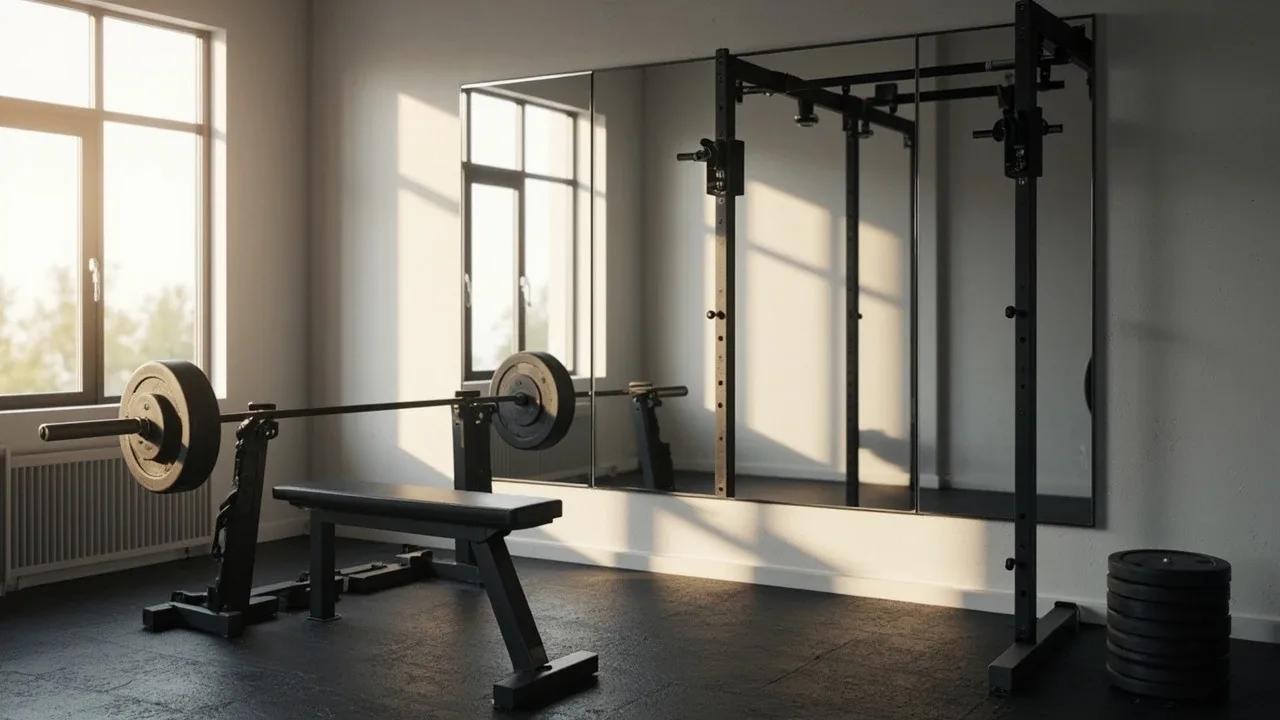
This is the holy grail for renters. A "Flat Foot" rack has a U-shaped base that sits on top of the floor. It does not need to be bolted down because the wide base and weight of the rack itself prevent tipping.
- Top Picks: Rogue SML-1 or Rep Fitness PR-1100 (search freestanding squat stands on Amazon).
- Stability: You can do pull-ups, squats, and bench presses safely. Just don't do aggressive kipping pull-ups (swinging), as the rack might "walk" slightly.
2. The Squat Stand (Independent Uprights)
Two separate upright stands with no connecting bar.
- Pros: Extremely easy to move and store in a closet.
- Cons: Less stable. Requires more care when re-racking heavy weights.
3. Doorway Pull-Up Bars (Leverage Style)
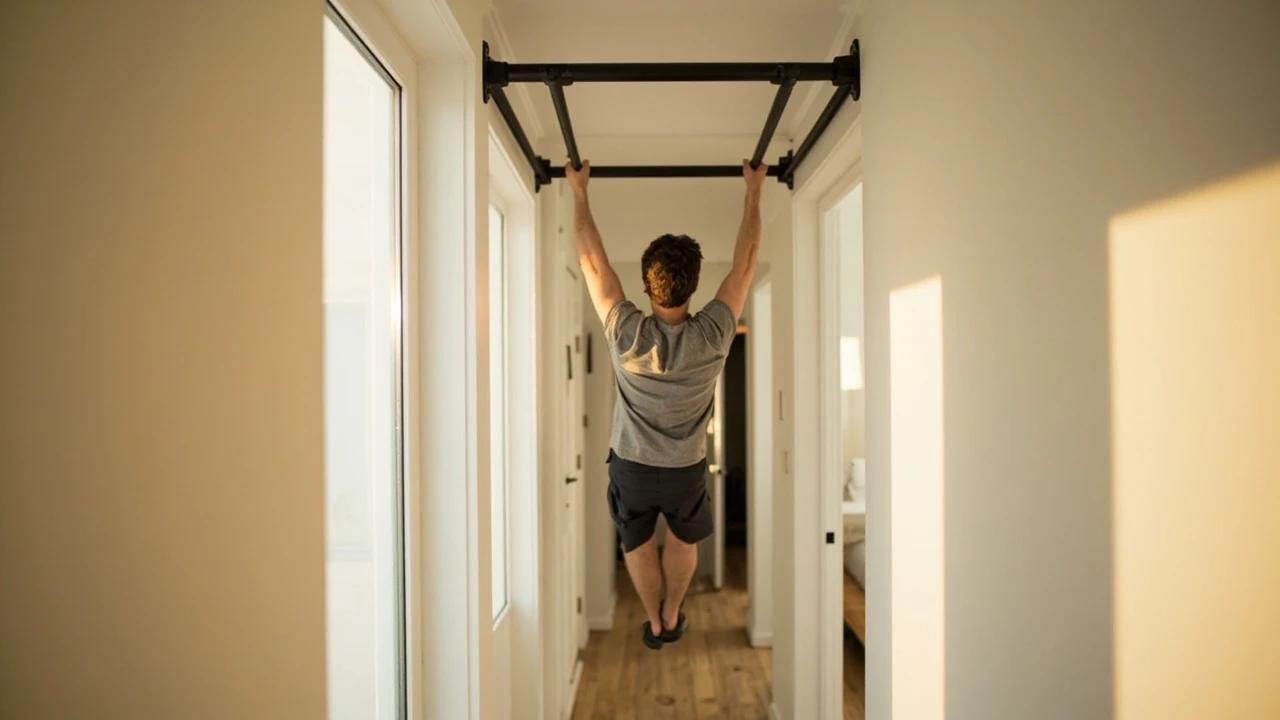
Do not buy the bars that extend inside the frame (friction/tension). They damage paint and can slip. See our full guide on DIY pull-up bars if you want to build one, but for apartments, buy a leverage bar that hooks onto the top of the door trim. It translates your weight into pressure against the wall (safe) rather than outward pressure on the frame (unsafe).
Floor Protection: Saving Your Deposit
If you damage the hardwood or carpet, say goodbye to your security deposit.
The "Sandwich" Method for Carpets
If you put a 1000lb rack directly on carpet, it will leave permanent divots.
- Layer 1 (Bottom): The existing carpet.
- Layer 2: 3/4" Plywood sheet. This distributes the weight of the rack legs over a huge surface area.
- Layer 3 (Top): Rubber Horse Stall Mat or Gym Flooring tiles. Result: When you move out, the carpet underneath is pristine.
Hardwood Floor Protection
Never put rubber mats directly on expensive hardwood for years. Some rubber off-gasses chemicals that can stain wood finish.
- Solution: Put a layer of thin plastic sheeting or a felt rug pad down first, then the rubber mats.
Noise Control: The "Good Neighbor" Protocol
You are the upstairs neighbor. Do not be the enemy.
1. No Steel Plates
Iron plates make a loud "CLANG" when loaded, and a loud "THUD" when dropped.
- Solution: Bumper Plates. They are rubber. They touch quietly. They absorb impact.
2. Crash Pads are Mandatory
Even with bumper plates, a 300lb deadlift shakes the floor.
- Solution: Buy Silencer Pads (Crash Pads). They are 6-inch thick foam blocks you drop the weights onto. They reduce noise and vibration by 90%. You can deadlift at midnight and the downstairs neighbor won't hear a thing.
3. Controlled Eccentrics
Don't drop the weight. Lower it.
- Not only is this quiet, but the eccentric (lowering) phase is where most muscle damage and growth occurs. You get swoler and quieter.
4. Cardio Noise
- Treadmills: The "thump-thump-thump" of running is unbearable for neighbors below. Avoid.
- Air Bikes: The fan noise is loud (like a vacuum cleaner).
- Magnetic Rowers / Bikes: These are virtually silent. A magnetic spin bike (like Peloton or generic alternatives) is the ultimate apartment cardio tool.
Storage: Vertical and Hidden
The "Bookshelf" Aesthetic
If your gym is in your living room, you don't want it to look like a dungeon.
- Use Industrial Pipe Shelving (wood and black pipe) to store weights. It looks like cool urban furniture, not gym storage.
- Keep dumbbells in a nice basket or wooden crate when not in use.
Under-Bed Storage
- Barbells: Slide easily under a bed or couch.
- Folding Bench: Can slide under a bed if you check the clearance height needed.
Sample Budget for an Apartment Gym
- Squat Stand (Flat Foot): $250 - $400
- Barbell (7ft): $200
- Bumper Plates (260lb set): $400 - $500
- Adjustable Dumbbells: $300 - $500
- Adjustable Bench: $200
- Flooring (Stall Mats): $100
Total: ~$1,500 - $2,000. Considering a gym membership is $50-$100/mo, this pays for itself in 2 years, and you can sell the equipment for 70% of its value when you move. It is an investment, not an expense. For more savings, check our under $200 budget guide.
Final Tip: Check Your Lease
Most leases forbid "waterbeds" due to weight. They rarely forbid gym equipment. A full gym setup weighs about the same as a bookcase full of books or a large refrigerator. Unless you are installing a 2000lb industrial machine, you generally do not need permission—just be respectful with noise.
Also see: Apartment-friendly DIY: build a pair of parallettes for under $15.
Budget check: How much does a home gym cost? See the full tier-by-tier breakdown — from $100 minimalist to $5,000+ premium builds.
Frequently Asked Questions
Can you have a home gym in an apartment?
Yes, with freestanding and doorframe-mounted equipment. Skip wall anchors, concrete lag bolts, and anything that requires drilling. Most apartments allow the same gym you'd put in a spare bedroom.
What home gym equipment doesn't need drilling?
Adjustable dumbbells, doorframe pull-up bars, tension-mounted rings, folding benches, freestanding squat stands, resistance bands, and all cardio machines. That covers 95% of training goals.
Apartment gym soundproofing — what works?
Horse stall mats absorb most impact. For deadlifts, use rubber dampeners or bumper plates that are quieter than iron. Train during reasonable hours — nothing beats neighbor goodwill.
Will my landlord notice?
Freestanding gear leaves zero evidence. Keep equipment off shared walls, use anti-slip mats to protect floors, and avoid plyometrics on upper floors. Most issues come from vibration, not visible signs.
Soundproofing for renters: How to soundproof a home gym — apartment-safe methods that work without drilling or permanent installs.
Apartment-friendly budget build? Best Home Gym Equipment Under $100 — every item on this list is apartment-safe; the bands + pull-up bar + ab wheel combo runs silent.
Apartment-friendly cardio? Best Compact Cardio Machines — the 6 picks ranked by noise (walking pads + magnetic rowers win for above-floor-1 apartments).
Got a spare bedroom in the apartment? Best Home Gym Equipment for a Spare Bedroom — the no-damage equipment picks that turn an extra room into a gym without touching the walls.
If your lease does allow anchoring, the calculus changes completely. Wall-mounted gear is the single best use of a small footprint — the best wall-mounted gym equipment covers folding racks and bars, and is worth reading before you rule drilling out. Just note it's studs or concrete only: drywall anchors top out at 50-75 lbs and have no place holding gym equipment.
Plan the footprint first. The free home gym planner shows how much floor a rack, bench or treadmill really takes in an apartment-sized room, to scale and in 3D.
A pull-up bar with no drilling at all: Best Pull-Up Bars for Home: Doorway, Wall & No-Drill — which doorway bars leave no marks, which frames they are safe on, and the freestanding answer when the frame fails the check.
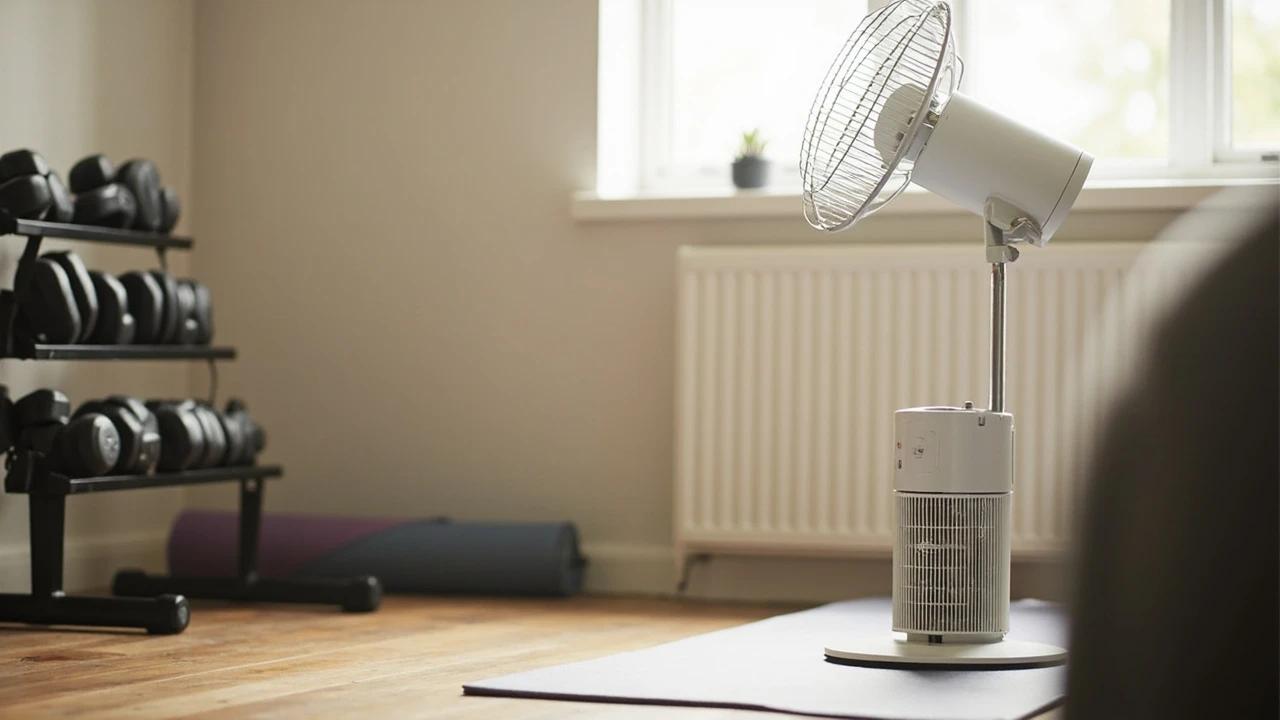
A fan you can run at 6am. Best Fans for a Home Gym: 5 Quiet Picks by Decibel — five picks ranked on noise rather than airflow, for exactly the neighbour problem this page is about.
The quietest strength equipment a rental can have: Best Resistance Bands for Home: Loop, Tube & Mini Bands — bands for every job, and how to anchor one to a door safely.