Table of Contents
Start here: Home Gym by Room Size — Complete Guide — layouts, budgets, and equipment lists for every common room size.
Key takeaways
Wall-mounted vertical storage can shift a small home gym from roughly 60% to 90% usable training floor space.
- A Wall Control Pegboard and waist-height dumbbell wall shelves handle the most common clutter; 20+ dumbbell pairs can reclaim 20+ sq ft of floor.
- A vertical bar holder keeps a 7 ft barbell in just 6 inches of wall footprint vs. floor-based storage.
- Mount all heavy plate and dumbbell holders into wall studs — drywall alone cannot bear the load safely.
- Zone walls by equipment type and label each position to maintain a 5-minute post-workout cleanup habit.
In a small home gym, there's one direction most people forget to look: up.
The average garage gym or spare bedroom has 8-10 feet of vertical wall space that's completely wasted. While you're struggling to find room for your dumbbells, your walls are staring at you, empty.
Vertical storage is the single most impactful change you can make to a small gym. It transforms a cluttered floor into an open training area.
The Philosophy: Floor Space = Training Space
Every square foot your weights occupy on the floor is a square foot you can't squat, deadlift, or do burpees in.
Rule of thumb: If it's not actively being used in your workout, it should be on the wall.
The Best Vertical Storage Solutions
1. Dumbbell Wall Storage
The Problem: A full set of dumbbells (20+ pairs) can take up 20+ square feet of floor space.
The Solution: Wall-mounted dumbbell holders.
- Olympic Dumbbell Tree: Holds dumbbells horizontally. Requires 6 feet of wall width.
- Vertical Dumbbell Trays: Stack dumbbells vertically. Takes only 2 feet of wall width.
- DIY Solution: Install 2x4s with small blocks to hold each dumbbell individually.
Pro Tip: Mount the holders at waist height. Too high = hard to put away. Too low = you have to bend down (bad for your back).
2. Plate Storage: Wall Pegs vs. Trees
The Problem: 300 pounds of plates takes up a massive amount of floor space.
Solution A: Wall-Mounted Pegs
- Install 4"x4" wooden blocks (called "plate stringers") on the wall.
- Slide plates onto the pegs.
- Pros: Clean look, no floor footprint.
- Cons: Must hit studs perfectly. 300lbs ripping out of drywall is dangerous.
Solution B: Vertical Plate Tree
- A pole with arms sticking out.
- Wheels for mobility.
- Pros: Move it out of the way when not in use.
- Cons: Takes some floor space.
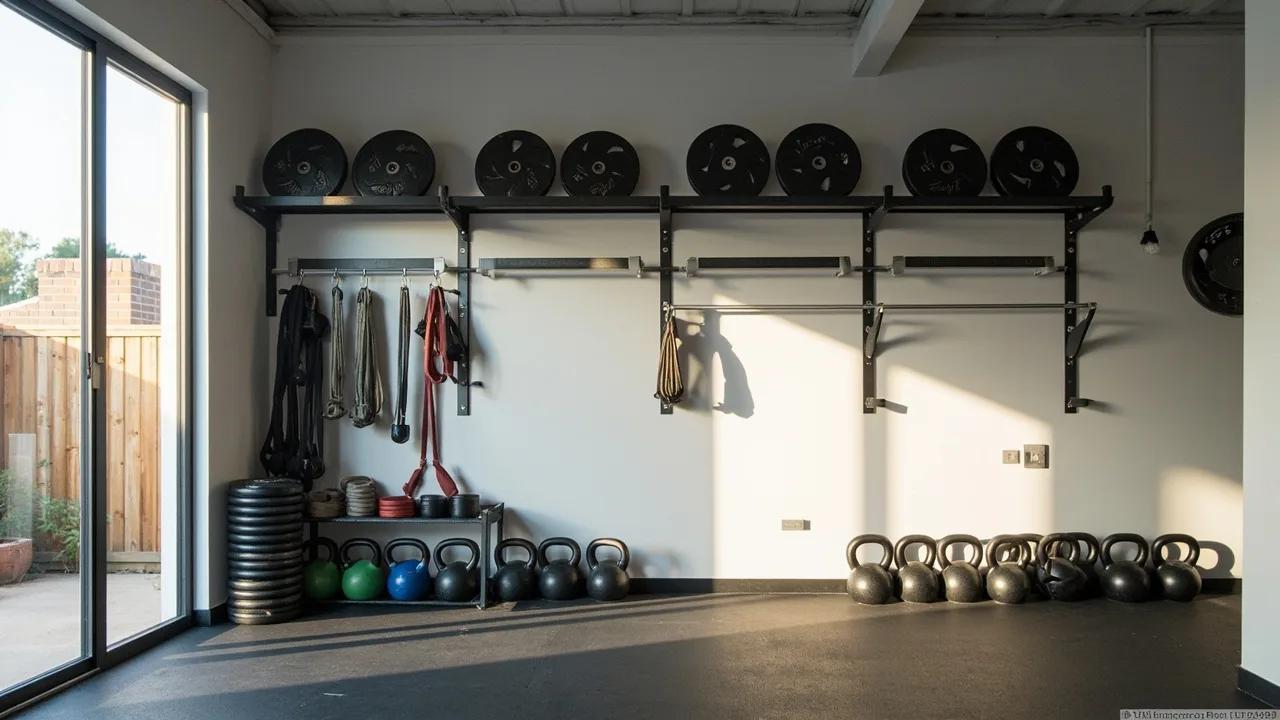
3. Kettlebell Wall Rack
Kettlebells are notoriously hard to store because of their shape.
- Solution: Wall-mounted "horns" or simple hooks.
- Storage: Hang bells vertically by the handle.
- Footprint: Zero floor space.
- Look: Industrial hooks look cool and add to the gym aesthetic.
4. Resistance Band Wall Organizer
The Problem: Bands get tangled, lost, or tangled with other equipment.
- Solution: A simple pegboard with hooks.
- Organization: Hang each band on its own hook.
- Bonus: Label each hook with band color/resistance level.
5. Barbell Vertical Holder
The Problem: A 7-foot barbell takes up a 7-foot strip of floor.
- Solution: Mount a 3-bar vertical holder to the wall.
- Storage: Bars stand upright.
- Footprint: 6 inches wide instead of 7 feet long.
6. Accessory Pegboard
This is the ultimate small gym upgrade.
- Install: A standard pegboard (like Wall Control or Pegboard).
- Store: Everything.
- Lifting belts
- Wrist wraps
- Resistance bands
- Jump ropes
- Chalk bags
- Foam rollers
- Weight plates (light ones)
- Ab wheels
- Fractional plates
The key: Nothing touches the floor except your feet and the equipment you're actively using.
Storage by Gym Type
Apartment Gym
- Must be non-invasive (no drilling).
- Solution: Over-the-door organizers, freestanding shelving units, under-bed storage for bars.
- See our apartment gym guide for more tips.
Garage Gym
- Can drill into studs.
- Solution: Full wall-mounted systems (Wall Control, French Cleat).
- Install heavy-duty steel hooks for kettlebells, bikes, and slam balls.
Spare Bedroom
- Solution: Closet door organizers + wall pegboards.
- Use the back of the closet door for bands, ropes, and small accessories.
The "Hidden" Storage Spots
1. Ceiling
- Install ceiling-mounted hooks for:
- Heavy bags (boxing)
- Battle ropes
- Suspension trainers
2. Behind the Door
- Over-the-door shoe organizers store:
- Small dumbbells
- Resistance bands
- Accessories
3. Under the Bench
- Store flat items:
- Yoga mats
- Ab rollers
- Foldable steppers
DIY vs. Buy
DIY Options (Budget)
- 2x4 + screws: Create custom shelf brackets for ~$5.
- PVC pipe: Cut notches to hold kettlebells.
- Pallet wood: Sand and stain for "rustic" storage shelves.
Buy Options (Premium)
- Wall Control: Metal pegboard system. Expensive but gorgeous.
- Rogue Storage: Heavy-duty, matches Rogue equipment.
- REP Fitness: Good value, includes attachment hooks.
Organization Tips
-
Zone Your Wall: Put related items together.
- Left wall: Weights (plates, dumbbells).
- Right wall: Accessories (bands, belts, chalk).
- Center: Main equipment (rack, bench).
-
Label Everything: Use a label maker. It helps you put things back in the right spot.
-
Color Code: Wrap colored tape around band handles. Match to colored hooks.
-
Clean Up After Every Session: 5 minutes of re-racking prevents clutter from building up.
Sample "Before & After"
Before:
- Floor: 40% covered in equipment
- Workout area: 60% of room
After:
- Floor: 10% covered in equipment
- Workout area: 90% of room
The difference is dramatic. You suddenly have room to do floor work, HIIT, yoga, and stretching—without moving anything.
Recommended Products
| Product | Best For | Price Range |
|---|---|---|
| Wall Control Pegboard | Full accessory organization | Check price on Amazon |
| PRx Performance Dumbbell Wall Shelf | Dumbbell storage | Check price on Amazon |
| Kettlebell Hooks | Kettlebell wall mount | Check price on Amazon |
| Vertical Bar Holder | Barbell storage | Check price on Amazon |
| Over-Door Organizer | Apartment no-drill storage | Check price on Amazon |
Summary
Vertical storage isn't about buying more stuff. It's about rethinking the space you already have.
Start today:
- Pick one area (dumbbells or plates).
- Get them off the floor.
- Notice the difference in your training space.
Your floor is for training. Your walls are for storing.