Table of Contents
- Quick Answer
- Key Numbers
- Why Horse Stall Mats Are the #1 Budget Gym Flooring
- Where to Buy Horse Stall Mats
- The Smell Problem (And How to Fix It)
- Standard Sizes and Specs
- How to Cut Horse Stall Mats
- Installation Over Different Surfaces
- How Many Mats Do You Need?
- Horse Stall Mats vs. Rubber Rolls vs. Foam Tiles
- Care and Maintenance
- FAQ
DIY projects hub: Build your own home gym equipment → — power racks, sandbags, plyo boxes, and more.
Key takeaways
Horse stall mats — 4×6 ft, 3/4" thick rubber panels rated for 1,200-lb horses — cost about $50–$55 each, roughly $2 per square foot versus $4–$8 for commercial gym flooring.
- Five mats cover a 10×10 ft room (
$250); a two-car garage needs about 17 mats ($850). - Off-gas smell dissipates in 3–5 days in a ventilated garage or 3–6 weeks in a closed basement; sun the mats 3–7 days and use a 1:1 vinegar-water wash to accelerate the process.
- Cut with a heavy-duty utility knife and straight edge; budget 2–3 blades per cut and push mats tight against walls to close gaps.
- Never use bleach, acetone, or petroleum-based cleaners — they degrade the rubber.
If you spend more than five minutes in any home gym forum, someone will say it: "Just get horse stall mats."
They are right. Horse stall mats are the single best flooring investment you can make for a home gym. They are cheaper than commercial gym flooring, tougher than anything marketed to fitness consumers, and available at a store you have probably never walked into.
This guide covers everything: where to buy, how to handle the infamous rubber smell, cutting techniques, installation on different surfaces, and how many mats you actually need.
Quick Answer
Horse stall mats are the best budget flooring for a home gym. A standard mat is 4×6 feet of solid 3/4-inch vulcanized rubber, weighs about 94 lbs, and costs $50-55 at farm stores like Tractor Supply — roughly $2 per square foot versus $4-8 for commercial gym flooring. They take dropped barbells without damage, never slide, and outlast every piece of equipment sitting on them. Plan for a strong rubber smell during the first 2-4 weeks.
Key Numbers
- Standard mat: 4×6 ft (24 sq ft), 3/4 in thick, ~100 lbs, $50-55 at Tractor Supply.
- ~$2.00 per sq ft vs $4-8 per sq ft for commercial fitness flooring.
- A 10×10 room takes 5 mats with cuts (~$250); a two-car garage takes 17 mats (~$850).
- Rated for 1,200-lb horses with metal shoes — a 45-lb plate drop is nothing.
- Smell timeline: tolerable in 3-5 days in a ventilated garage, 3-6 weeks in a closed basement; sunning + a vinegar wash speeds it up.
Why Horse Stall Mats Are the #1 Budget Gym Flooring
Let's get specific about why these things dominate:
- 3/4 inch recycled vulcanized rubber. Dense and solid — not foam, and not loose crumb rubber. Solid. You could park a truck on them.
- $2.00 per square foot (or less). Commercial gym flooring runs $4-$8 per square foot. You are paying horse prices, not fitness markup prices.
- Indestructible. They are designed for 1,200 lb horses with metal shoes stomping on them all day. Your 45 lb plate drop is nothing.
- No sliding. The weight keeps them in place. Each mat weighs roughly 100 lbs, so they are not going anywhere.
- Sound deadening. That 3/4 inch of rubber absorbs impact noise better than any foam tile ever could.
Compare that to the flimsy EVA foam puzzle tiles that compress under a squat, slide apart during burpees, and slice open when you drop a dumbbell. There is no contest.
Where to Buy Horse Stall Mats
Tractor Supply Company is the go-to. They carry the standard 4x6 foot, 3/4 inch thick mat for around $50-$55. Most locations keep them in stock year-round.
Other options:
- Rural King — Similar pricing to Tractor Supply
- Local feed stores — Sometimes cheaper, sometimes not
- Farm & Fleet — Regional chain, good stock in Midwest
- Murdoch's — Western states
Why not Amazon? You can buy rubber mats on Amazon, but they are typically thinner (1/2 inch), smaller, and significantly more expensive per square foot. The farm supply store mat is the real deal.
| Product | Best For | Price Range |
|---|---|---|
| Heavy-Duty 4x6 Rubber Stall Mat | Standard gym flooring | $110-$130 |
| Rubber-Cal Diamond Plate Mat | Textured surface option | $60-$80 |
| IncStores Rubber Tiles | Interlocking alternative | $3-$5/sq ft |
Pro tip: Call ahead. These mats weigh 100 lbs each. You do not want to drive 45 minutes only to find they are out of stock. Also, bring a truck or SUV with the seats down. They do not fit in a sedan.
The Smell Problem (And How to Fix It)
Let's address the elephant in the room. New horse stall mats smell like you opened a tire factory inside your house. The off-gassing is real, and it is aggressive.
Here is what actually works:
Step 1: Sun them. Lean the mats against a fence or lay them flat on a driveway in direct sunlight. UV light accelerates off-gassing. Leave them for 3-7 days, flipping once.
Step 2: Vinegar wash. Mix one part white vinegar with one part water in a spray bottle. Scrub both sides with a stiff brush. Rinse with a hose. The acid neutralizes some of the volatile compounds.
Step 3: Time. Even with sun and vinegar, it takes 2-4 weeks for the smell to become truly unnoticeable indoors. In a garage gym, with the door cracked, it is a non-issue within days.
What does NOT work: Febreze, baking soda, essential oils. You cannot mask this smell. You have to let it gas off.
Garage vs. basement: If you are installing in a basement, plan for a longer break-in period. Garages with ventilation handle the smell much faster.
Standard Sizes and Specs
The standard horse stall mat you will find at Tractor Supply:
- Dimensions: 4 feet x 6 feet (24 square feet per mat)
- Thickness: 3/4 inch (19mm)
- Weight: Approximately 100 lbs per mat
- Material: Vulcanized rubber (solid, not recycled crumb)
- Surface texture: Varies — some have a pebble/diamond texture on one side and smooth on the other
How to Cut Horse Stall Mats
You will almost certainly need to cut at least one mat to fit your space. Here is the process:
- Measure twice. Use a tape measure and mark your cut line with chalk or a paint marker (Sharpie disappears on black rubber).
- Snap a chalk line. For long straight cuts, a chalk line is your best friend. Stretch it across the mat and snap.
- Score with a utility knife. Use a fresh, sharp blade. You are not cutting through in one pass. Score a line about 1/4 inch deep.
- Repeat passes. Make 4-6 passes along the same line, going deeper each time. Let the knife do the work — do not force it.
- Fold and finish. Once you are about halfway through, fold the mat along the cut line. The remaining rubber will separate cleanly.
Tips:
- Change blades frequently. Rubber dulls blades fast. Budget 2-3 blades per cut.
- Use a straight edge (a 2x4 works perfectly) as a guide.
- Cut on a surface you do not care about — the blade will go through the mat and into whatever is underneath.
- A circular saw works but creates a mess of rubber dust and smells terrible. Stick with the utility knife.
Installation Over Different Surfaces
Concrete (Garage/Basement)
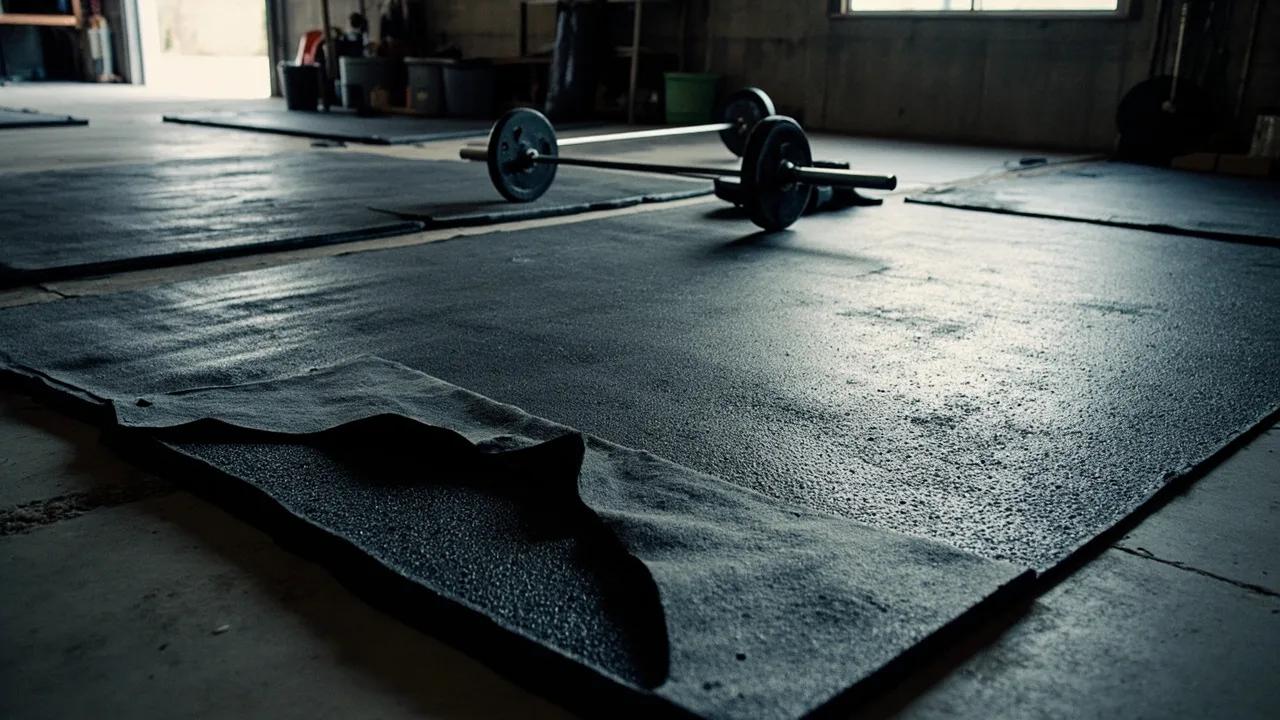
This is the easiest installation. Sweep the concrete clean, lay the mats down, and push them tight together. Done.
- No adhesive needed. The weight holds them in place.
- Butt the edges tight. They will not move once loaded with equipment.
- If your concrete is uneven, the mats will conform slightly, but major cracks or slopes should be addressed first with self-leveling compound.
Plywood / Wood Subfloor
Works great. Lay them directly on the wood.
- Moisture barrier: If you are on a ground-level wood floor, put down a layer of 6-mil plastic sheeting first to prevent moisture from being trapped between rubber and wood.
- The rubber will not damage wood flooring underneath, but sweat can seep through the seams and cause issues. Consider sealing seams with rubber sealant tape.
Carpet
This is the least ideal but still workable, especially if you are building a home gym in an apartment.
- Lay them directly on low-pile carpet. They will be stable enough for most exercises.
- Warning: High-pile or plush carpet will make the mats feel slightly squishy underfoot. Not dangerous, but not ideal for heavy squats.
- The rubber traps heat and moisture against carpet. Pull them up monthly to let the carpet breathe, or mold can develop.
How Many Mats Do You Need?
Each mat covers 24 square feet (4x6). Here is a quick reference:
| Gym Size | Area | Mats Needed | Cost |
|---|---|---|---|
| Small lifting platform (4x6) | 24 sq ft | 1 | ~$50 |
| Squat rack zone (8x6) | 48 sq ft | 2 | ~$100 |
| 10x10 room | 100 sq ft | 5 (with cuts) | ~$250 |
| Single car garage (10x20) | 200 sq ft | 9 | ~$450 |
| Two car garage (20x20) | 400 sq ft | 17 | ~$850 |
Budget move: You do not have to cover the entire floor. Buy 2-3 mats and cover just the lifting area — the zone around your rack and bench. That is where drops happen and where traction matters. This is especially smart for a budget gym under $200.
Horse Stall Mats vs. Rubber Rolls vs. Foam Tiles
| Feature | Stall Mats | Rubber Rolls | Foam Tiles |
|---|---|---|---|
| Thickness | 3/4" | 1/4" - 3/8" | 1/2" - 3/4" |
| Cost per sq ft | $2.00 | $1.50-$3.00 | $1.00-$1.50 |
| Durability | Indestructible | Good | Poor |
| Weight drop safe | Yes | Light drops only | No |
| Smell | Strong initially | Moderate | None |
| Cutting | Utility knife | Utility knife | Scissors |
| Best for | Lifting, deadlifts | Cardio, general | Yoga, stretching |
The verdict: Stall mats win for any gym where you lift heavy. Rubber rolls are a decent middle ground for cardio-focused spaces. Foam tiles are only acceptable for stretching areas or a senior exercise corner where you will never drop weight.
| Product | Best For | Price Range |
|---|---|---|
| ProsourceFit Exercise Puzzle Mat | Light exercise / yoga area | $45-$55 |
| Rubber-Cal Roll | Cardio zone flooring | $50-$80 |
| Heavy Duty Utility Knife | Cutting stall mats | $8-$12 |
Care and Maintenance
Horse stall mats are absurdly low-maintenance:
- Sweep or vacuum weekly to remove dust and chalk.
- Mop with warm water and a splash of Simple Green or dish soap monthly.
- Do not use bleach, acetone, or petroleum-based cleaners. They degrade rubber.
- Inspect quarterly for any separation at seams. Push them back together if they drift.
That is it. These mats will outlast your gym equipment, your house, and possibly you.
FAQ
How long does the horse stall mat smell last?
In a garage with ventilation, the smell is tolerable within 3-5 days and unnoticeable within 2-3 weeks. In an enclosed basement, plan for 3-6 weeks. Sunning and vinegar washing before installation cuts the time significantly. The smell is not toxic — it is just unpleasant.
Can I use horse stall mats over radiant floor heating?
Yes, but with a caveat. The 3/4 inch rubber acts as an insulator, so you will lose some heating efficiency. The mats will not be damaged by radiant heat, but your floor will take longer to warm the room. Most people find it acceptable since they are working out and generating body heat anyway.
Do horse stall mats damage hardwood floors?
Not directly. The rubber will not scratch or dent hardwood. However, trapped moisture (sweat dripping through seams) can cause warping or staining over time. Use a moisture barrier underneath and seal the seams if you are placing them on hardwood you want to preserve.
Are horse stall mats safe for indoor air quality?
The initial off-gassing produces volatile organic compounds (VOCs) that can irritate sensitive individuals. After the break-in period (2-6 weeks), VOC levels drop to negligible. If you have respiratory sensitivities, cure the mats outdoors for a full month before bringing them inside. Once cured, they are as inert as a car tire.
How do I prevent gaps between mats?
Push them tight against a wall on two sides and let the wall act as a backstop. For the remaining seams, the combined weight of the mats plus your equipment keeps them locked together. If you still get gaps, apply a thin bead of silicone caulk along the seam edges on the underside. Do not glue them to the floor — you will want to move them eventually.
Laying stall mats over basement concrete? The basement home gym layout guide covers the moisture, post-mapping, and ceiling-height work that has to happen before the mats go down.
Sourcing the iron used and the floor mats new? How to Buy Used Home Gym Equipment on Facebook Marketplace — the standard playbook: buy used for steel/iron, buy new for things that wear (mats, foam, motors).
Garage-gym setup also has a heat problem. Best Fans for a Garage Gym — fan picks and CFM math that keep stall-mat floors comfortable in summer.
Planning a garage install? Garage Gym Layout Ideas — where the mats, platform, and rack go in 1-car and 2-car floor plans.
Cold slab in winter? How to Heat a Garage Gym Without Blowing a Breaker — mats slow the heat loss underfoot, but condensation on cold steel is the problem that actually costs you a barbell.
Flooring changes the plate decision. Bumper plates vs iron plates — on proper matting, iron does the same job for about half the price.