Table of Contents
- Quick Answer
- Why Basements Beat Bedrooms (Most of the Time)
- Constraint 1: Ceiling Height (The Deal-Breaker)
- Constraint 2: Moisture (The Slow Killer)
- Constraint 3: Structural Posts (The Layout Tax)
- Flooring on Concrete (The Easy Part)
- Climate Control on a Budget
- Sound: Mostly Already Solved
- Lighting (Often Overlooked)
- Common Mistakes I See Repeatedly
- Frequently Asked Questions
- Next Steps
Key takeaways
Basement ceiling height is the single constraint that determines which equipment is even possible before addressing moisture or posts.
- Ceilings under 6'8" limit training to rowing and kettlebells; a full rack with pull-up bar needs 7'8"–8'4".
- Keep basement humidity below 55%; above 60% causes steel to rust and requires a dehumidifier plus concrete sealer.
- Map structural posts and ductwork before buying any equipment — posts can be repurposed as TRX or bag mounts.
- Lay concrete sealer before rubber mats; skip carpet, laminate, vinyl plank, and epoxy coatings under lifting zones.
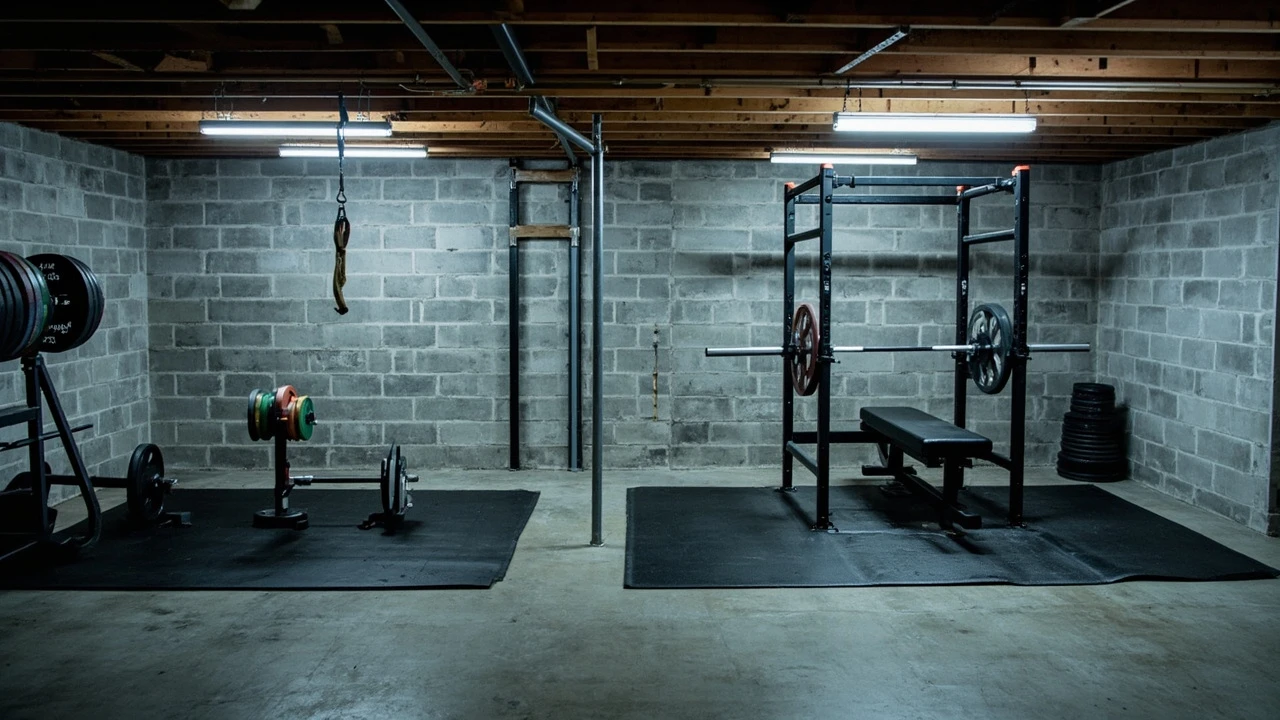
Basements are the most underrated home gym space. Concrete floors absorb deadlifts. Walls deaden plate clang. Climate stays moderate year-round. And almost nobody else in the family wants the space.
But three things kill more basement gym builds than budget ever does: ceiling height, moisture, and structural posts. Ignore any of them and you'll be the person who spent $2,000 on equipment that doesn't fit, smells like a wet sock, or has to share a floor with a steel column right where the rack belongs.
This is the layout guide I wish I'd had before I built two basement gyms — one in a 1950s ranch with 6'10" ceilings and a sump pump, and one in a finished 2010 build with 9' ceilings and zero structural surprises. The first taught me everything in this article. The second was easy because of the first.
Quick Answer
Plan a basement home gym in this order: (1) measure ceiling height at the lowest joist/duct — under 7' kills overhead pressing; (2) solve moisture before any equipment arrives (dehumidifier + concrete sealer is the $200 starter kit); (3) map structural posts and run rack/lifting zone on the longest unobstructed wall; (4) lay flooring on the concrete (horse stall mats, no plywood needed); (5) add lighting, fan, dehumidifier, and a wall thermostat for climate. Skip ahead and you'll buy gear that doesn't fit or rust within a year.
Why Basements Beat Bedrooms (Most of the Time)
A basement is the closest thing to a commercial gym most homes have:
- Concrete subfloor — no joist vibration to neighbors, no carpet to protect, no plywood platform needed. Drop the weight; the floor doesn't care.
- Walls are usually masonry — natural sound deadening. Plate clangs that would echo through a bedroom get absorbed by 8 inches of concrete block.
- Climate-stable — basements stay 55-72°F year-round in most climates. No summer heat, no winter freeze.
- Out of sight — no one complains about visual clutter. You can leave the bar loaded between sessions.
- Cheap to dedicate — basements are usually under-utilized. The opportunity cost vs a spare bedroom is near zero.
The catch is the three constraints below. Solve them once and the basement is the best gym space in the house. Don't solve them and you'll wish you'd used the garage.
Constraint 1: Ceiling Height (The Deal-Breaker)
This is the single most-skipped measurement. Builders don't list it. Real estate listings don't mention it. You have to measure it yourself.
Pull a tape measure from the concrete floor up to the lowest obstruction: the bottom of the joist above, the bottom of any ductwork, the lowest beam, the bottom of any plumbing.
| Lowest point | What you can do |
|---|---|
| 6'8" or less | Rowing, mat work, kettlebells under 24kg. No rack. No overhead press. |
| 6'8"–7'2" | Above + adjustable dumbbell work + bench press + most squats (no overhead). |
| 7'2"–7'8" | Above + foldable rack with pull-up bar removed + barbell back squat for most heights. |
| 7'8"–8'4" | Full rack + bench + standard pull-up bar (depends on rack height). |
| 8'4"+ | Anything goes. This is commercial-tier headroom. |
A common basement trap: 6'10" at the lowest beam. You buy a rack, find the base is 7'2" without the pull-up bar, return it, and start over with adjustable dumbbells and a foldable bench. The whole gym took 80 square feet because I couldn't squat heavy. Total budget I wasted: $400 in returned equipment + freight back to the warehouse.
How to fight low ceilings
If your lowest obstruction is 6'10"–7'2" and you're 5'10" or taller, your options narrow fast:
- Drop the bench, not the rack. A low-profile bench (15" pad height) buys you 2" of clearance vs a standard 17" bench.
- Skip the pull-up bar on the rack. A rack base is typically 7'0"–7'2"; the pull-up bar adds another 6"–10".
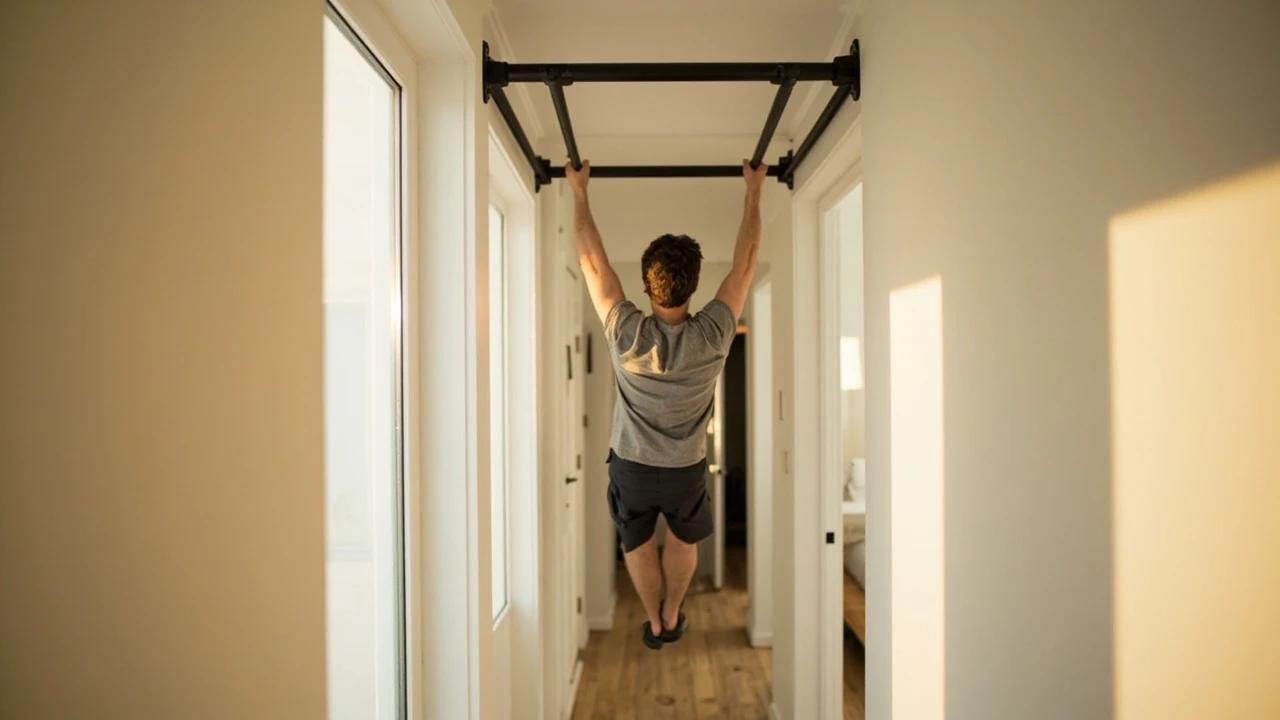
- Wall-mounted pull-up bar. Mount it BETWEEN joists where the room is taller. Saves 6"+ over a rack-mounted bar.
- Doorway pull-up bar in a different room. Skip the basement pull-up entirely.
- Use bumper plates exclusively. They're shorter (in stack height) than iron plates, helping with low-ceiling overhead movements.
If the lowest point is under 6'8", accept the constraint and design around it. A basement-as-cardio-and-accessory room is still a usable gym. See The Complete 5-Step Home Gym Guide for goal-driven equipment selection that doesn't require a rack.
Constraint 2: Moisture (The Slow Killer)
Basements aren't dry. Even "dry" finished basements average 50-65% relative humidity vs 35-45% on the first floor. Steel rusts above 60% humidity. Iron plates pit. Barbell knurling gets gritty. Within 12 months a steel rack in an unhandled basement starts looking like equipment from a shipyard.
Diagnose first
Buy a $15 hygrometer. Stick it in the basement for a week. Read it at:
- Coldest part of the morning
- Mid-day after sun warms the house
- After a heavy rain (or run the sprinkler outside for 30 minutes)
| Average humidity | Action |
|---|---|
| < 45% | You're set. Skip to flooring. |
| 45-55% | One dehumidifier in the gym corner. ~$200 starter unit. |
| 55-70% | Dehumidifier + concrete sealer on floor + check for wall seepage. ~$300 total. |
| > 70% | Stop. Find the water source. Likely needs a sump pump, gutter rerouting, or French drain before you spend a dollar on equipment. |
The $200 dehumidifier-first build
If your humidity hovers in the 50s, a single 30-pint dehumidifier (Frigidaire, GE, hOmeLabs) parked near the equipment keeps the gym corner under 50% RH year-round. Set it to 45-48% and let it run. Drain it via a garden hose into the floor drain or sump basket so you don't have to empty buckets.
This single $200 spend will save you thousands in rust replacement over the life of the gym.
Concrete sealing
If the concrete floor feels cold and wet to the touch — or you see any white/chalky efflorescence — seal it before laying floor mats. A 1-gallon bucket of penetrating concrete sealer ($30-40) covers ~400 sq ft and stops water vapor from rising through the slab. Apply, let cure 24 hours, then lay mats.
Constraint 3: Structural Posts (The Layout Tax)
Many basements have steel I-beams or concrete posts every 12-16 feet. They look like nothing — until you try to put a rack where one stands. Then they're everything.
Map them first
Before anything else, walk the basement with a piece of chalk and mark every:
- Steel post or column
- HVAC duct hanging from the ceiling
- Water heater, furnace, sump pump
- Electrical panel
- Window well or daylight window
The gym goes in the LARGEST contiguous rectangle that contains none of these.
Real layouts
Tiny basement: 8×10 ft, one post in corner
  +----------+
  | rack     |  ← rack against far wall
  | + bench  |
  |          |
  | walkway  |
  |          |
  | mat zone |
  +----+-----+
       | post
       +-----
Rack on the long wall, bench under it, mat in the middle for warm-up and stretching. Storage on the side wall opposite the rack.
Medium basement: 10×14 ft, post mid-floor
  +-------------+
  | rack | bench|
  |      |      |
  |  POST       |
  | mat  | bike |
  |      |      |
  +-------------+
Post becomes a natural divider between lifting zone (left) and cardio/accessory zone (right). The post itself is great for hanging bands, towels, and stretching against.
Large basement: 16×20 ft, two posts
  +------------------+
  | rack             |
  | + bench          |
  |   POST   POST    |
  | dumbbells | rower|
  |           |      |
  | bike      | mat  |
  +------------------+
Lifting zone gets one of the two longest walls. Cardio cluster on the opposite wall. Posts mark the boundary between the two zones.
Post workarounds
- Hang a TRX strap from a post-mounted bracket — turns the post into a training asset.
- Mount a heavy bag bracket on a post — saves wall space and uses the post's load capacity.
- Plate storage hugged against a post — keeps plates off the lifting-zone floor.
- Don't try to remove a post. They're structural. Hiring an engineer to install a microlam beam to replace a post is a $3,000-$8,000 project and rarely worth it for a home gym.
Flooring on Concrete (The Easy Part)
Concrete is the best subfloor for a home gym. It's flat, heavy, doesn't transmit vibration to your neighbors, and won't get damaged by dropped plates. You do not need a plywood platform on top of concrete. Plywood is for protecting carpet and floating floors — concrete needs no protection.
What to lay on top
- 3/4" rubber horse stall mats (Tractor Supply, ~$50-60 each, 4×6 ft) are the gold standard. Lay them like puzzle pieces over the lifting zone. Two mats = 48 sq ft, enough for any rack + barbell setup. Read the full horse stall mat guide for installation tips.
- Interlocking foam tiles (3/4" EVA) work for mat-only/cardio zones but compress under heavy plate drops. Avoid in the lifting zone.
- Bare concrete with rubber dampening cubes under each plate-drop area works for budget builds. Adds vibration absorption only where it matters.
The big concrete-floor advantage: no platform building required. You can have the lifting zone laid down in 30 minutes for $100-120.
What NOT to do
- Don't carpet a basement gym. Carpet traps moisture against the concrete and turns into a mold sandwich within a year.
- Don't lay laminate or vinyl plank. They float and shift under barbell load, plus they hide moisture issues until it's too late.
- Don't paint the floor under the lifting zone. Epoxy paint chips under plate drops and looks worse than bare concrete after six months.
Climate Control on a Budget
Basement climate is usually 55-72°F passively, which is great for lifting. The problems are airflow and humidity (covered above).
The minimum kit
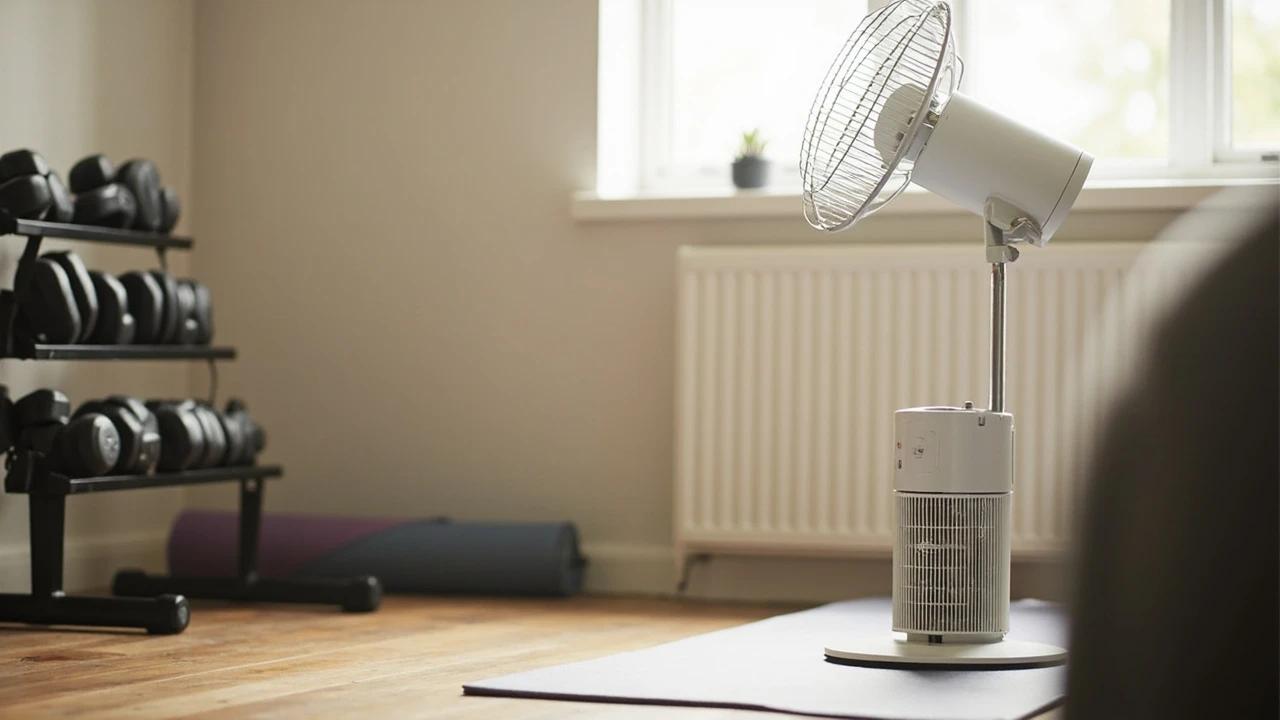
- One 20" floor fan ($30) on a wall hook for air movement. Basement air goes stagnant fast.
- One dehumidifier ($200) running 24/7 in summer, 8 hrs/day in winter. (See moisture section.)
- Small electric space heater ($40) for the 2-3 coldest months if your basement drops below 55°F. Run it 30 min before workouts; never leave it unattended.
- An open dehumidifier-drain to the floor drain or sump — eliminates the daily-bucket-empty chore.
That's it. No HVAC retrofitting required for most basements.
When to upgrade to mini-split
If you live somewhere with extreme summer humidity (Gulf Coast, Mid-Atlantic, parts of the Midwest) and you're going to use the gym year-round, a mini-split air conditioner ($1,200-1,800 installed) pays for itself in equipment longevity within 5 years vs the dehumidifier-only approach. Doesn't apply for dry climates.
Sound: Mostly Already Solved
Basements have the best inherent sound deadening in the house. The concrete walls + concrete floor + earth on the outside of the foundation walls absorbs 70-80% of the sound that would otherwise travel through a frame floor.
But the path upward through the joists to the floor above is wide open. If anyone lives directly above the basement gym, your impact noise will travel straight to their feet.
The fix is the same as any home gym soundproofing — rubber stall mat over the lifting zone, plywood + rubber sandwich for the heaviest impact area, and felt pads under plate storage. See the full soundproofing guide for the layered approach and budget tiers.
If the basement is fully detached from living space (e.g., the floor above is a garage or unused storage), skip the sound treatment entirely. The concrete walls handle the rest.
Lighting (Often Overlooked)
Basements are usually too dark. A standard basement has one 60W incandescent bulb every 100 sq ft. That's about 1/5 the lighting density of a commercial gym, and it makes form-checking nearly impossible.
The cheap upgrade: two 4-foot LED shop lights ($25 each, plug-in) mounted to the joists above the lifting zone. Total cost: $50. Light output: 8,000 lumens, equivalent to a small office.
If you have a daylight window or window well, position the lifting zone to face the window — natural light during the day makes weekday-morning training feel less like a dungeon and more like an actual gym.
Common Mistakes I See Repeatedly
- Buying the rack before measuring ceiling height. This single mistake costs more home gym builders more money than anything else.
- Skipping the dehumidifier. "It feels dry down here" — your hygrometer will disagree. Rust costs more than the dehumidifier within 12 months.
- Building the gym around a post instead of away from it. The post is permanent. Move the rack 4 feet left.
- Carpet remnants under the lifting zone. Moisture trap, plus the carpet compresses under load and bunches.
- No floor drain on the dehumidifier. Six months in, you stop emptying the bucket, the basement gets humid, your rack rusts. Run a hose to a floor drain on day one.
- Painting the floor. Looks great for two months. Looks awful for 8 years.
- Treating sound when no one lives upstairs. Wasted money. Basement walls handle 80% of it.
For the cross-cluster mistake list (not basement-specific), see Home Gym Mistakes to Avoid.
Frequently Asked Questions
Do I need to waterproof the walls before building a basement gym?
Only if water gets in. Run a sprinkler outside for 30 minutes and watch the walls. If you see seepage, dampness, or staining, fix the source (gutter, grading, French drain) before building. If walls stay dry after a hose test, you're good as-is — just run the dehumidifier.
How much does a basement gym cost to set up vs a garage gym?
Basement is usually $200-400 cheaper because you skip the platform (concrete is already there), skip insulation (basement is climate-stable), and skip most flooring (rubber mats over concrete). Equipment costs the same. See How Much Does a Home Gym Cost? for full cost breakdowns by tier.
Can I lift heavy on a concrete basement floor without a platform?
Yes — concrete handles 3,000+ psi of compressive load. Drop a 405lb deadlift on a 3/4" rubber stall mat over concrete: zero problem. The concrete doesn't care, the plates are protected by the mat, and the noise is absorbed by the floor mass.
What about smell? Basements smell weird.
The dehumidifier eliminates 80% of "basement smell" (mold/mildew off-gassing). For the remaining mustiness, run a fan and crack a window for 10 minutes a day. If smell persists after dehumidification, you have an active moisture source (leak, seepage, dripping pipe) that needs to be diagnosed.
Should I finish the basement before building the gym?
No. Drywall, paint, and ceiling tiles are unnecessary for a gym. Unfinished basements are cheaper, easier to upgrade, and reveal moisture issues faster (you can see them, not just smell them). Keep the gym in an unfinished section if you can.
My basement has only 6'6" ceilings. Is a home gym even possible?
Yes — just not a rack-based one. Build around adjustable dumbbells, kettlebells, bands, and a flat bench. You can run nearly any strength program for years on that setup. Skip overhead movements (they need 7'+) and substitute push-press with a heavier strict press. See the complete 5-step build guide for goal-driven setups that don't require overhead clearance.
Is a basement better than a single-car garage for a home gym?
Depends on climate. In hot/humid climates, basements win every time (cool, stable, dry with a dehumidifier). In dry climates with extreme summer heat (Phoenix, Vegas), basements and garages are about equal — both need climate management. See the single-car garage layout guide for a head-to-head comparison.
Next Steps
Once you've measured, mapped, and dehumidified:
- Run through the complete 5-step home gym guide for goal + equipment selection that fits your ceiling height.
- Pick flooring — horse stall mats for concrete subfloor.
- If anyone lives above the basement, follow the soundproofing guide.
- Use the cost calculator to budget the build.
- If you're cramped on layout, the 10x10 home gym guide translates almost directly to basement spaces of the same dimensions.
Basements reward planning more than any other home gym space. Get the three constraints right and you have the best gym room in the house. Skip them and you'll be the person on Craigslist next year selling a rusty rack.
Picking cardio for a basement layout? Best Compact Cardio Machines — the air bike and Concept2 rower work best in basements; walking pad doubles as recovery cardio.
Basement stays cool, garage doesn't. If you also train in a garage during off-seasons, Best Fans for a Garage Gym covers the summer ventilation problem basements never have.
Is your usable basement zone roughly 12×12? 12x12 Home Gym Layout (Floor Plan Included) — the dimension-specific plan to pair with this guide.
Short on basement floor space? Best Wall-Mounted Gym Equipment — folding racks and wall-mounted storage that keep the training footprint near zero.
Low basement ceiling? Squat Rack vs Power Rack — rack heights compared, including the short-rack and stand options that fit under 7-foot ceilings.
Map your basement before you haul anything down. Use the 3D gym planner to drop equipment into your room size and spot conflicts early.
Comparing a basement against the garage? The Garage Gym Gap — the measured case for why a basement corner usually beats a shared garage bay.
Exposed joists are a pull-up bar waiting to happen. Best Pull-Up Bars for Home: Doorway, Wall & No-Drill — the two ceiling-mount bars rated 500 and 600 lb, and how to find the joist centre before drilling.
Moving air in a basement: Best Fans for a Home Gym: 5 Quiet Picks by Decibel — ceiling height usually rules out a ceiling fan down here, which leaves the portable options that guide ranks by noise.