
Table of Contents
- Quick Answer
- Related guides
- Priority 1: Flooring ($50-200)
- Priority 2: Adjustable Dumbbells ($150-400)
- Priority 3: Olympic Barbell ($150-300)
- Priority 4: Plates ($200-400)
- Priority 5: Adjustable Bench ($100-240)
- Priority 6: Squat Stand or Rack ($180-900)
- Priority 7: Pull-Up Bar ($60-90)
- Priority 8: Cardio ($200-990)
- Priority 9: Accessories ($50-200)
- Common Inversions (Don't Do These)
- Quick Priority Order by Budget
- Frequently Asked Questions
Key takeaways
Flooring comes first, then adjustable dumbbells, then a barbell and plates, then a bench and a rack — buying in this order prevents wasted money on equipment with nowhere to go.
- A barbell covers 20+ exercises versus a treadmill's one; it should take priority over any cardio machine.
- A rack without plates is useless — buy plates ($1.20–1.50/lb used) before or alongside the rack.
- Adjustable dumbbells (e.g., Bowflex SelectTech 552 or PowerBlock Elite 90) cover 95% of movements and replace 10–15 fixed pairs.
- Spread the full build over 3–12 months, roughly one purchase per month, to avoid costly impulse buys.
The biggest home gym mistake: buying in the wrong order. People spend $400 on a treadmill before they own a barbell. Others buy a $1,000 rack before they have any plates to put on it.
Here's the priority order that actually works.
Quick Answer
Buy in this order:
- Flooring ($50-200) — protects your floor, makes everything else possible
- Adjustable dumbbells ($150-400) — maximum versatility per dollar
- Olympic barbell ($150-300) — foundation of barbell training
- Plates ($200-400) — start with 175 lb
- Adjustable bench ($100-240)
- Squat stand or rack ($180-900)
- Pull-up bar ($60-90)
- Cardio ($200-990)
- Accessories ($50-200 as needed)
Related guides
- Home gym cost calculator
- How much does a home gym cost (tier breakdown)
- Home gym mistakes to avoid
- Home gym checklist
Priority 1: Flooring ($50-200)
Why first: Everything else goes on top. Replacing flooring after you've moved in a rack is miserable.
- Horse stall mats (4x6, 3/4" thick): $60-75 each — covers ~24 sq ft per mat
- Rubber gym tiles: $2-4 per sq ft — premium look, more cost
- Interlocking foam (bodyweight only): $20-40 total — NOT for barbell work
Minimum: 1 horse stall mat under your primary lifting zone. Expand as budget allows.
Priority 2: Adjustable Dumbbells ($150-400)
Why second: Adjustable dumbbells cover 95% of movements at any training level. Curls, rows, presses, lunges, goblet squats — all possible with one pair.
Picks:
- Bowflex SelectTech 552 (cheaper bought used) — most common
- PowerBlock Elite 90 — premium, more weight range
- Used fixed-weight dumbbells ($1/lb) — if you know what weight you need
Rule: Don't buy fixed dumbbells unless you're sure you want a specific weight long-term. Adjustables win for 3+ years of progression.
Priority 3: Olympic Barbell ($150-300)
Why third: The barbell is the single highest-leverage piece of equipment ever invented. One bar + plates enables squat, bench, deadlift, press, row — the foundation of all strength training.
Picks:
- Budget: CAP OB-86PB, Rep Colorado Bar
- Best all-around: Rogue Ohio Bar ($300) — 190K PSI, bronze bushings
- Olympic lifts: Rogue Bella 2.0 or Rep Alpine
Don't: buy a "standard" 1" sleeve bar. Olympic (2") is the only format worth using. Standard bars use incompatible plates and max out under 300 lb.
Priority 4: Plates ($200-400)
Why fourth: A bar without plates is a very long piece of metal. Buy plates right after (or with) the bar.
Starter set: 175 lb (2x 45, 2x 25, 2x 10, 2x 5, 2x 2.5) — covers most beginner-to-intermediate needs.
Used is your friend. Iron plates at $1.20-1.50/lb used vs $1.50-2/lb new. Facebook Marketplace constantly has full sets.
Iron vs bumpers: Iron is cheaper, quieter, more durable. Bumpers only matter if you drop from overhead.
Priority 5: Adjustable Bench ($100-240)
Why fifth: Doubles what you can train. Flat, incline, decline bench press. Incline dumbbell work. Seated shoulder press. Row support.
Picks:
- Budget: Flybird FB149 — folds flat
- Mid: Rep AB-3000 ($240) — sturdy, lifetime warranty
- Premium: Rogue AB-3.0 ($500) — competition-grade
Priority 6: Squat Stand or Rack ($180-900)
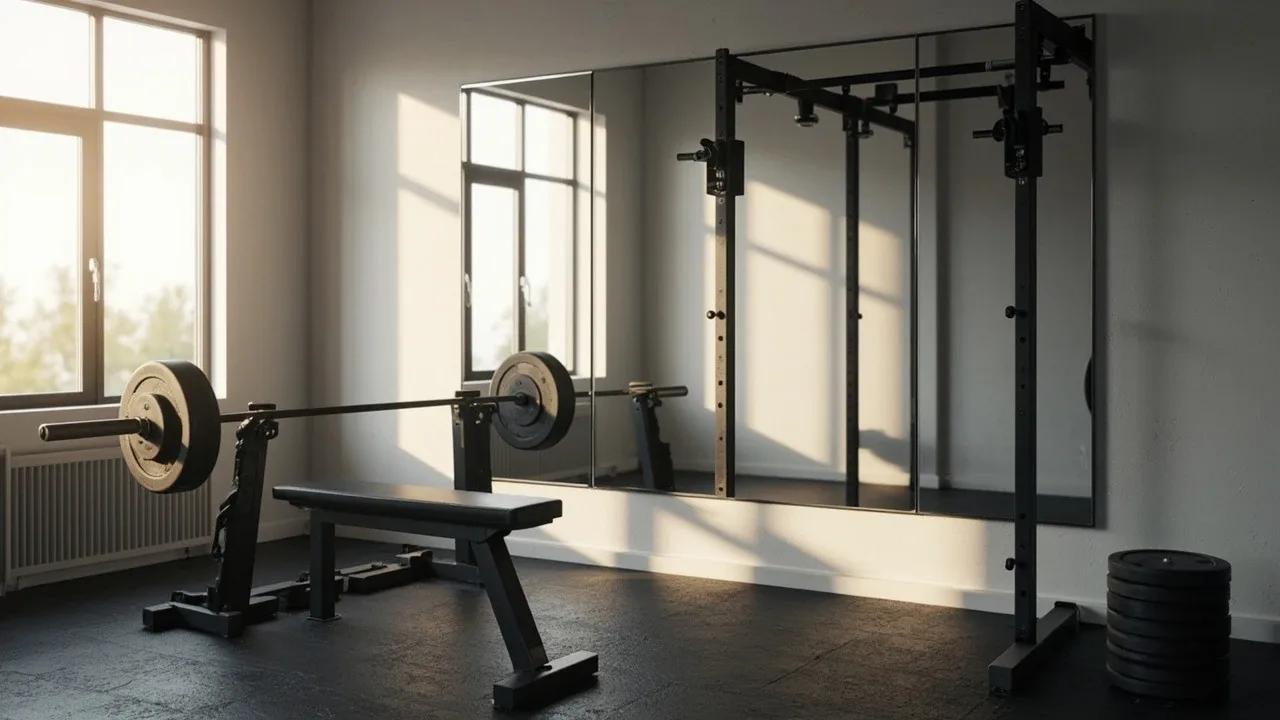
Why sixth (not first): A rack is expensive. You can squat and bench without one if you're clever — floor press, front squat with power cleans, etc. — though safety matters at intermediate weights.
Picks by budget:
- Squat stand: Titan T-2
- Compact rack: Rep PR-1100 ($380)
- Full rack: Rep PR-4000 ($800) or Rogue R-3 ($900)
Bridge option: a Budget DIY power rack gets you from $800 down to a fraction of that with a weekend of work.
Priority 7: Pull-Up Bar ($60-90)
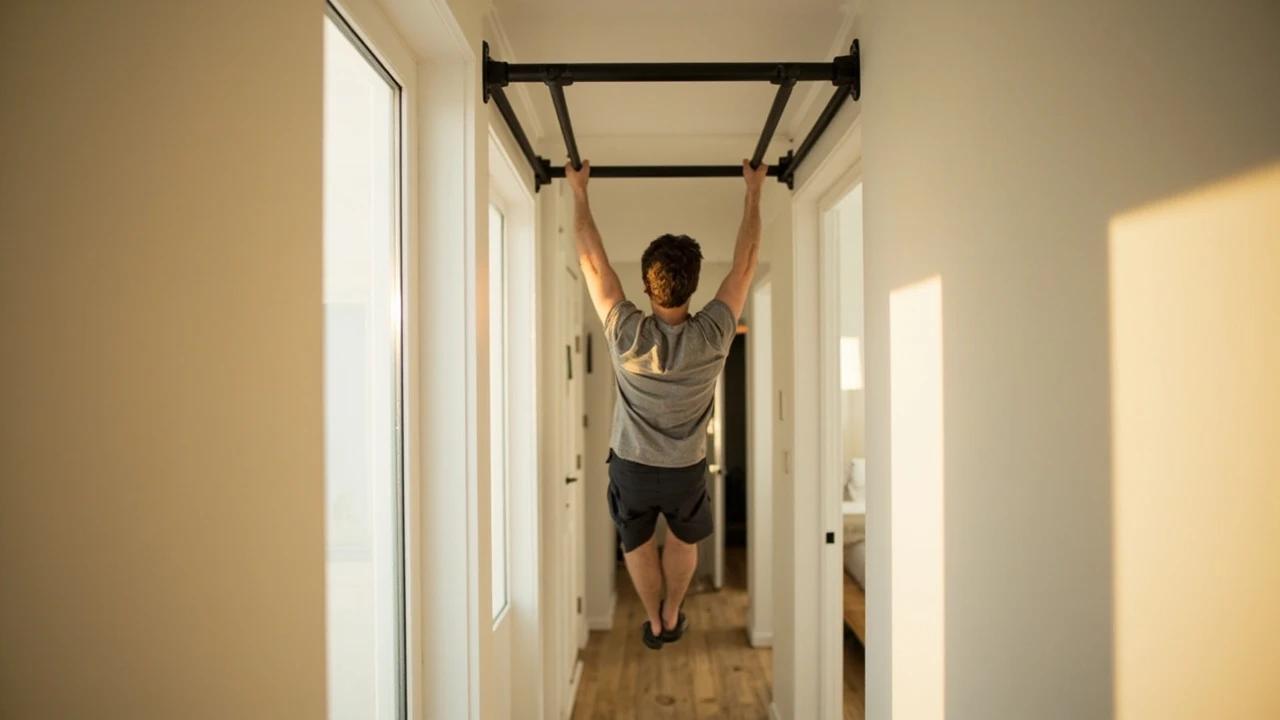
Why seventh: Bodyweight pulling is trainable on a doorframe bar in the meantime. Upgrade to wall-mounted when you have dedicated gym space.
- Doorway bar (Iron Gym): $30
- Wall-mounted bar (Titan, Rep)
Priority 8: Cardio ($200-990)
Why late: Running outdoors is free. HIIT and conditioning work with minimal equipment. Dedicated cardio machines are nice but nowhere near first-tier priority.
- Walking pad: $200-400 (underrated; fits anywhere)
- Concept2 RowErg (formerly the Model D): gold standard, lasts forever
- Assault bike: $750 (conditioning work)
Priority 9: Accessories ($50-200)
Add as needed, in this order of usefulness:
- Chalk ($10)
- Lifting belt ($40-80)
- Wrist wraps ($20)
- Straps ($20)
- Resistance bands (if not already owned) ($30-50)
- Foam roller ($20)
Common Inversions (Don't Do These)
People frequently buy in this wrong order:
- Treadmill before barbell — Treadmill serves one exercise; barbell serves 20+
- Full rack before plates — Rack without weights is furniture
- Designer bench before plates — Plates are foundational; bench can be basic to start
- Smart mirror/Tonal before barbell — Novel does not equal better for strength gains
- Cable machine before anything else — Useful, not foundational
Quick Priority Order by Budget
$500 budget: Flooring + adjustable dumbbells + barbell + 135 lb plates + budget bench $1,000 budget: Above + squat stand + more plates (175 lb) $1,500 budget: Above + upgrade to full rack + adjustable bench $2,000 budget: Above + 300 lb plates + walking pad + accessories
Use our cost calculator for a space-and-budget-specific plan.
Frequently Asked Questions
What's the first thing to buy for a home gym?
Flooring, then adjustable dumbbells. Flooring is non-negotiable before any heavy lifting. Dumbbells are the single most versatile piece of equipment you can buy.
Do I need a rack?
Not immediately. You can squat with a barbell on the floor (power clean into squat) or use spotter arms. A rack is a priority 6 purchase, not priority 1.
Dumbbells or barbell first?
Dumbbells if your budget is under $500. Barbell if you have $500+ and want to squat/bench/deadlift heavy. Ideal: get both.
Should I buy used or new?
Used for plates, racks, bars, benches. New for adjustable dumbbells. Always inspect used equipment for structural damage.
How long should a home gym build take?
Most people build over 3-12 months, one purchase per month as budget allows. Rushing a full build wastes money on the wrong items.
Need the bigger picture first? How to Build a Home Gym: The Complete 5-Step Guide — the cornerstone walkthrough covering space, budget, goals, equipment order, and layout in one place.
Need specific dumbbell picks? Best Budget Adjustable Dumbbells — five vetted picks, sorted by mechanism and use case.
Need the order at the entry tier specifically? Best Starter Home Gym Equipment — the same priority logic applied to the 8-item starter kit.
Looking at racks specifically? best budget squat racks — the 5 picks that match the recommended purchase order at each budget tier.
Wondering when the spend pays off? How Much Does a Home Gym Cost vs Gym Membership in 2026? lays out break-even at every budget tier — useful for deciding how aggressive to be on each purchase in this order.
Adding a kettlebell to the build? Best Kettlebells for a Home Gym — the adjustable-vs-cast-iron decision, sizing for men and women, and the specific bells worth buying.
Starting with the cheapest essentials first? Cheapest Home Gym Equipment — the low-cost picks that belong at the very top of the buying order.
Building on a modest budget? Best Affordable Home Gym — five goal-specific builds that fit the budget, plus the single best setup for most people.
Free, and worth doing before purchase one: know what you should be eating. Nutrition costs nothing to plan and drives results more than any single piece of gear — start with the calorie and macro calculator.
Sizing the bar itself? What size barbell do you need — a 7 ft bar racks because its shaft spans 51.5 in; most 6 ft bars span 44.5 in and fall through the J-cups.
Choosing the plates themselves? Bumper vs iron — iron costs about half as much per pound and loads far more on the bar; bumpers buy you drops and quiet.
Where recovery gear belongs in the order: Best Massage Guns for Home Gyms: Amplitude & Stall Force — not near the top, and the guide says so plainly. It also takes a drawer rather than floor space, which is why it survives small builds.