Table of Contents
Key takeaways
A complete starter home gym requires at least 64 sq ft, a $500–800 equipment budget before a rack, and flooring installed before any iron arrives.
- Minimum space is 8×8 ft (64 sq ft) with an 8 ft ceiling; 10×10 ft (100 sq ft) is comfortable for most setups.
- Core equipment costs: adjustable dumbbells $150–400, Olympic barbell $150–300, adjustable bench $100–240, squat stand or rack $180–800.
- Allocate 70–80% of budget to equipment, 10–20% as a surprise buffer, and 5–10% to flooring.
- A $500–800 home gym recoups its cost in 5–8 months compared to a $1,200/year membership.
Building a home gym is 30% training and 70% planning. This checklist covers every decision before you spend a dollar — space, budget, equipment, safety, and finishing touches.
Work through it top to bottom. By the end, you'll have a clear buying plan and zero surprise costs.
Quick Answer
The 7 sections:
- Space assessment — dimensions, ceiling, floor, climate
- Budget planning — tier selection, hidden costs
- Flooring first — horse stall mats, tiles, underlayment
- Core equipment — dumbbells, bar, plates, bench, rack, pull-up bar
- Accessories — cardio, storage
- Safety — anchoring, lighting, first aid
- Post-setup — maintenance, upgrades, replacements
Related guides
- Home gym cost calculator
- How much does a home gym cost (tier breakdown)
- What to buy first for a home gym
- Home gym mistakes to avoid
Section 1: Space Assessment
Before spending any money, answer these:
- Room dimensions: length x width x height (measured with tape, not eyeballed)
- Usable floor area: length x width after subtracting fixed obstacles
- Ceiling height: minimum 8 ft for most lifters; 9 ft for tall lifters or kipping
- Door width: check if a 4x6 horse stall mat (flat) will fit through
- Floor type: concrete, hardwood, carpet, LVP — affects flooring plan
- Climate: temp range throughout year; humidity; ventilation
- Electrical: outlet count, 20-amp circuits for cardio machines
- Natural light: window placement affects layout
- Shared walls: downstairs neighbors? noise impact?
- Usage: dedicated gym? shared (guest room / office)?
Section 2: Budget Planning
- Total budget: write an actual dollar number
- Equipment cost: 70-80% of total
- Flooring cost: 5-10% of total
- Accessories / consumables: 5-10% of total
- Buffer for surprises: 10-20% reserve
- Tier decision: Minimalist, Starter, Core, Full, or Premium (see cost tiers)
- New vs used split: plan target % used
Section 3: Flooring (Buy First)
- Primary flooring: horse stall mats, rubber tiles, or interlocking foam
- Coverage area: at minimum, lifting zone (~32 sq ft)
- Thickness: 3/4" minimum for barbell work
- Underlayment: plywood or vapor barrier if over carpet/concrete
- Edge finishing: aluminum threshold trim or tuck-under strategy
Section 4: Core Equipment (Prioritized)
Buy in this order (see what to buy first for detail):
- Adjustable dumbbells ($150-400)
- Olympic barbell ($150-300)
- Plate set (245 lb minimum): iron or bumper
- Adjustable bench ($100-240)
- Squat stand or power rack ($180-800)
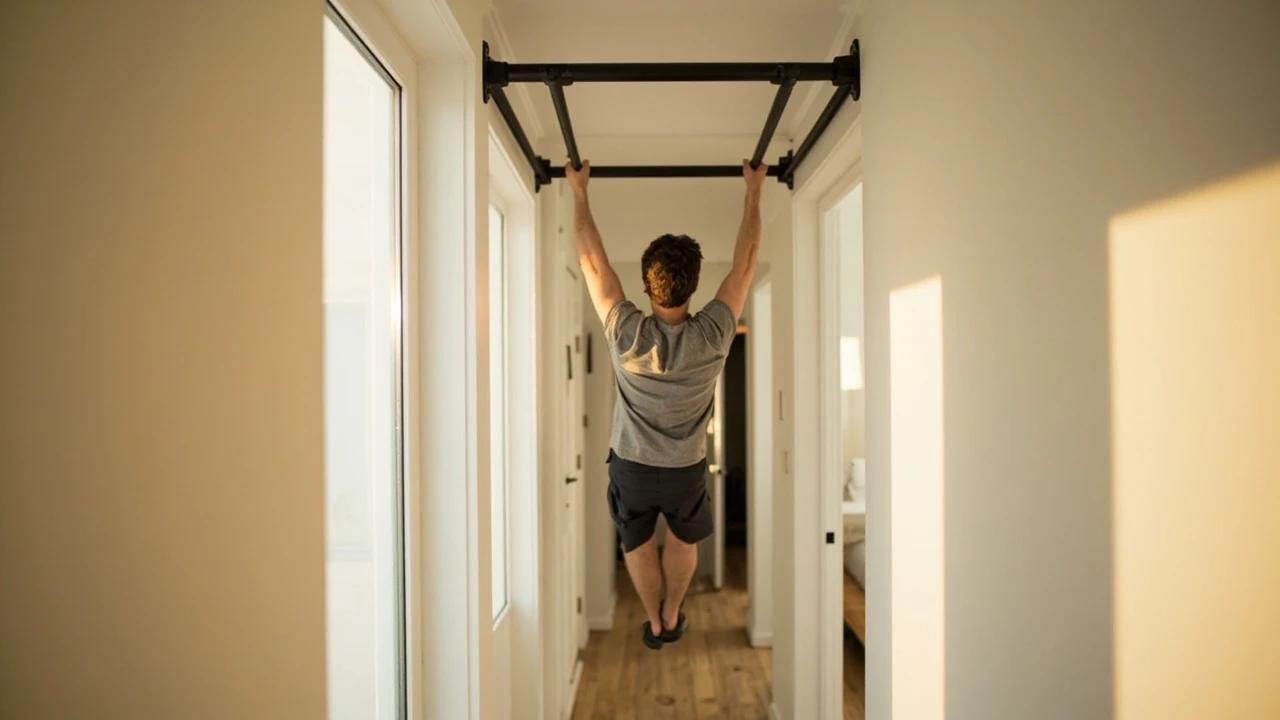
- Wall-mounted pull-up bar ($60-90)
Section 5: Accessories
Add as needed, not upfront:
- Cardio (optional): walking pad, rower, or bike
- Storage: plate tree, bar rack, pegboard
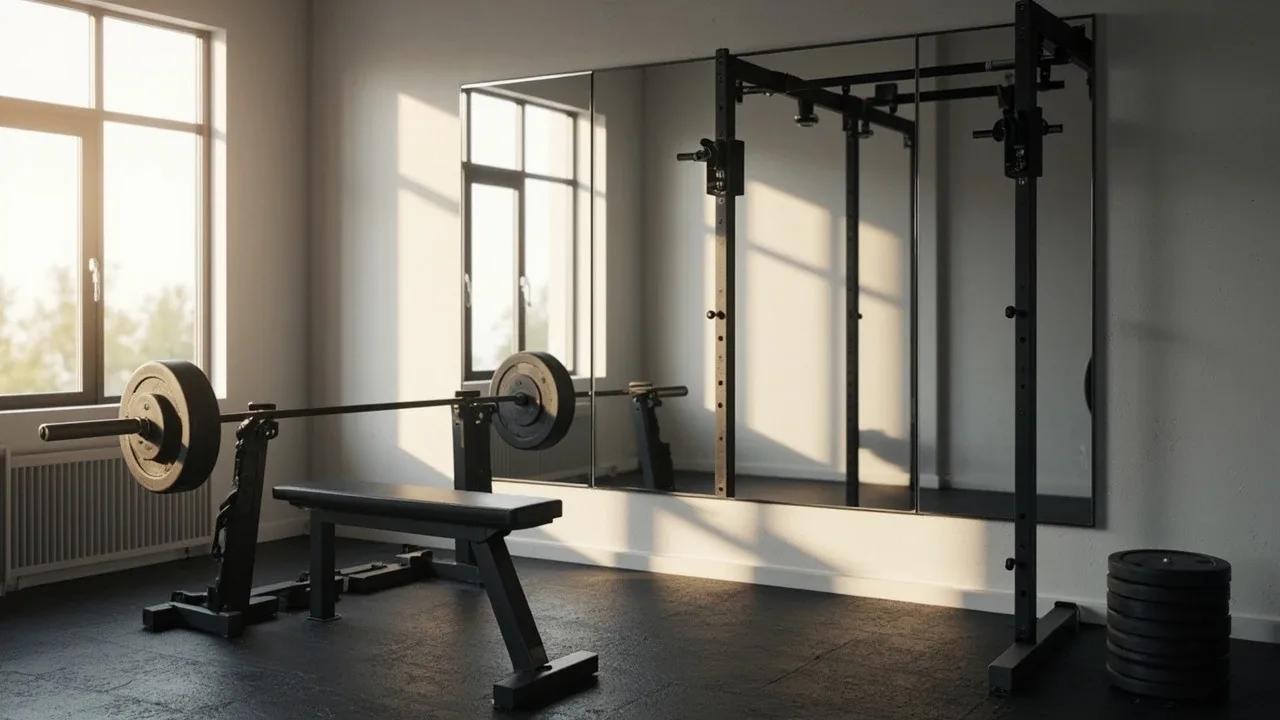
- Mirrors: 3x5 ft for form check
- Mat storage: rolling cart if shared space
- Chalk + belt + straps (as training demands)
Section 6: Safety
Non-negotiables:
- Wall anchor the rack (or add 200+ lb base ballast)
- Steel pipe safety bars (not wood) at squat height
- Lighting: minimum 300 lumens/sq ft in lifting zone
- First aid kit for minor injuries
- Collars for barbell (prevent plate slides during shakes)
- Clear walkways — no plates on floor
- Phone within reach during heavy lifts (you may need it)
Section 7: Post-Setup Maintenance
- Monthly: inspect rack bolts, pulleys, cable condition
- Monthly: oil bar (especially in humid environments)
- Quarterly: tighten flooring if shifting
- Annually: replace worn consumables (bands, straps, chalk)
- Annually: major inspection for cracks in DIY equipment
- As needed: upgrade bars/plates/rack when you outgrow current gear
When to Add a Second Round of Equipment
Signs you're ready for a buying round 2:
- You use every piece of your gym weekly
- You're hitting weights at the upper range of your plate set
- You've trained consistently for 6+ months
- You've identified specific exercises you want to add
Don't add equipment "just in case." Add it when training pulls you toward it.
Frequently Asked Questions
What do you need for a home gym?
At minimum: flooring, adjustable dumbbells, an Olympic barbell, 245 lb of plates, and an adjustable bench. Total: $500-800. Add a squat stand or rack when you've trained consistently for a few months.
Home gym essentials checklist — what can't I skip?
Flooring (always), adjustable dumbbells and a barbell + plates, and an adjustable bench. Without these, you can't train comprehensive full-body strength.
What do I need for a home gym in a small space?
Wall-mounted foldable rack (or no rack), adjustable dumbbells, a barbell + plates, folding bench, wall-mounted pull-up bar, horse stall mat. Everything folds or mounts to the wall when not in use.
How much space do I need for a home gym?
Minimum 8x8 ft (64 sq ft) with 8 ft ceilings for a serious strength setup. 10x10 (100 sq ft) is comfortable. 12x12 (144 sq ft) is ideal with cardio + storage included.
Just getting started? How to Build a Home Gym: The Complete 5-Step Guide — the cornerstone walkthrough that puts this checklist in context, from picking the room to laying the floor.
Should you keep paying for a gym while you build this list? How Much Does a Home Gym Cost vs Gym Membership in 2026? — a $350 home gym pays for itself in under 5 months vs a typical $1,200/year membership.
Short on square footage? Best Home Gym Equipment for Small Spaces — the checklist trimmed down to the foldable, stackable, and wall-mounted picks that survive a small room.
Planning a 12×12 room? 12x12 Home Gym Layout: Complete Setup Guide — match this checklist against the 144 sq ft floor plan.
Building on a small budget? Best Starter Home Gym Equipment — the checklist narrowed to the 8 items that matter most at this tier.
One more box worth ticking: your calorie target. It costs nothing and shapes every result the equipment on this list can give you. Work it out with the calorie and macro calculator.
Before you tick anything off: run your room through the free gym layout planner. It is much cheaper to discover a clearance problem in 3D than after the pallet arrives.
New to this and want the short version first? The get-started walkthrough covers space, equipment and budget in three steps — do that, then come back and work the checklist.
Is a mirror worth a line on the list? Home Gym Mirrors: What Size, How High, What It Costs — an honest look at when a $15 phone tripod does the job better.