Table of Contents
- Quick Answer
- Related guides
- Step 1: Measure Your Actual Space
- Step 2: The Core Equipment Picks (Ranked)
- Step 3: Flooring That Protects Your Floor (and Your Downstairs Neighbors)
- Step 4: Storage That Keeps the Room Usable
- Step 5: Noise Management
- Step 6: A Realistic Build Timeline and Budget
- Frequently Asked Questions
Key takeaways
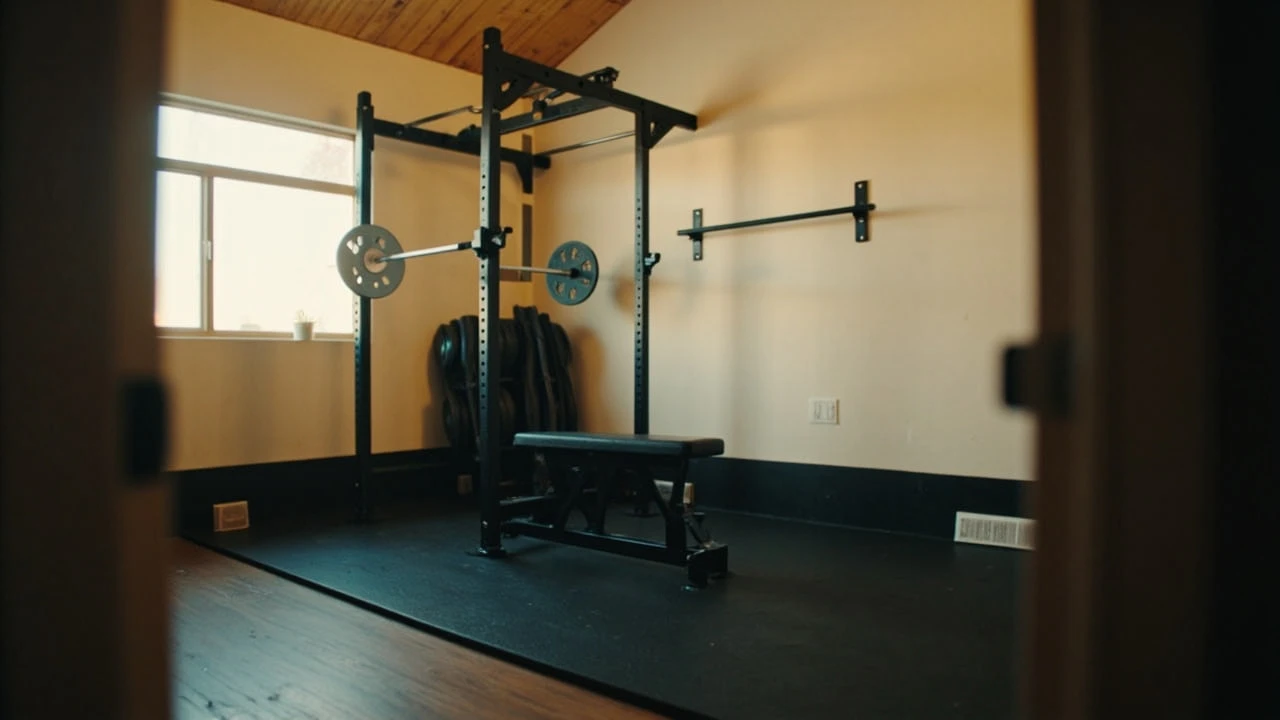
A 10×10 or 12×12 spare bedroom is enough for a complete barbell setup; a full build costs $600–$800 buying used.
- The Rep PR-1100 or Titan T-2 power rack, a quality Olympic barbell, and a 300 lb plate set cover the core setup.
- Minimum viable space is 60 sq ft of clear workout zone with at least 8 ft of ceiling height.
- 3/4" horse stall mats ($60–$75 each) protect floors and cut impact noise; foam tiles compress under barbell load and should be avoided.
- Dropping bumper plates on shared floors risks structural noise; controlled eccentrics keep iron-plate descents under 70 dB.
Most people agree a spare bedroom is a waste. A rarely-used guest room, a "future office," a room that collects boxes you'll sort "eventually." Turning it into a home gym isn't a compromise — it's the single highest-value use of that square footage.
Unlike garages (no climate control) and basements (moisture), a spare bedroom is already climate-controlled, clean, and private. You just need the right equipment — not too much, not too bulky, and not so loud it pisses off the rest of the house.
Here's the complete equipment plan for a spare bedroom gym that actually works.
Quick Answer
For a 10x10 or 10x12 spare bedroom, the top 5 equipment picks are:
- Compact power rack (Rep PR-1100 or Titan T-2) — the foundation
- Olympic barbell (Rogue Ohio Bar or Rep Colorado) — 7 ft, ~$200-300
- 300 lb plate set (Rep or Fringe Sport iron) — ~$250-350
- Adjustable bench (Rep AB-3000 or Flybird WB5)
- Horse stall mats (3/4", Tractor Supply) — ~$60 for 4x6
Budget $600-800 for a complete, serious setup if you buy used; new gear costs more.
Related guides
- Home Gym by Room Size (complete guide)
- 10x10 home gym layout with floor plan
- Best equipment for small spaces
- Vertical storage solutions
Step 1: Measure Your Actual Space
Most spare bedrooms are between 10x10 and 12x12. Before buying anything, measure:
- Floor area: length × width. You need a clear workout zone of at least 60 sq ft.
- Ceiling height: Stand, press a broomstick overhead, and add 6 inches. That's your minimum. Most bedrooms are 8 ft — enough for barbell overhead press if you're under 6'2".
- Door width: Standard interior doors are 30". A 4x6 horse stall mat will NOT fit through rolled — plan to carry it diagonally or cut it in half.
- Window placement: You want the rack along a windowless wall. Natural light is great; slamming a barbell near a window is not.
- Floor type: Carpet, hardwood, LVP, or concrete subfloor all behave differently. This determines your flooring plan (see below).
Rule of thumb: If your spare bedroom is under 80 sq ft, skip the full rack. Use a squat stand or adjustable dumbbells instead. Under 60 sq ft, go bands and bodyweight.
Step 2: The Core Equipment Picks (Ranked)
1. A Compact Power Rack
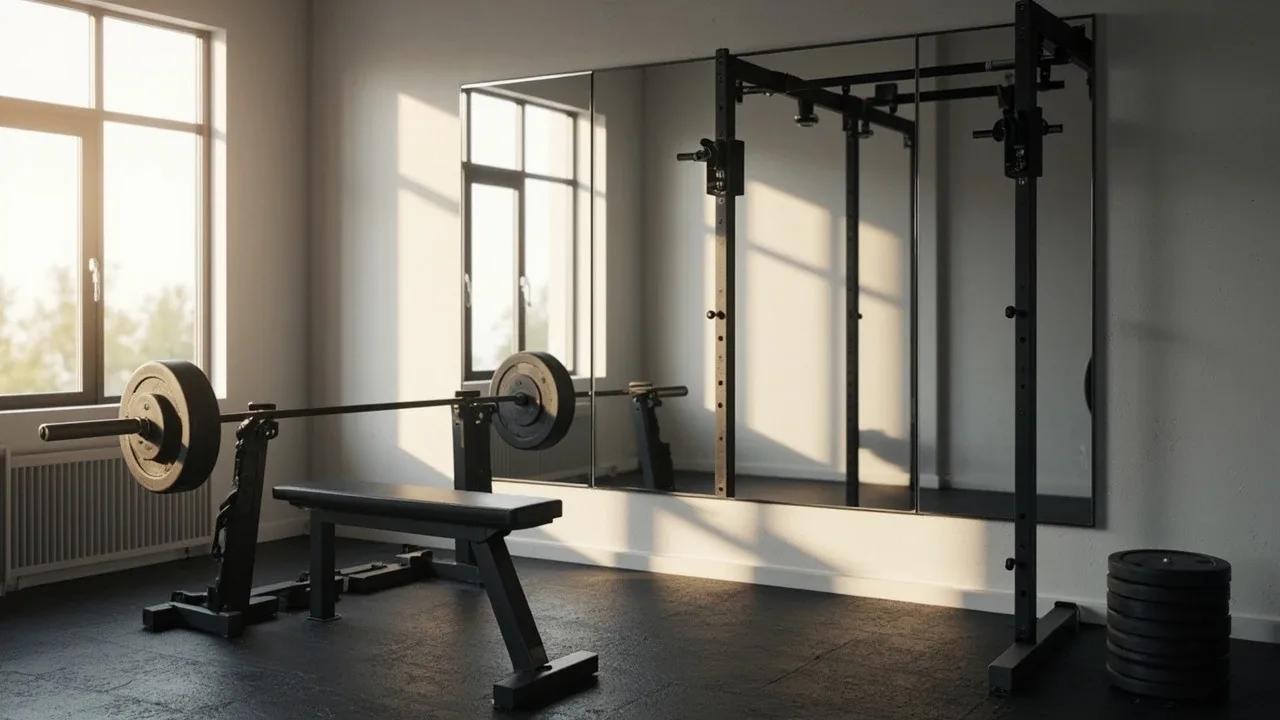
This is the foundation. Everything else is optional. In a spare bedroom, you want a 30-32 inch depth rack (not the 40+ inch competition-depth cages) so you preserve walkaround space.
- Budget: Rep PR-1100 or Titan T-2 Series. Both rated for 700 lb+ safe, more than enough for home use.
- Mid-tier: Rep PR-4000 or Rogue R-3 (~$600-900). Thicker steel, lifetime warranty, better hole spacing.
- Skip: Any "half rack" or "wall-mount" if you deadlift heavy — they flex under load.
2. Olympic Barbell
A 7-foot Olympic bar is the single most important piece after the rack. Don't cheap out — bad bars eat your wrists.
- Budget: CAP OB-86PB or Rep Colorado Bar. Serviceable.
- Best: Rogue Ohio Bar (~$300). 190K PSI tensile strength, bronze bushings, bulletproof.
3. Plate Set
For a spare bedroom, iron plates are cheaper and quieter than bumpers. Go bumpers only if you drop weights from overhead (Olympic lifting).
- Iron set: Rep or Fringe Sport 300 lb set, ~$250-350
- Bumper set: ~$400-550 for 230 lb (the big 45s take up vertical space)
Aim for 300 lb total — covers 95% of home-gym lifters for years.
4. Adjustable Bench
An adjustable bench (flat, incline, decline) doubles what you can train.
- Budget: FLYBIRD WB5. Folds flat for storage.
- Best: Rep AB-3000 or Fringe Sport Extreme (~$300). Sturdy under 300+ lb incline press.
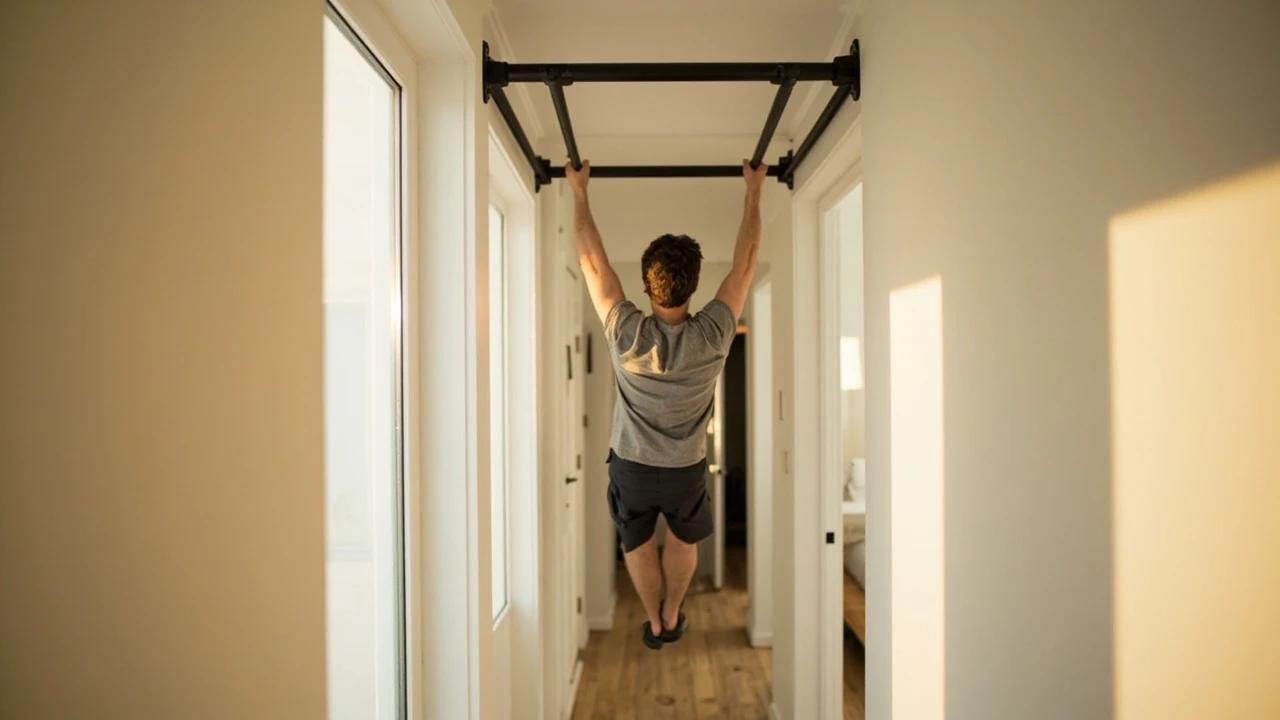
5. Wall-Mounted Pull-Up Bar
Mounts to two studs, holds 250+ lb, takes zero floor space.
- Titan wall-mounted bar. Installs in 20 minutes with a drill.
Step 3: Flooring That Protects Your Floor (and Your Downstairs Neighbors)
Spare bedrooms usually sit above living rooms. Flooring matters more than people realize — both for your floor and for sound.
- Horse stall mats — 3/4" thick, 4x6 ft, ~$60-75 each at Tractor Supply. Two mats cover a 10x12 room's lifting zone.
- Rubber gym tiles — snap-together, cleaner aesthetic, ~$3/sq ft. More expensive but renter-friendly.
- Interlocking foam tiles — DO NOT USE for barbell work. Great for bodyweight and yoga, crush under plates.
For renters: put down a moving blanket or plywood base under horse stall mats to prevent impressions in carpet.
Step 4: Storage That Keeps the Room Usable
The biggest mistake in a spare bedroom gym is leaving plates and dumbbells on the floor. Get them vertical or in racks.
- Plate tree — ~$80. Holds 300 lb of plates in 2 sq ft of floor space.
- Wall-mounted bar rack — stores barbells vertically, ~$30-50.
- Pegboard on a wall — resistance bands, straps, chalk, phones. Looks clean and adds capacity.
- Rolling tool cart — dumbbells, kettlebells, rollers. Wheel it into a closet between sessions.
If your spare bedroom is also a guest room, everything needs to be mobile or closet-stored.
Step 5: Noise Management
Spare bedroom gyms share walls, floors, and ceilings with the rest of your house. Keep the peace:
- Train during awake hours. No 5 AM squat sessions in a second-floor bedroom.
- Don't drop weights. Use controlled eccentrics on deadlifts. If you can't, switch to bumpers + thick flooring.
- Put the rack on rubber feet. Rack creak translates through the floor. Felt pads or rubber squares under each foot eliminate 90% of the noise.
- Rubber dampening cubes under plates during deadlifts soak up the impact.
If you live in an apartment with downstairs neighbors, skip bumper drops entirely. Iron plates with controlled descent + thick flooring is the apartment-safe approach.
Step 6: A Realistic Build Timeline and Budget
Here's how most spare bedroom gyms come together:
| Week | Spend | What you get |
|---|---|---|
| 1 | Check price on Amazon | Power rack delivered + assembled |
| 2 | $250 | Olympic barbell + first 135 lb of plates |
| 3 | $200 | Remaining plates to 300 lb |
| 4 | Check price on Amazon | Adjustable bench |
| 5 | Mats: see Step 3; bar: check price on Amazon | Flooring + pull-up bar |
The full build takes 5 weeks. You'll be training the entire time — not waiting until everything's perfect.
Used gear shortcut: Facebook Marketplace and OfferUp can bring the full build in at $600-800 if you're patient. Racks, plates, and bars lose zero performance with age. Just inspect for rust and weld cracks.
Budget check: How much does a home gym cost? See the full tier-by-tier breakdown — from $100 minimalist to $5,000+ premium builds.
Frequently Asked Questions
Can you fit a home gym in a spare bedroom?
Yes — most spare bedrooms (10x10 to 12x12 with 8ft ceilings) accommodate a complete strength setup: power rack, barbell, bench, 300 lb of plates. Deadlifts and overhead press both work. The only common deal-breakers are ceilings under 8 ft or a bedroom under 80 sq ft.
What's the best equipment for a bedroom home gym?
A compact 30-inch-depth power rack is the single highest-impact purchase. Pair it with an Olympic barbell, 300 lb plate set, adjustable bench, and 3/4" horse stall mat flooring. That covers squat, bench, deadlift, press, and rows — the vast majority of what serious lifters train.
How do I soundproof a home gym in a bedroom?
The fix is in three layers: (1) horse stall mats absorb impact, (2) rubber rack feet cut transmission through the floor, (3) rubber dampening cubes under plates quiet deadlifts. Skip bumper plate drops entirely if you share floors with neighbors. Iron plates with controlled descent stay under 70 dB — about the volume of conversation.
Do I need to reinforce a bedroom floor for a home gym?
Almost never. Standard residential floors support 40-50 lb per square foot (live load). A power rack + barbell + 300 lb of plates spreads across ~16 sq ft, averaging well under that limit even with a 200 lb lifter. The only concern is point loading — always use a mat under plate trees or racks on second floors.
Spare bedroom vs garage gym — which is better?
Spare bedroom wins for climate, cleanliness, privacy, and setup speed. Garage wins for size, noise tolerance, and truck-heavy equipment like sleds or reverse hypers. If you mainly do barbell lifts (squat, bench, deadlift, press), a spare bedroom is the better build. If you do strongman, dynamic throws, or need a 20x20 footprint, build in the garage.
Even smaller than a spare bedroom? The DIY Tiny Home Gym Guide — DIY layouts for closet- and corner-sized footprints where every inch matters.
Want the complete build workflow? How to Build a Home Gym: The Complete 5-Step Guide — the cornerstone walkthrough that takes a spare room from empty to training-ready in five steps.
Is the spare room close to 12×12? 12x12 Home Gym Layout — the exact floor plan for 144 sq ft, including what fits there that doesn't at 10×10.
Not sure it all fits the spare room? Plan it in 3D — set your room size, add the gear, and check the fit before it arrives.
The highest value per square foot in a spare bedroom is a pair of affordable adjustable dumbbells — they replace a whole rack and store in a corner.
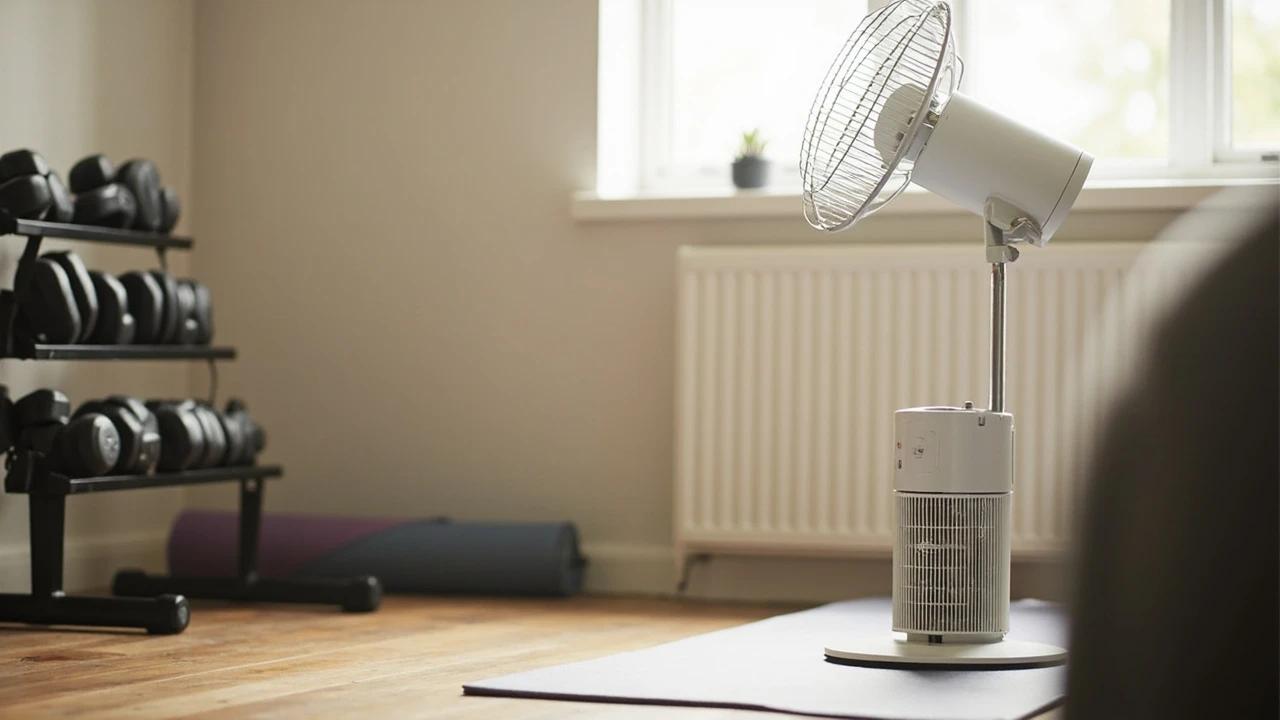
Keeping it quiet enough for the rest of the house: Best Fans for a Home Gym: 5 Quiet Picks for Indoor Training — why a DC motor is the one specification that reliably means quiet, and which budget fan suits a corner rather than a whole room.