Table of Contents
Quick Answer: The best treadmills for seniors in 2026 are the Sole F63 (best overall — a cushioned, 325 lb-capacity folding deck built to last), the Horizon T101 (best value — easy hydraulic fold and a 0.5 mph start speed), the UREVO Strol (best budget pick, with one of the lowest ~3-inch step-up heights), the NordicTrack T Series 5 (best for guided walking workouts), and a Sunny Health & Fitness walking treadmill (best for extended handrail support on a budget). Whichever you choose, prioritize a low step-up height, long sturdy handrails, an emergency-stop safety clip, and a slow 0.5 mph start over motor horsepower. One buying note: the F63 is sold direct by Sole — Amazon's F63 listings have no seller behind them — so if you want to order on Amazon today, the Horizon T101 and the NordicTrack T Series 5 are the picks that ship from there.
Key takeaways
Senior-safe treadmills prioritize a low step-up height, a 0.5 mph minimum start speed, and sturdy handrails over motor power or top speed.
- The Sole F63 ($1,000–$1,200) is the top overall pick; the UREVO Strol ($300–$400) offers the lowest step-up at roughly 3 inches.
- Clip the safety key to clothing every session — this is the single most important fall-prevention step.
- Avoid increasing speed and incline at the same time; change only one variable per session.
- Treadmills are not recommended for adults with balance disorders or high fall risk.
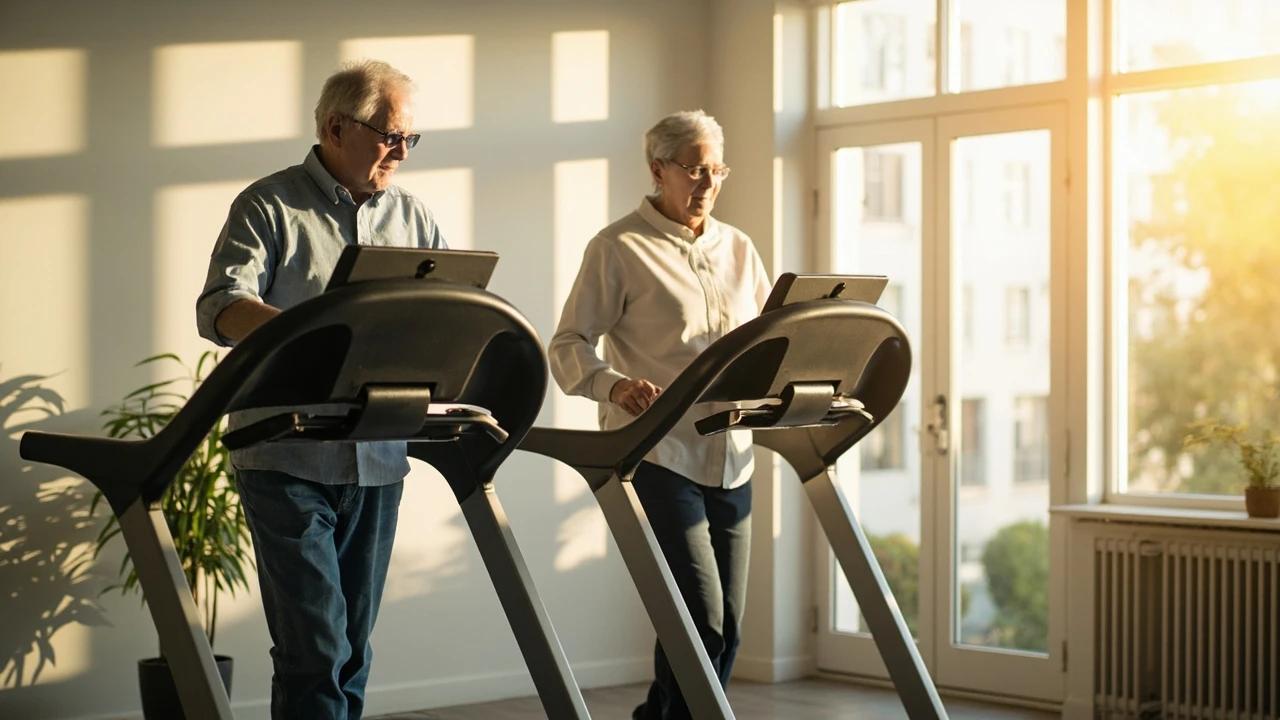
A treadmill lets you keep your daily walk going through bad weather, short winter days, and unsafe sidewalks — without leaving the house. For a lot of older adults, that consistency is the whole game: walking is the single most sustainable form of cardio after 60, and a treadmill removes every weather-and-daylight excuse.
But here's the honest part most "best treadmill" lists skip: a full treadmill is not the safest cardio machine for every senior. The moving belt sits several inches off the floor and keeps going whether or not your feet do, so balance and focus matter. If you have significant balance problems or a high fall risk, a recumbent exercise bike (you stay seated) or a low-deck walking pad (1-2 inches off the floor, slower top speed) is the safer first choice. This guide is for seniors who specifically want a real treadmill — and it ranks every pick on the safety features that actually keep you upright.
Medical disclaimer. This article is educational and not medical advice. Treadmill walking raises your heart rate and carries a fall risk. If you have heart disease, a balance disorder, severe arthritis, recent surgery, or take medication affecting blood pressure or coordination, talk to your doctor before starting — and consider supervised sessions for your first weeks. Stop and seek help for chest pain, dizziness, or shortness of breath.
Are Treadmills Safe for Seniors?
Yes — with the right machine and the right habits. Treadmill walking is low-impact, weight-bearing cardio that supports heart health, bone density, and the leg strength that keeps you independent. The risk isn't the walking; it's the moving belt combined with a lapse in balance or attention.
Two facts settle most of the safety question:
- The belt doesn't stop when you do. That's why an emergency-stop safety clip (a magnetic key that tethers to your clothing and kills the belt if you drift back) is non-negotiable — and why we rank it above motor power.
- Most treadmill injuries are step-on/step-off stumbles, not running falls. A low step-up height and long, sturdy handrails matter far more for a senior than top speed or incline.
One more consideration: if you have osteoporosis or low bone density, a fall carries a much higher fracture risk — weigh that honestly against a treadmill's benefits, and see our osteoporosis exercise guide for safer weight-bearing options.
If you're setting up a senior-safe training space, treadmill placement matters too — leave clear runoff space behind the deck and never put it against a wall you'd hit. Our fall-proof home gym setup guide covers the room-level safety architecture. And if a treadmill feels like too much, the recumbent bike and walking pad comparisons cover the lower-risk alternatives.
Key Features to Look For
Forget the marketing horsepower wars. Here's what actually matters for an older walker, in priority order.
1. Step-Up Height (the most overlooked spec)
This is the height of the running deck above the floor — what your foot has to clear to get on. Full treadmills typically sit 6 to 9 inches off the floor; walking pads sit 1-2 inches. A high deck is a daily stumble hazard. Look for the lowest deck you can find in a real treadmill — the UREVO Strol's roughly 3-inch step-up is among the lowest available.
2. Long, Sturdy Handrails
Side handrails give you something to steady against while you mount, dismount, and find your pace. Longer rails are better — short "pulse grip" bars near the console are useless for balance because they're too far forward. A senior-appropriate treadmill has rails that run alongside where you actually stand.
3. Emergency-Stop Safety Clip
The magnetic tether key. Clip it to your shirt every single time. If you stumble backward, it pulls free and stops the belt instantly. Every treadmill on this list has one — use it.
4. Slow Start Speed (0.5 mph)
Many treadmills bottom out at 1.0 mph, which is a brisk pace if you're just easing in or recovering from surgery. Look for a 0.5 mph minimum so you can start at a true stroll and hold the rails until you're steady.
5. Deck Cushioning
A cushioned, multi-layer deck absorbs impact that would otherwise travel into knees, hips, and the lower back. This is the feature that makes daily walking sustainable for arthritic joints. For more on joint-friendly equipment, see our arthritis home gym guide.
6. Easy Folding
If the treadmill lives in a bedroom or living room, a hydraulic-assisted fold lets you stand it up without straining your back. Skip models that require muscling a heavy deck up by hand.
7. Weight Capacity (with margin)
Buy a treadmill rated at least 50 lbs above your body weight. A frame running well within its limit feels more stable and lasts longer.
8. A Readable Display and Simple Controls
Large, high-contrast numbers and obvious speed buttons beat a cluttered touchscreen. You should be able to change speed without looking down for more than a second.
The 5 Best Treadmills for Seniors (2026)
1. Sole F63 — Best Overall
The Sole F63 is the treadmill most home-gym reviewers point seniors toward when budget allows, and for good reason: it's built like a commercial machine but folds for home storage.
- Deck: Large 20" x 60" cushioned "Cushion Flex" deck — gentle on joints, roomy enough for an unsteady gait
- Motor: ~3.0–3.25 CHP (varies by model year) — quiet and effortless at walking speeds
- Speed: 0.5–12 mph (true slow start)
- Capacity: ~325 lbs
- Folding: Hydraulic-assisted fold
- Handrails: Long side rails plus console grips
Pros: Durability you can lean on for years, a forgiving cushioned deck, and a genuine 0.5 mph start. The big deck is reassuring if your walking gait wanders.
Cons: Heavy and large even folded; premium price. The step-up height is typical-treadmill (not the lowest here).
Best for: Daily walkers who want one treadmill that lasts a decade. Buy the F63 direct from Sole — Amazon's F63 listings have no seller behind them, and a search there returns replacement running belts and other brands' machines.
2. Horizon T101 — Best Value
The T101 is the long-standing budget recommendation from physical therapists and home-gym reviewers alike. It does the fundamentals right without paying for a screen you won't use.
- Motor: ~2.5 CHP
- Speed: 0.5–10 mph
- Capacity: ~300 lbs
- Folding: "FeatherLight" hydraulic fold — drops down gently, lifts easily
- Extras: Bluetooth speakers, simple button controls
Pros: The easiest fold in its price class, a true 0.5 mph start, and a reputation for reliability. Straightforward controls suit seniors who don't want an app.
Cons: Shorter deck than the Sole; basic display. Step-up height is standard.
Best for: The best balance of price, reliability, and easy storage. Check the Horizon T101 on Amazon.
3. UREVO Strol — Best Budget & Lowest Step-Up
If the step over a high deck worries you, the UREVO Strol is the answer. It's a walking-focused treadmill with one of the lowest decks on the market — around a 3-inch step-up — and it folds nearly flat.
- Step-Up: ~3 inches — easiest mount/dismount in this roundup
- Speed: Walking-focused (lower top speed than a running treadmill)
- Folding: Folds nearly flat for under-bed or closet storage
- Extras: Remote and app speed control
Pros: Lowest step-up here, compact and light, genuinely affordable. Ideal for cautious walkers and tight spaces.
Cons: Shorter handrails than a full treadmill; lower top speed (fine for walking, not for jogging); lighter-duty motor.
Best for: Budget buyers and anyone nervous about stepping onto a tall deck. Check the UREVO Strol on Amazon.
4. NordicTrack T Series 5 — Best for Guided Walking Workouts
Changed September 2026. This pick used to be the ProForm Carbon TL, which no longer has a seller on Amazon. The T Series 5 is the same iFIT platform at the same price, with near-identical deck and motor specs.
If motivation is your real obstacle, the T Series pairs a cushioned folding deck with iFIT trainer-led sessions that can adjust the speed and incline for you — so you just follow along.
- Deck: 18" x 55" with KeyFlex cushioning; SpaceSaver fold
- Motor: 2.6 CHP
- Speed / incline: Up to 10 mph, incline to 10%
- Capacity: ~300 lbs
- Extras: iFIT guided walking workouts, on-screen trainers, scenic walks; 5" LCD display
Pros: Guided sessions keep daily walks interesting, and auto-adjust means less fiddling with buttons mid-walk. Solid cushioning.
Cons: The best experience needs an iFIT subscription (ongoing cost). The 5" LCD is small if you want to watch the scenic walks rather than just follow the audio, and the 18-inch belt is two inches narrower than the F63's — worth weighing if your walking gait wanders.
Best for: Seniors who'll stick with it better when a coach leads. Check the NordicTrack T Series 5 on Amazon (about $599).
5. Sunny Health & Fitness Walking Treadmill — Best for Extended Handrail Support
Sunny Health & Fitness makes several budget treadmills designed around longer side handrails and walking-friendly speeds — the closest thing to a rehab-style walking treadmill without the clinic price tag.
- Handrails: Extended side rails for steadier support through the full stride
- Speed: Walking-focused, slow start
- Footprint: Compact, foldable
- Price: Among the most affordable senior-appropriate options
Pros: Long handrails give balance-conscious walkers something to hold the entire time; affordable; compact.
Cons: Lighter-duty build; basic display; check the specific model's step-up height before buying.
Best for: Balance-conscious walkers who want long rails without spending four figures. Check Sunny Health treadmills on Amazon.
Quick Comparison
| Treadmill | Best For | Step-Up | Start Speed | Capacity | Price Range |
|---|---|---|---|---|---|
| Sole F63 | Overall durability | Standard | 0.5 mph | ~325 lbs | $1,000–$1,200 |
| Horizon T101 | Value + easy fold | Standard | 0.5 mph | ~300 lbs | $800–$850 |
| UREVO Strol | Budget + low step-up | ~3 in | 0.5 mph | ~265 lbs | $300–$400 |
| NordicTrack T Series 5 | Guided workouts | Standard | 0.5 mph | ~300 lbs | $550–$650 |
| Sunny Health walking | Extended handrails | Low–standard | ~0.5 mph | ~220–265 lbs | $400–$500 |
Key Numbers
- Full treadmills sit 6–9 inches off the floor; a walking pad sits 1–2 inches. The UREVO Strol's ~3-inch step-up is among the lowest real-treadmill decks available.
- A senior-safe treadmill should start at 0.5 mph — many machines bottom out at 1.0 mph, too fast for easing in or post-surgery walking.
- Buy a frame rated at least 50 lbs above your body weight for stability and longevity.
- The two non-negotiable safety features are an emergency-stop safety clip and long side handrails — both rank above motor horsepower for older walkers.
- Aim for the federal guideline of 150 minutes of moderate activity per week — five 30-minute walks, or shorter sessions if that's where you start.
How to Use a Treadmill Safely After 60
The machine is only half the safety equation. These habits are the other half:
- Clip the safety key to your clothing every time. It stops the belt if you drift backward. This is the single most important rule.
- Start the belt before you step on, at 0.5–1.0 mph. Straddle the belt with feet on the side rails, start it slow, then step on holding the handrails.
- Hold the rails until you're steady — then let go with a light touch. Don't death-grip them; a tight hold throws off your gait. The goal is a fingertip's reassurance, not a lean.
- Look forward, not at your feet. Watching your feet shifts your balance. Pick a spot on the wall ahead.
- Change one thing at a time. Increase speed or incline, never both at once, and never quickly.
- Keep a phone within reach and, for the first weeks, have someone nearby or in earshot.
- Build gradually. Start with 5–10 minutes and add a few minutes each week toward 20–30. Consistency beats intensity every time.
For a follow-along routine to start with, the physical-therapist-led walking workout above is paced exactly for beginners and seniors.
Frequently Asked Questions
Is a treadmill or a walking pad better for seniors?
It depends on balance and goals. A walking pad sits lower to the floor, moves slower, and stores under a bed — safer and simpler if you only want gentle daily walking. A full treadmill offers a longer cushioned deck, handrails, incline, and higher speeds for seniors who want a more substantial workout and have steady balance. If fall risk is a real concern, start with the walking pad or a recumbent bike.
What treadmill speed is safe for seniors?
Start at 0.5–1.0 mph holding the handrails, and only increase once you feel steady. A comfortable senior walking pace is usually 1.5–3.0 mph. There's no need to go faster — the health benefits of walking come from consistency and duration, not speed. A treadmill that will not run slower than 1 mph forces an unsteady walker to begin faster than they can safely manage, which is why a 0.5 mph minimum start speed is a key buying feature for seniors.
Are treadmills safe for seniors with balance problems?
Treadmills carry more fall risk than seated cardio. If you have a diagnosed balance disorder, frequent dizziness, or a history of falls, a recumbent exercise bike or a low-deck walking pad is the safer choice. If you do use a treadmill, insist on long handrails, the safety clip, a low step-up height, and ideally someone nearby for your first weeks.
What is the best low-step treadmill for seniors?
The UREVO Strol, with a roughly 3-inch step-up height, is among the lowest real-treadmill decks available — the easiest to mount and dismount. Walking pads sit even lower (1–2 inches) if a minimal step is your top priority.
Should a senior get a treadmill with a long handrail?
Yes, if balance is any concern. Long side handrails — ones that run alongside where you actually stand, not just short grips by the console — let you steady yourself through the whole stride. The Sunny Health & Fitness walking treadmills are built around extended rails, and the Sole F63 has long side rails as well.
How much should a senior spend on a treadmill?
A reliable senior-appropriate treadmill runs $300–$1,200. Budget walking treadmills like the UREVO Strol start around $300; the value pick (Horizon T101) lands near $700; and a built-to-last folding deck like the Sole F63 runs $1,000–$1,200. Spend on safety features and build quality, not horsepower or screens.
What to Read Next
- Best Recumbent Bikes for Seniors — the no-fall-risk seated cardio alternative
- Best Walking Pads for Seniors — lower, slower, and stores under a bed
- Fall-Proof Home Gym Setup — room-level safety for any senior gym
- Home Gym Equipment for Arthritis — joint-friendly choices across the board
- Best Home Gym Equipment for Seniors — the full senior equipment picture
- Exercises for Osteoporosis Prevention in Seniors — why fall risk matters even more with low bone density
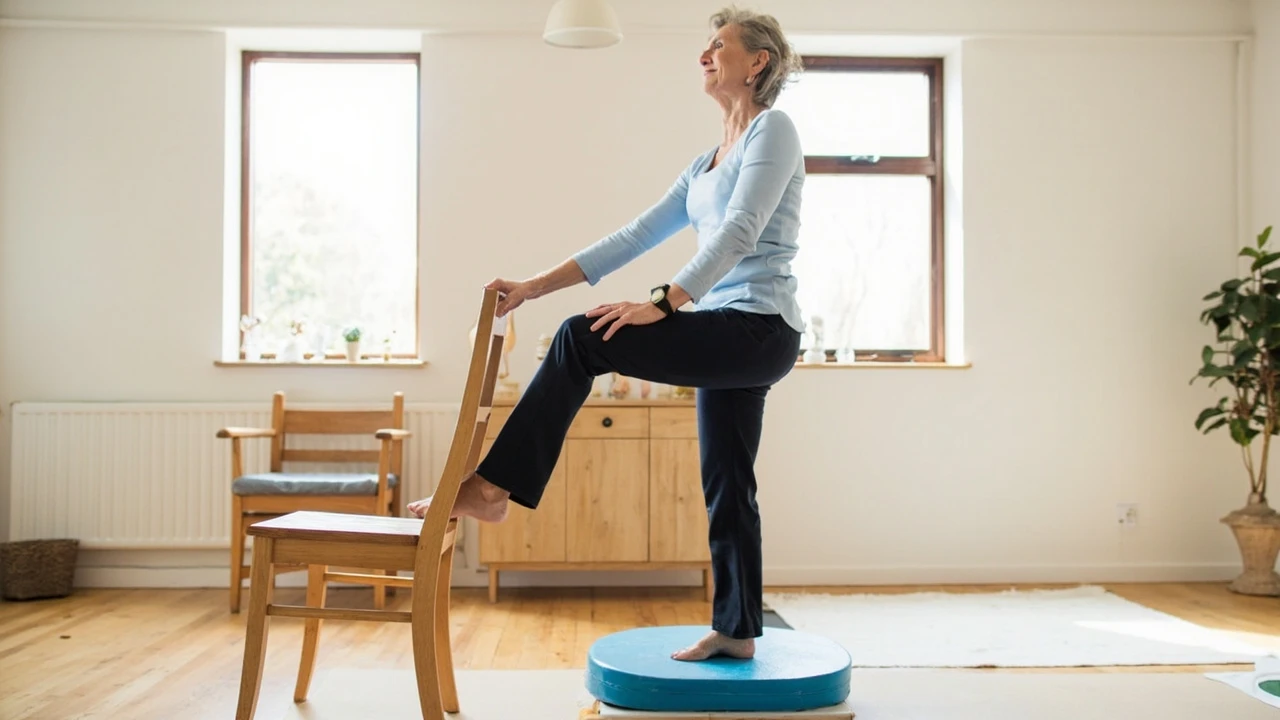
Walking builds endurance; balance work keeps the walking safe. The best balance training equipment for seniors covers stability tools that pair naturally with treadmill sessions — the equipment to do it well costs less than $100, and everything works next to a wall or chair for support.
Pair the walking with a calorie target. Steps raise your daily burn, but the number that governs weight change is total intake versus expenditure — the calorie calculator estimates both from your age, weight, and activity level.
Prefer to sit for cardio? Best Rowing Machines for Seniors: Seat Height First — full-body, zero-impact, and no fall risk from a moving belt. The buying decision turns on seat height.