Table of Contents
Key takeaways
Walking pads provide a low step-up, compact alternative for seniors aiming to reach the American Heart Association's 150-minute weekly activity target indoors.
- The Sperax 2-in-1 Walking Pad ($250–$330) is the top pick; the LifeSpan TR1200i ($700–$1,100) suits premium buyers needing a wider, more durable deck.
- Adults over 70 or with balance concerns should choose a 2-in-1 model with a handrail rather than a flat pad.
- Beginners should start at 1–1.5 mph for 10–15 minutes daily before building toward 20–30 minutes.
- Avoid decks narrower than 15 inches and any model whose controls are app-only with no hardware buttons.
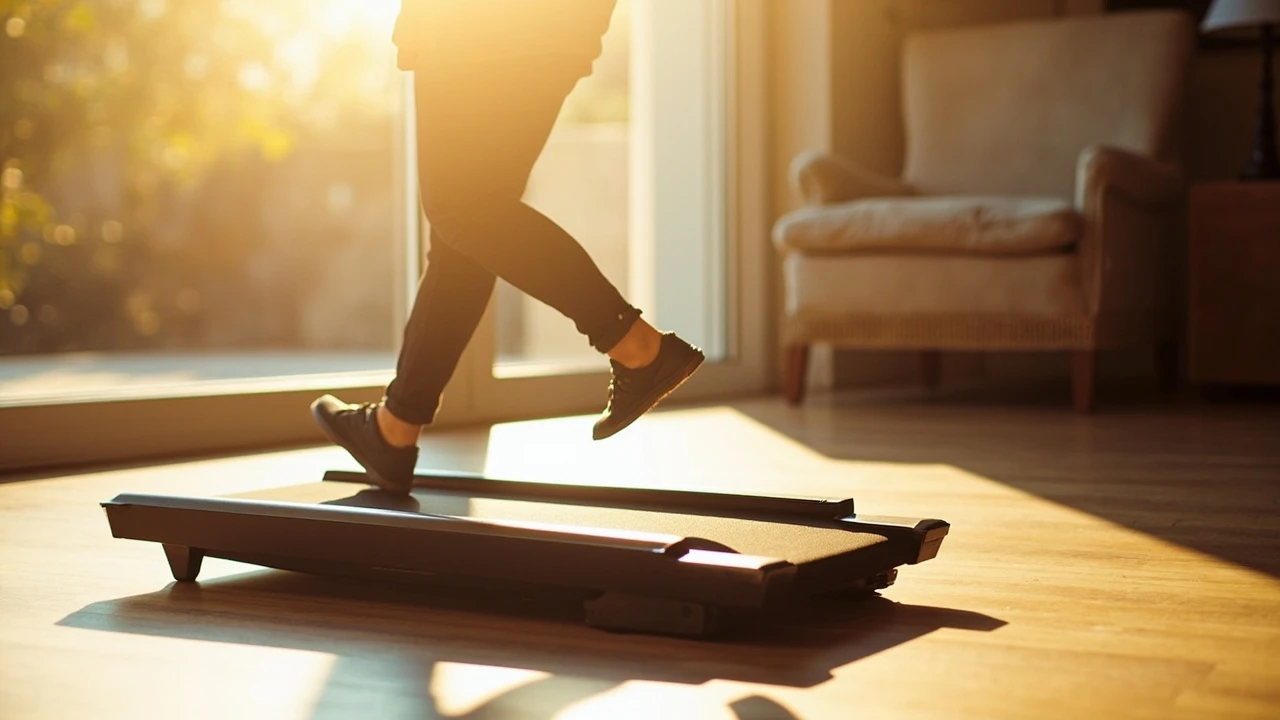
A walking pad is a slim, foldable treadmill designed for indoor walking — usually 4-6 inches tall, 16-20 inches wide, with a top speed of 4-6 mph (no running). Over the past three years they've gone from niche office gear to the most popular cardio purchase for seniors building home gyms.
The reasons are obvious once you see one in person: they fit under a bed, they're quiet enough to use while watching TV, they don't require a giant treadmill console, and the low-speed-only design eliminates the #1 home treadmill injury (stepping off at 7 mph and hitting the wall behind you).
But not every walking pad is built for senior use. Some have too-narrow decks, some don't include a side rail, some have abrupt belt starts that throw off balance. This guide covers the five worth buying for a parent or grandparent — and three to avoid even if they were free.
Quick Answer
The best walking pads for seniors in 2026 are: (1) Sperax 2-in-1 — best overall, foldable handrail balances safety and storage; (2) UREVO 2-in-1 Pro — best with handrail under $300; (3) WalkingPad C2 — best ultra-compact for very small apartments; (4) LifeSpan TR1200i — best premium pick if budget is no concern; (5) DeerRun Walking Pad — best budget-only pick under $250. Pick based on whether a side handrail is required (yes, for most seniors over 70 or anyone with balance concerns), deck width (16-20" recommended), and whether you have storage room or need under-bed clearance.
Why a Walking Pad Beats a Treadmill for Seniors
Standard treadmills are dangerous for older adults. The leading senior fitness equipment injury comes from full-size treadmills: stepping off at speed, missing the handrail, or being thrown when the belt unexpectedly accelerates. Walking pads solve this through three design constraints:
- Maximum speed is 4-6 mph (most cap at 4). You physically cannot accelerate to a running pace. The injury risk drops dramatically.
- Belt starts and stops slowly. Most walking pads ramp up over 3-5 seconds. Standard treadmills can jump to 3 mph in a fraction of a second.
- Deck height is 4-6 inches vs 14-22 inches on full treadmills. If a senior does step off, the fall is shorter and the deck is closer to the ground.
For seniors specifically, the safety advantage is the entire reason this category exists. The fitness benefit is a bonus.
Walking pad vs recumbent bike for seniors
Both are excellent. The decision usually comes down to joint health and balance:
| Factor | Walking pad | Recumbent bike |
|---|---|---|
| Knee impact | Low (walking is natural) | None (seated, no impact) |
| Hip impact | Low | None |
| Balance required | Yes, even with handrail | None |
| Cardiovascular intensity | Easy to scale | Easy to scale |
| Storage footprint | 5-12" tall folded, slides under bed | Cannot fold, dedicated floor space |
| Watch TV while using | Yes | Yes |
| Best for | Mobile seniors who want walking practice | Seniors with balance issues or knee pain |
For seniors with significant balance issues, joint disease, or recent fall history, our recumbent bike guide covers the safer alternative. Many seniors end up with both — walking pad for daily 4-6 mph movement, recumbent bike for harder steady-state cardio.
What Actually Matters for Senior Use
Spec sheets focus on motor wattage and incline. For seniors, three things matter more:
1. Side handrail (the most important spec)
A 2-in-1 walking pad includes a foldable side handrail that locks upright when in use. This is the single most important senior-safety feature.
- Yes/strongly recommended: Anyone over 70, anyone with balance issues, anyone recovering from injury, anyone with mild dizziness or vertigo history.
- Optional: Healthy seniors 60-70 with no balance concerns who'll only walk at 1.5-2 mph.
A walking pad without a handrail forces the user to walk freehand or hold a chair next to it. Both are unsafe. Buy the 2-in-1 model — the $50-100 premium is the cheapest fall insurance you'll ever buy.
2. Deck width (16-20" minimum)
Narrow decks (under 16") force a tight stride, which feels unnatural and increases trip risk on uneven foot placement.
- Under 16" wide: Skip. Too narrow.
- 16-18" wide: Acceptable for slower walking.
- 18-20"+ wide: Best for natural stride. Worth the extra footprint.
3. Belt start behavior
Cheap walking pads jolt to the set speed in under a second. Quality ones ramp over 3-5 seconds. The slower ramp is night-and-day safer for seniors — they can adjust posture before the belt is moving full speed.
This is rarely listed in specs. Look for video reviews or buy from a brand with a good return policy and test it yourself.
4. Remote control
Bending forward to adjust speed on the deck console is awkward and slightly dangerous. A handheld remote (most walking pads include one) lets you change speeds without breaking stride. Some 2-in-1 models also have controls on the handrail itself, which is the most senior-friendly setup.
5. Max weight rating
Most walking pads are rated to 220-300 lbs. If the user is heavier, check the rating specifically — running a walking pad over its rated weight burns out the motor within 6-12 months.
What doesn't matter (much)
- Incline. Most walking pads have no incline. That's fine for seniors — flat walking is the safest mode.
- Built-in speakers. Use your TV or a Bluetooth speaker. The pad's tinny speakers are an afterthought.
- App connectivity. Most seniors won't use the app. Don't pay extra for it.
- Motor wattage. As long as it's rated for the user's weight and a max speed of 4+ mph, the wattage spec is marketing fluff.
Top 5 Walking Pads for Seniors
Listed in our recommended order.
1. Sperax 2-in-1 Walking Pad — Best Overall ($250-330)
Sperax's 2-in-1 has a foldable handrail with speed controls integrated into the handle. The deck is 18.5" wide. Max speed 6 mph (capped at 4 with handrail up). Folds flat to 5" tall.
Why it's the senior pick: The handrail + integrated controls + slow belt ramp is exactly the combination that makes walking pad use safe. The 2-in-1 fold means it doubles as a treadmill desk later if needed.
Trade-offs:
- 220 lb weight limit (lower than some).
- The integrated handle controls have a slight delay (1-2 sec) that takes getting used to.
- Heavier than handle-less models (60 lbs) — once unfolded, you don't want to move it daily.
Best for: The most common senior walking pad use case — daily 15-30 min walks at 1.5-3 mph, with the handrail engaged for balance.
Check the UREVO 2-in-1 walking pad on Amazon
2. UREVO 2-in-1 Pro — Best Under $300 ($180-230)
UREVO's 2-in-1 Pro features a 17" deck, foldable handrail, and a 4 mph max with the rail extended (6 mph rail down). Hydraulic belt-ramp keeps starts smooth.
Why it's the senior pick: Slightly cheaper than the Sperax with nearly identical safety features. The hydraulic ramp is noticeably smoother than budget pads. Wide range of replacement parts available.
Trade-offs:
- Smaller 17" deck might feel cramped for users over 6 feet tall.
- Handrail is foldable but not removable, so the folded footprint is taller.
- Remote control is on the smaller side and can be easy to misplace.
Best for: Mobile seniors under 5'10" who want a real safety rail without spending $400+.
Search UREVO 2-in-1 walking pad on Amazon
3. WalkingPad C2 — Best Ultra-Compact ($300-450)
The original from-Xiaomi WalkingPad C2 folds to a 5" tall, ~30" long bundle that slides under most beds or behind doors. Belt width 16". Max speed 3.7 mph. No handrail.
Why it's the senior pick (with caveats): For very small spaces, this is the only walking pad that genuinely disappears. Steady belt start. Quiet motor.
Trade-offs:
- No handrail. This is the biggest limitation for seniors. Only buy if the user has solid balance.
- 16" deck is on the narrow side.
- Newer Chinese clones are 60% cheaper with similar quality — if you don't need the WalkingPad brand specifically, see option 5.
Best for: Healthy 60-70-year-old seniors with no balance issues in studio apartments or RVs where storage space is the binding constraint.
Search WalkingPad C2 on Amazon
4. LifeSpan TR1200i Walking Treadmill — Best Premium ($700-1,100)
A true semi-commercial walking treadmill with a full-size console, sturdy two-bar handrail, intuitive controls, and a 300 lb weight rating. Not technically a walking pad (doesn't fold flat) but designed for the same use case.
Why it's the senior pick: If budget allows and storage isn't an issue, the LifeSpan is the gold standard. The dual handrail provides much more support than any 2-in-1 walking pad. Belt is wider (20") and longer (56"). 10-year frame warranty.
Trade-offs:
- Doesn't fold under bed. Footprint is 70" × 33" when in use.
- Heavier and bigger than walking pads — needs a dedicated 6×3 ft footprint.
- Price is 3-4× a basic walking pad.
Best for: Seniors with a dedicated room or basement gym space and the budget for the safer, longer-lasting option. Worth it for anyone who'll use it daily for 5+ years.
Buy the TR1200i direct from LifeSpan — Amazon's TR1200i listings have no seller behind them, only belts and consoles. LifeSpan's under-desk models are on Amazon, but none of them have the two-bar handrail that earned this pick.
5. DeerRun Walking Pad — Best Budget Pick ($150-220)
DeerRun's basic walking pad has an 18" deck, 4 mph max, slow belt ramp, and a basic remote. No handrail. Folds to 5" tall.
Why it's the senior pick (at this price): Below $200, this is the only model with a deck wide enough to be safe (18") and a remote that actually works. Build quality is mid but the warranty is solid.
Trade-offs:
- No handrail. Bigger limitation for seniors than the WalkingPad C2 because most DeerRun buyers don't have a wall-mount handrail nearby.
- 220 lb max weight.
- Belt occasionally needs re-tensioning at the 6-month mark (easy DIY fix with the provided wrench).
Best for: Tight-budget builds for active seniors with good balance. Pair with a freestanding grab bar from the fall-proof home gym setup guide if balance is a concern.
Search DeerRun walking pad on Amazon
Specs At-a-Glance
| Product | Handrail | Deck width | Max speed | Folded height | Weight limit | Price |
|---|---|---|---|---|---|---|
| Sperax 2-in-1 | Yes, foldable | 18.5" | 6 mph | 5" | 220 lbs | $250-330 |
| UREVO 2-in-1 Pro | Yes, foldable | 17" | 6 mph | 5.5" | 240 lbs | $230-290 |
| WalkingPad C2 | No | 16" | 3.7 mph | 5" | 220 lbs | $300-450 |
| LifeSpan TR1200i | Yes, dual bar | 20" | 4 mph | Doesn't fold | 300 lbs | $700-1,100 |
| DeerRun Walking Pad | No | 18" | 4 mph | 5" | 220 lbs | $150-220 |
How We Researched and Picked
We do not own these walking pads, and we are not clinicians. Here is the basis for the picks.
The senior-specific criteria came first. Most walking pad roundups optimise for top speed and app integration. For an older user the numbers that decide it are different, and they drove this shortlist: step-up height, deck width, minimum speed, whether a handle or handrail is available, weight capacity, and how the machine behaves at the moment it starts moving. A pad that cannot go slow enough is not usable no matter how it reviews.
Specifications come from the manufacturer. Deck dimensions, speed range, step-up height and capacity are taken from the manufacturer's documentation. Where a figure was not published, the product was excluded rather than estimated — step-up height in particular is a fall-risk number and not something to guess at.
Buyer reviews were filtered toward the relevant user. Reviews mentioning use by an older adult, a balance concern, or recovery from injury were weighted far more heavily than general fitness reviews, because they surface the things that matter here: whether the belt starts with a jolt, whether the handle is reachable, whether the display is legible without reading glasses.
Safety framing is sourced, not invented. Where this guide touches balance, fall risk or exercise capacity in older adults, it points to published guidance — NIH, AAOS and the National Osteoporosis Foundation — rather than asserting it ourselves.
What we did not do: we did not test these machines, and we did not test them with older users. We give no medical advice. If you have a balance, cardiac or joint condition, the equipment decision should follow a conversation with your doctor or physical therapist, not this page.
What to Skip
These walking pads appear in "best of" lists but I'd actively avoid them:
- Anything with a deck under 15" wide. Too narrow for safe walking, period. Some "compact" units sell for $150 and they're injury bait.
- Walking pads with running mode but no handrail. A pad that claims 7-8 mph speeds combined with no support is the worst of both worlds — fast enough to throw a senior off but no rail to catch them.
- Sub-$120 unbranded walking pads on Amazon. The belt-tensioning mechanism in this price tier fails within 3-6 months. The motors burn out. Replacement parts don't exist.
- Walking pads with smart-app-required controls. If the phone battery dies or the app updates and breaks, the user can't change speed. Always pick a model with hardware buttons.
Pairing With a Senior-Safe Home Gym
A walking pad is one component of a senior home gym. To round out the setup:
- Sturdy bench or chair for seated exercises. See Chair Exercise Equipment for Seniors.
- Resistance bands for strength. Best Resistance Bands for Seniors.
- Grab bars for balance. Covered in Fall-Proof Home Gym Setup for Seniors.
- Recumbent bike for harder cardio days. Best Recumbent Bikes for Seniors.
- Stable, well-lit floor space. A 6×4 ft cleared area minimum. See the senior home gym equipment overview.
For seniors managing specific conditions:
- Arthritis: Home Gym Equipment for Arthritis.
- Bad knees: Home Exercises for Seniors with Bad Knees.
- Helping a parent build a gym: How to Help a Parent Set Up a Home Gym.
Frequently Asked Questions
How long should a senior walk on a walking pad each day?
The American Heart Association recommends 150 minutes of moderate cardiovascular activity per week for older adults — that's roughly 20-30 minutes per day, 5-6 days per week. For complete beginners, start at 10-15 minutes daily and build slowly. Speed matters less than consistency; 2 mph for 30 minutes is excellent for someone restarting after years away from exercise.
Are walking pads safe for someone with mild dementia or memory issues?
Yes, with the right model and supervision. Pick a 2-in-1 with a handrail, set the max speed at 2 mph or lower in the app/menu, and use the remote with one-button start/stop. Avoid models with complex multi-step interfaces. Always supervise the first 4-6 sessions until the user is fully comfortable.
Can a senior use a walking pad after hip or knee replacement surgery?
Once cleared by a physical therapist, yes. Most PTs love walking pads post-replacement because the controlled, slow, flat surface is safer than outdoor walking on uneven ground. Always start at 1-1.5 mph for the first 2-3 weeks post-clearance, and always use the handrail.
Will a walking pad fit in a small apartment?
Yes — that's their core advantage over treadmills. Most fold to under 5" tall, which slides under any standard bed (16-20" clearance). A few apartments with very low beds (or platform beds with under-bed drawers) may not accommodate the folded pad. Measure first.
How loud are walking pads?
Quiet enough to use while watching TV or having a conversation. Most measure 45-55 dB at moderate walking speed — equivalent to a refrigerator hum. Far quieter than full-size treadmills, which run 65-80 dB.
Do walking pads have an incline?
Most don't, and that's by design — flat walking is the safest mode for seniors. A few mid-range models offer 0-3% manual incline (you physically prop up the front), but this is rarely useful and skip-worthy for senior use.
What's the difference between a walking pad and an under-desk treadmill?
They're the same product category. "Walking pad" emphasizes the low profile and home use; "under-desk treadmill" emphasizes office use. The hardware is identical.
How long do walking pads last?
A well-maintained walking pad (light cleaning after each use, occasional belt tensioning) lasts 3-5 years in daily home use. Premium models (LifeSpan TR1200i) regularly last 7-10 years. Budget-tier models under $200 typically need replacement at the 2-3 year mark.
Next Steps
- Decide if the user needs a handrail. Over 70 or any balance concerns → yes (Sperax, UREVO, LifeSpan). Healthy 60-70 with no concerns → optional.
- Measure the storage clearance — under bed, behind door, closet. Most folded walking pads need 5" of vertical clearance.
- Pair the walking pad with one or two strength/balance pieces. See the senior home gym equipment guide for the broader setup.
- If this is a gift or for a parent, How to Help a Parent Set Up a Home Gym covers the gentle-introduction conversation.
A walking pad is the easiest, safest cardio purchase a senior can make. Pick a 2-in-1 with a handrail, start at 1.5 mph for the first month, and build from there.
Walking pad covers cardio; what about strength? Strength Training After 60 for Beginners — the resistance-training half of the senior fitness picture, complementary to walking pad cardio.
Walking pad for cardio, plus balance work? Best Balance Training Equipment for Seniors — the second pillar of senior fitness with the equipment that backs it up.
Walking pad for osteoporosis prevention? Exercises for Osteoporosis Prevention in Seniors — walking is the most-recommended weight-bearing cardio for bone density. The full program adds resistance and balance training.
Walking pad is one option; what about rowers and air bikes? Best Compact Cardio Machines — the full compact cardio category beyond walking pads.
Want a full treadmill instead of a walking pad? Best Treadmills for Seniors — when a longer cushioned deck, handrails, and incline are worth the higher step-up height, and the five models we'd buy.
Ready for more than walking? Best Rowing Machines for Seniors: Seat Height First — the seated, full-body alternative, and the 14-inch seat problem nobody mentions.