Table of Contents
- Key Numbers
- Why Wall-Mounted Over Freestanding?
- Wall-Mounted Folding Squat Racks
- Wall-Mounted Pull-Up Bars
- Wall-Mounted Plate Storage
- Wall-Mounted Suspension Trainers and TRX Anchors
- Wall-Mounted Barbell Storage
- Wall-Mounted Dumbbell Racks
- Wall-Mounted Accessories
- Installation Tips: Doing It Right
- The Ultimate Wall-Mounted Gym Setup
- FAQ
Not sure where to spend? Use our Home Gym Cost Calculator → — get a personalized equipment list for your space, budget, and goals in 30 seconds.
Key takeaways
Wall-mounted folding racks occupy just 4–5 inches of depth when stowed, making them the best solution for dual-use rooms where floor space cannot be permanently dedicated to a rack.
- The PRx Performance Profile ($550–$700), Rogue RML-3W ($500–$650), and Titan Fold-Back ($300–$400) are the leading folding rack options.
- Mount only into studs or concrete — drywall anchors max out at 50–75 lbs and must never be used for gym equipment.
- Pull-up bars require a minimum 300-lb capacity; use 3/8" × 3" lag bolts and at least two studs.
- A complete wall-mounted setup uses roughly 12 linear feet of wall and under 2 square feet of floor space when stowed.
Start here: Home Gym by Room Size — Complete Guide — layouts, budgets, and equipment lists for every common room size.
Quick Answer: The best wall-mounted gym equipment in 2026: PRx Profile Rack (folding squat rack, 4" from wall when stowed), Rogue Monster Lite fold-back rack (heavy-duty option), Titan Fitness wall-mount pull-up bar, wall plate storage pegs, and pegboard accessory organizers. All require mounting into studs or concrete — never drywall alone.
If your home gym is short on floor space, your walls are the answer. Wall-mounted equipment lets you train hard and then fold, hang, or retract everything when you're done — leaving the floor completely clear for parking, living, or pretending you don't have a gym.
This is the definitive guide to the best wall-mounted gym equipment in 2026. Every product earns its spot on this list by doing two things: performing well during workouts and disappearing when the workout's over.
Key Numbers
- A folding squat rack uses 4-5 inches of depth when stowed; a freestanding rack permanently occupies 16+ square feet.
- One properly lag-bolted wall stud holds 200-300 lbs; two studs hold 500+ lbs. Drywall anchors are rated for only 50-75 lbs — never use them for gym equipment.
- Folding rack prices: Titan Fold-Back $300-400, Rogue RML-3W $500-650, PRx Profile $550-700. All need 90-92 inches of wall height.
- A complete wall-mounted gym uses ~12 linear feet of wall and under 2 square feet of floor when stowed.
- Wall-mounted pull-up bars need 14-16 inches of standoff from the wall and at least two studs.
Why Wall-Mounted Over Freestanding?
Before we dive into specific products, here's why wall-mounted gear wins in small spaces:
- Floor space savings: A folding squat rack uses 4-5 inches of floor space when stowed. A freestanding rack uses 16+ square feet permanently.
- Dual-use rooms: Garage gyms that double as parking, basement gyms that double as playrooms, spare bedrooms that host guests — wall-mounted gear makes all of this possible.
- Cleaner look: Everything off the floor means you can sweep, mop, and maintain the space easily. No more lifting dumbbell racks to vacuum under them.
- Safety: Nothing to trip over. No wobbly freestanding equipment that might tip.
The tradeoff: You need solid walls. Drywall alone won't cut it. Every piece of wall-mounted gym equipment must be anchored into studs or concrete. More on installation later.
Wall-Mounted Folding Squat Racks
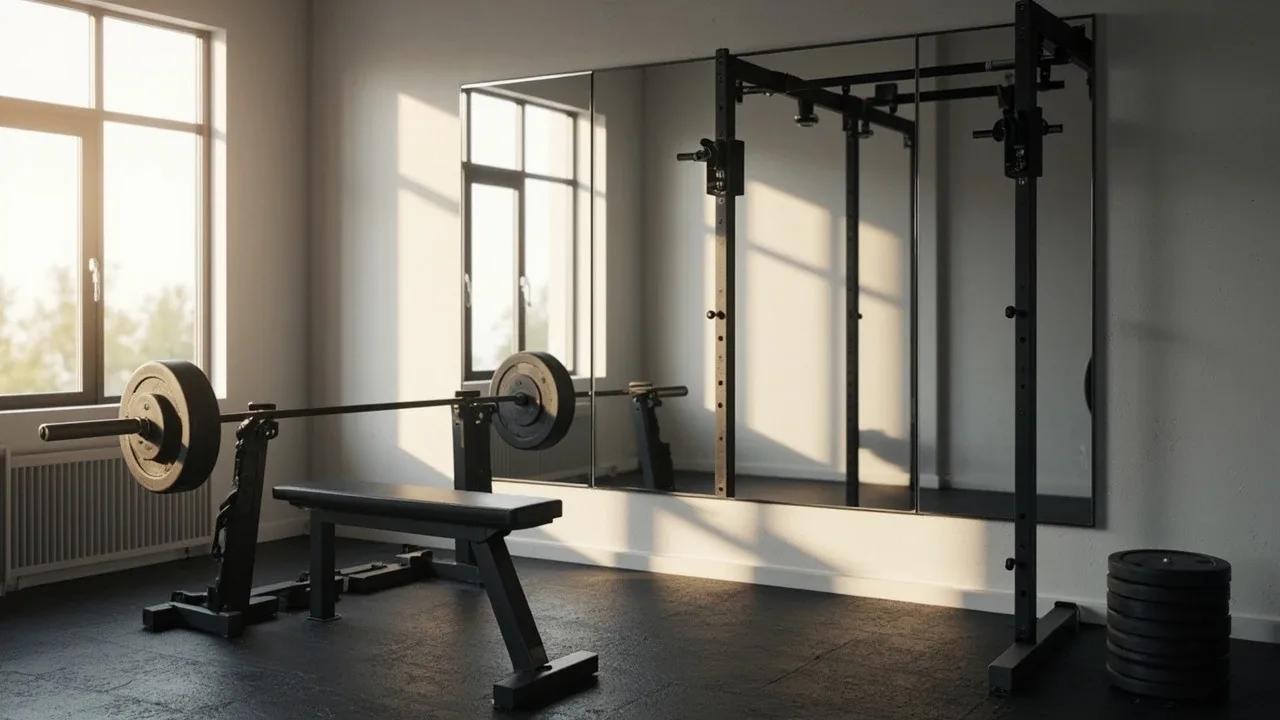
This is the crown jewel of wall-mounted equipment. A folding rack gives you a full squat and bench press station that folds flat against the wall in under 60 seconds.
What to Look For
- Depth when folded: The best racks fold to 4-5 inches from the wall. Cheaper ones stick out 8-12 inches.
- Depth when open: 20-24 inches is standard. Enough for squats and bench press.
- Weight capacity: Minimum 1,000 lbs. Don't go cheaper here.
- Hole spacing: Westside spacing (1-inch holes through the bench zone) matters for precise bench press setup.
- Pull-up bar: Some models include a pull-up bar at the top. Worth it.
Top Picks
| Product | Best For | Price Range |
|---|---|---|
| Rogue RML-3W Fold-Back Rack | Premium build quality, 1,000+ lb capacity | $500-$650 |
| PRx Performance Profile Rack | Fastest fold mechanism (10 seconds), Shark Tank famous | $1,300-$1,400 |
| Titan Fitness Fold-Back Rack | Budget-friendly alternative, solid build | $300-$400 |
Our pick: The PRx Profile Rack folds and unfolds faster than any competitor. You literally pull two pins and the uprights swing to the wall. If setup friction is what keeps you from working out, this rack removes the excuse. For more folding equipment, see our foldable equipment roundup.
Wall-Mounted Pull-Up Bars
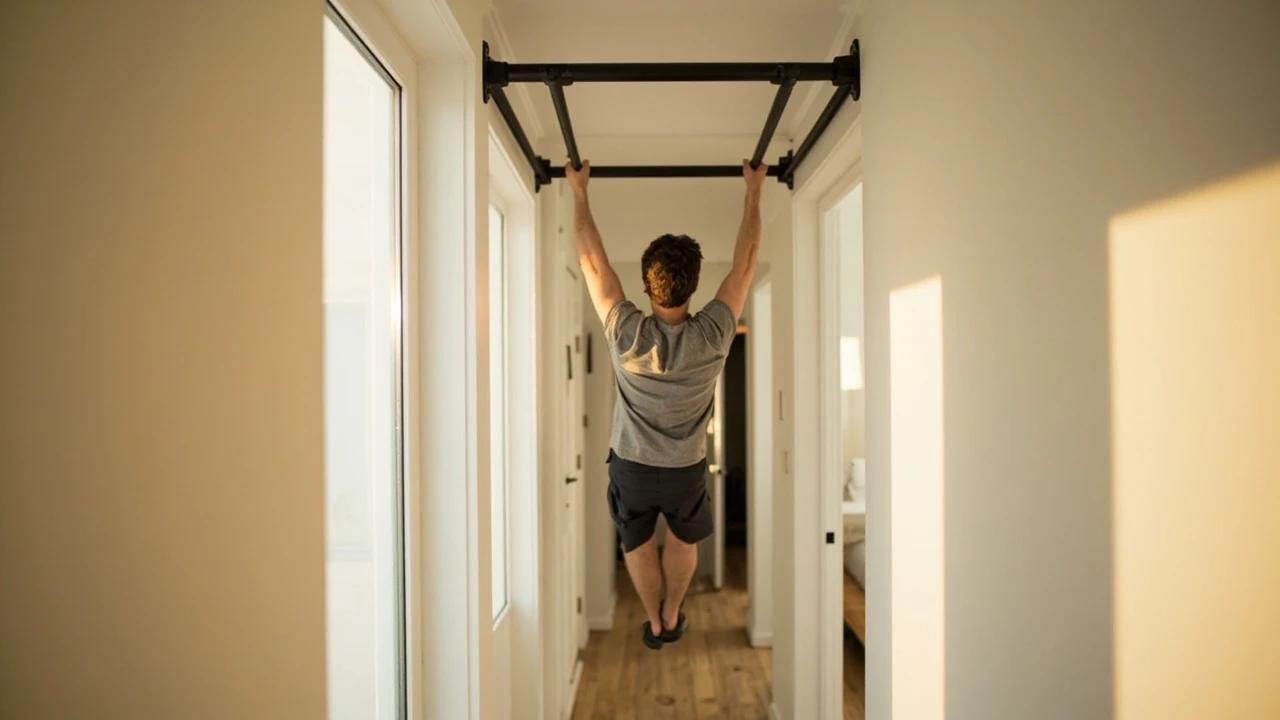
A pull-up bar is the highest-value piece of equipment per dollar and per square inch. Wall-mounted versions are sturdier than doorframe bars and give you more clearance for kipping or wide-grip variations.
What to Look For
- Standoff distance: How far the bar sits from the wall. 14-16 inches is ideal — enough room for your knees and chest.
- Weight capacity: 300+ lbs minimum.
- Grip options: Multi-grip (parallel, wide, narrow, neutral) gives you more exercise variety.
- Mounting: Requires two studs minimum, preferably three. Use lag bolts, not wood screws.
Top Picks
| Product | Best For | Price Range |
|---|---|---|
| Rogue P-4 Pull-Up System | Commercial-grade, multi-grip, bomber construction | $145-$195 |
| Titan Fitness Wall-Mounted Pull-Up Bar | Great value, solid steel, multi-grip | $60-$90 |
| Stud Bar Ceiling-Mounted Pull-Up Bar | Ceiling mount for low-wall spaces | $90-$130 |
If you're handy, you can also build your own pull-up bar for under $30 with pipe fittings.
Wall-Mounted Plate Storage
Weight plates on the floor are ankle-breakers and space-wasters. Wall-mounted plate storage is one of the simplest upgrades and frees up 4-6 square feet of floor instantly.
What to Look For
- Weight capacity per peg: Most hold 100-200 lbs per peg. You'll want 3-4 pegs for a full plate set.
- Peg diameter: Standard (1-inch) or Olympic (2-inch). Match your plates.
- Mounting: Each peg must hit a stud. 300 lbs of plates ripping out of drywall is a trip to the ER.
Top Picks
| Product | Best For | Price Range |
|---|---|---|
| Rogue Monster Plate Storage (direct — no Amazon seller) | Heavy-duty, holds 850+ lbs total | $100-$150 |
| Titan Wall-Mounted Plate Holder (4 pegs) | Budget pick, Olympic-size pegs | $70-$90 |
| Yes4All Wall-Mounted Plate Rack | Compact, good for lighter plate sets | $30-$50 |
For a full guide on keeping your plates, dumbbells, and accessories organized, see our vertical storage solutions article.
Wall-Mounted Suspension Trainers and TRX Anchors
Suspension training (TRX, rings, etc.) is one of the most space-efficient training methods. The anchor point takes up zero floor space and the straps store in a bag the size of a shoe.
What to Look For
- Anchor type: Dedicated wall/ceiling mount vs. multi-point anchor. Dedicated mounts are more secure.
- Weight capacity: 350+ lbs (to handle dynamic movements like muscle-ups).
- Mounting height: 7-9 feet is ideal. Higher gives you more strap range.
Recommended Setup
The simplest approach: mount a heavy-duty eye bolt (rated for 500+ lbs) into a ceiling joist or wall stud. Thread your TRX or gymnastic rings through it. Total cost: under $10.
For a dedicated anchor, the TRX X-Mount ($25) is specifically designed for wall/ceiling mounting and includes all hardware.
You can also build a full DIY cable pulley system using a wall-mounted anchor point — it adds lat pulldowns and cable rows to your wall-mounted setup.
Wall-Mounted Barbell Storage
Barbells are 7 feet long. On the floor, they're a hazard. On the wall, they're out of the way.
Options
- Horizontal barbell hangers: Two J-hooks mounted on the wall, spaced 36-48 inches apart. The bar lays flat against the wall. Best for: 1-2 bars.
- Vertical barbell holder: A single bracket near the floor with a cradle at the top. Bar stands straight up. Best for: 3+ bars, very narrow floor footprint (6 inches wide).
- Gun rack style: Multiple horizontal slots, one above the other. Bars stack like bookshelves. Best for: 4+ bars in a dedicated gym.
Cost: $15-$40 for a pair of basic J-hooks. $30-$60 for a vertical holder.
Wall-Mounted Dumbbell Racks
Standard dumbbell racks sit on the floor and eat up 4-6 square feet. Wall-mounted shelves hold the same weights at waist height and use zero floor space.
What to Look For
- Weight rating: Each shelf should hold at least 100 lbs. Adjustable dumbbells (up to 90 lbs each) need shelves rated accordingly.
- Depth: 12-14 inches is enough for most dumbbells.
- Material: Steel angle brackets with plywood shelving, or welded steel trays. Avoid particle board — it sags under weight.
DIY option: Two heavy-duty shelf brackets (rated 200+ lbs each) from the hardware store, plus a 2×12 board. Total cost: $20. Mount into studs, set your dumbbells on top. Simple, strong, free floor space.
Wall-Mounted Accessories
Resistance Band Pegs
- What: Simple dowels or hooks mounted on the wall.
- Why: Bands stored loose end up tangled, stretched, or lost. Wall pegs keep them organized and visible.
- Cost: $5-$15 for a set of hooks.
Medicine Ball Shelf
- What: A narrow shelf with a lip to prevent balls from rolling off.
- Why: Medicine balls on the floor are a rolled-ankle waiting to happen.
- Cost: $20-$40, or DIY with scrap wood.
Jump Rope Hook
- What: A single heavy-duty hook.
- Why: Jump ropes on the floor get tangled and stepped on.
- Cost: $3.
Installation Tips: Doing It Right
Every product on this list requires solid mounting. Here's how to not destroy your walls.
Finding Studs
- Stud finder: Electronic stud finders work 90% of the time. The $20 ones are fine.
- Knock test: Knock on the wall. Hollow sound = drywall only. Solid thud = stud behind it.
- Magnet trick: Run a strong magnet along the wall. It'll catch on the drywall screws that are driven into studs.
- Stud spacing: Standard is 16 inches on center. Once you find one stud, measure 16 inches left and right to find the next ones.
Hardware
- Lag bolts (3/8" × 3" minimum) for heavy loads (racks, pull-up bars, plate storage). Pre-drill pilot holes.
- Lag screws for medium loads (shelves, hooks, accessory storage).
- Never use drywall anchors for gym equipment. They're rated for picture frames, not 300 lbs of iron.
Weight Capacity Rules
- A single stud (typically a 2×4 or 2×6) can support 200-300 lbs of horizontal pull when properly bolted.
- Two studs with lag bolts can support 500+ lbs.
- Concrete walls (basement, garage) can handle virtually anything with proper concrete anchors (Tapcons or sleeve anchors).
Tips for Renters
If you can't drill into walls, you're not entirely out of luck:
- Power rack with attachments: Buy a freestanding rack and add wall-style accessories to the rack uprights instead.
- Over-door anchors: For TRX and resistance band work.
- Tension-mounted pull-up bars: Not as solid as wall-mounted, but they work for lighter users.
- Check out our apartment gym guide for full no-drill solutions.
The Ultimate Wall-Mounted Gym Setup
If you went all-in on wall-mounted equipment, here's what a complete setup looks like:
- Folding squat rack (back wall)
- Pull-up bar (integrated with rack or separate mount)
- Plate storage (wall pegs flanking the rack)
- Barbell storage (vertical holder next to the rack)
- Dumbbell shelf (side wall, waist height)
- TRX anchor (ceiling mount)
- Accessory hooks (bands, ropes, belts on pegboard)
Total wall space used: ~12 linear feet of wall Total floor space used when stowed: Less than 2 square feet Total floor space used during workout: ~50 square feet (the rack opens up, bench comes out)
That's the magic. You get a full gym that appears and disappears on demand.
FAQ
How much weight can a wall stud hold?
A single 2×4 wall stud can support 200-300 lbs of load perpendicular to the wall when fastened with proper lag bolts. For a folding squat rack (which distributes load across 4+ studs), the wall can handle well over 1,000 lbs. The weak point is never the stud — it's the fastener. Use 3/8" lag bolts minimum, not wood screws.
Can I mount gym equipment on drywall without studs?
No. Not for anything load-bearing. Drywall anchors (even "heavy-duty" ones) are rated for 50-75 lbs max. A pull-up bar with a 200 lb person doing kipping pull-ups generates dynamic forces exceeding 400 lbs. The anchors will rip out, the equipment will fall, and you'll have a hole in your wall and possibly a trip to the hospital. Always mount into studs or concrete.
Do wall-mounted racks damage the wall when removed?
You'll have lag bolt holes in the studs and drywall. The drywall holes are easy to patch with spackle and paint (10-minute fix). The stud holes don't affect structural integrity — they're small relative to the stud size. If you're renting, discuss with your landlord first, but the damage is comparable to mounting a large TV bracket.
What's the minimum wall height for a folding squat rack?
Most folding racks need 90-92 inches (7.5 feet) of wall height to mount at a usable height. This allows the pull-up bar to sit at approximately 82-84 inches — high enough for most people to hang without their feet touching the ground. Standard 8-foot ceilings (96 inches) work perfectly. If you have 7-foot ceilings, look for "short" rack models or skip the pull-up bar attachment.
Is wall-mounted equipment as stable as freestanding?
Yes, often more so. A wall-mounted pull-up bar bolted into two studs is essentially part of your house. It won't wobble, shift, or tip. Freestanding pull-up stations often sway or walk across the floor during intense sets. The same goes for folding racks — when locked open and bolted to the wall, they're at least as rigid as a freestanding rack of the same gauge steel. The wall is doing the stabilizing work that a heavy base plate does on freestanding equipment.
Mirror or rack on that wall? Home Gym Mirrors: What Size, How High, What It Costs — the two compete for the same square footage, and glass in a barbell drop zone is the expensive way to find out.
Only want the pull-up bar? Best Pull-Up Bars for Home: Doorway, Wall & No-Drill — seven bars ranked by how they attach to the house, including the two wall and ceiling mounts worth drilling for.