Table of Contents
Key takeaways
DIY sandbags cost $15–$30 and suit budget or experimental use, while commercial options like the Rogue Echo ($105) or Brute Force Kit ($120) last 5–10+ years for serious training.
- DIY material cost runs ~$0.25 per pound; commercial bags range from budget models to $165 (Rogue Strongman) and handle 200+ lbs versus 150 lbs for DIY.
- Budget commercial bags (Yes4All, Rep Fitness Basic) last 3–5 years; DIY canvas duffels typically 1–3 years.
- Inspect DIY seams monthly and re-tape to extend lifespan; dry bags in sunlight monthly to prevent odor.
- Avoid thin cotton duffels for DIY builds — they tear within months; use waxed canvas or ballistic nylon.
Sandbag training is the cheapest strength-and-conditioning tool in the world. The question isn't whether to use sandbags — it's whether to build one from a contractor bag or buy a tactical model with real handles.
This comparison covers cost, durability, training quality, and the edge cases where each option actually wins.
Quick Answer
For most home lifters, a DIY sandbag ($15-30) covers 95% of training needs. Go commercial if (a) you train 3+ days/week with sandbags, (b) you compete in strongman, or (c) you want multiple pre-set weights with minimal setup.
- DIY wins on: cost, customization, disposable-use scenarios
- Commercial wins on: durability, handles, multiple weight pins, aesthetic
Related guides
- DIY home gym projects hub
- DIY sandbag build guide
- Best cheap home gym equipment
- Budget home gym guide
Side-by-Side: Cost
| Aspect | DIY | Commercial (budget) | Commercial (premium) |
|---|---|---|---|
| Upfront cost | $15-30 | Check price on Amazon (Yes4All, Rep Basic) | $105-165 (Rogue, Brute Force) |
| Cost per pound | ~$0.25/lb | Check price on Amazon | ~$2/lb |
| Cost over 5 years | $25-90 (1-4 rebuilds) | Twice the upfront cost (replace once) | $105-165 (lifetime) |
The commercial sandbag's "premium" price is largely for handles and aesthetics. The sand inside costs the same.
Side-by-Side: Durability
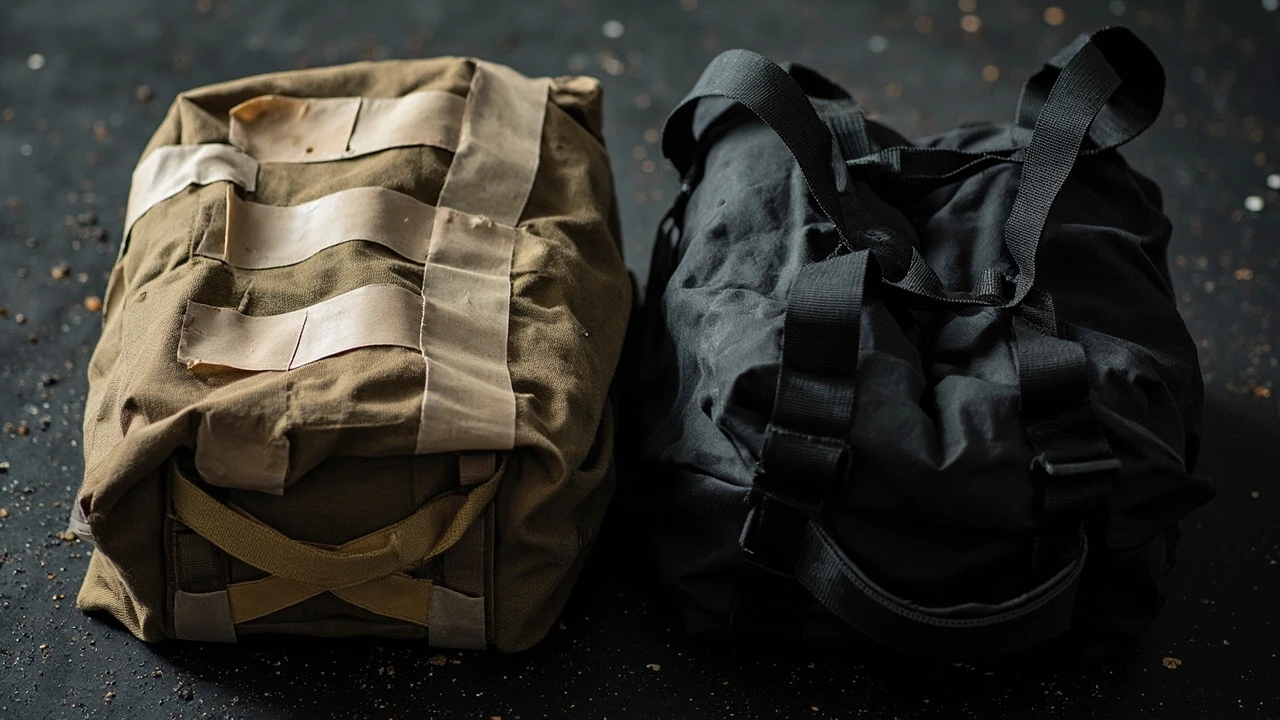
DIY lifespan: 1-3 years of regular use. Failure point: seam tears in the outer bag leading to sand leakage. Rebuilds are fast (30 minutes) and cheap ($10-15).
Budget commercial: 3-5 years. Failure point: handles tearing or zipper failure. Harder to repair than DIY.
Premium commercial: 5-10+ years. Industrial-grade materials, reinforced seams, replaceable handles.
Verdict: DIY loses on durability but wins on replaceability. A torn DIY sandbag costs $15 to replace; a torn commercial sandbag means a new bag or a repair job.
Side-by-Side: Training Quality
This is where the comparison gets nuanced.
For strength work (clean-and-press, shouldering, squats): DIY and commercial are essentially identical. The sand doesn't know what bag it's in.
For complex movements (Zercher carries, bear hugs, over-the-shoulder): commercial wins. Real handles let you grip at specific points. DIY sandbags need hand-under grips or makeshift loops.
For partner/throw drills: commercial. DIY seams can't survive impact landing.
For heavy loading (200+ lb): commercial. DIY outer bags can't hold >150 lb without seam stress.
Verdict: DIY covers 95% of home-lifter training. Commercial wins on the advanced 5%.
Side-by-Side: Setup & Weight Changes
DIY sandbags: single-weight per bag. If you want 50, 75, and 100 lb sandbags, build three.
Commercial sandbags: most have interchangeable fill pods (Rep, Brute Force). Pre-fill 5 pods at different weights, swap them in/out of one outer shell as your training progresses. Much cleaner.
Verdict: Commercial clearly better if you're progressing through weights frequently. DIY better if you want one or two fixed weights.
When DIY Actually Wins
- Tight budget. $15 vs $100. Not close.
- Experimental use. Testing whether sandbag training fits your routine? Build DIY first.
- Outdoor/rough use. Training at the beach, in a park, in the rain — DIY absorbs that abuse without you crying over a $100 bag.
- Military/PCS moves. Leave the DIY behind, rebuild on arrival.
When Commercial Actually Wins
- Multi-year serious use. If you're training sandbags 3+ days/week, durability favors commercial.
- Multiple weights regularly. The pod system saves real time.
- Specific movements. Zercher drills and partner work benefit from real handles.
- Gym aesthetic. DIY sandbags look like what they are. Commercial models match your rack.
- Gift/gym signaling. A Rep sandbag is a better gift than a contractor bag of sand.
Product Picks — Commercial
If you've decided on commercial:
Budget:
- Yes4All sandbag (40 lb fillable) — widely available, adequate for 2-3x/week training
- Rep Fitness Basic Sandbag — upgrade handles, slightly better stitching
Mid-tier ($90-130):
- Rogue Echo Sandbag ($105) — excellent reputation, an integrated filler bag, full weight range
- Brute Force Sandbag Kit ($120) — modular, widely used in strongman
Premium ($150+):
- Rogue Strongman Sandbag (up to $165) — 300 lb rated, competition-grade
Planning the full build? How much does a home gym cost? breaks down every budget tier, and our cost calculator picks equipment that fits your space and spend.
Frequently Asked Questions
How long does a DIY sandbag last?
1-3 years depending on build quality and use frequency. The failure point is always seam tears letting sand leak. Monthly inspection and re-taping extends lifespan significantly.
Are commercial sandbags worth the money?
For 3+ sessions per week with frequent weight changes: yes. For 1-2 sessions per week with a fixed weight: probably not — DIY covers that use case.
Best budget sandbag?
Yes4All is the entry point. Rep Fitness Basic is meaningfully better. Below that, go DIY.
Can you use a duffle bag as a sandbag?
Yes — military surplus duffels are the standard DIY outer shell. Look for waxed canvas or ballistic nylon construction. Avoid thin cotton duffels; they'll tear within months.
Do DIY sandbags smell over time?
Yes, from moisture buildup. Dry them out monthly in the sun. For worse smells, empty the sand, wash the outer bag, and refill. Takes an hour.