Table of Contents
DIY projects hub: Build your own home gym equipment → — power racks, sandbags, plyo boxes, and more.
Key takeaways
A backyard shed as small as 8×10 ft can become a year-round gym for $500–$2,000 once insulated, wired, and climate-controlled.
- Fix leaks and insulate first — R-13 batts in walls plus R-5 to R-10 foam board prevents moisture damage to iron equipment.
- A dedicated 20-amp electrical circuit ($500–$1,500) is required for safe heater and lighting use; long extension cords are a code violation.
- A mini-split heat pump ($700–$1,500) is the most versatile climate solution; a 1,500W electric space heater works for budgets but needs ventilation.
- The payoff versus a gym membership runs 10–40 months depending on local rates.
Quick Answer: Converting a shed to a home gym costs $500-$2,000 and takes 1-3 weekends. Key steps: (1) assess structure and fix leaks, (2) insulate walls and ceiling with rigid foam or fiberglass, (3) install rubber flooring over plywood or concrete, (4) add electrical for lighting and a fan/heater, (5) mount equipment. Minimum usable size: 8x10 feet. A 10x12 shed fits a full power rack setup.
Your backyard shed is sitting there right now, full of rakes, a lawnmower you use 12 times a year, and a pile of "I'll deal with this later." Meanwhile, you're paying $50/month for a gym membership and driving 20 minutes each way to wait for a squat rack.
The math doesn't math.
A shed gym conversion costs $500-$2,000 depending on how far you take it. That's 10-40 months of gym membership fees. And unlike a gym membership, you can sell the equipment when you're done with it. The shed stays, and it's now climate-controlled storage even if you stop lifting.
Here's the step-by-step process to turn that junk shed into a serious training facility.
Key Numbers
- A shed-to-gym conversion costs $500-$2,000 and takes 1-3 weekends.
- 10×12 ft (120 sq ft) is the sweet spot — a half rack, bench, and dumbbell area. An 8×10 shed works for dumbbell and bodyweight training only.
- Measure ceiling height at the eaves, not the peak: prefab sheds run 6-6.5 ft at the eaves even with 7.5-ft peaks; overhead pressing wants 8 ft.
- A dedicated 20-amp circuit from the house costs $500-$1,500 installed; wall insulation runs $100-$300.
- Stall-mat flooring costs $40-50 per 4×6 mat.
Step 1: Assess Your Shed
Not all sheds are created equal. Before you start ripping things apart, answer these questions:
Structure Check
- Foundation: Is it on a concrete slab, gravel pad, or just sitting on dirt? Concrete is ideal. Gravel works. Dirt needs a subfloor.
- Walls: Plywood sheathing, T1-11 siding, or metal panels? You need something you can insulate and attach things to.
- Roof: Does it leak? Fix leaks first. Water and iron don't mix.
- Floor: Plywood subfloor or concrete? If plywood, check for rot. Jump on it. If it flexes more than a little, it needs reinforcement.
Size Matters
The two most common shed sizes for gym conversion:
8×10 shed (80 sq ft):
- Tight but workable for bodyweight + dumbbell training
- No room for a full power rack
- Think: adjustable dumbbells, a bench, kettlebells, resistance bands
10×12 shed (120 sq ft):
- The sweet spot. Room for a half rack, bench, and dumbbell area
- Comparable to a 10×10 bedroom gym but with more privacy and noise tolerance
- You can actually deadlift here without bothering anyone
Ceiling Height
- Minimum: 7 feet for basic exercises
- Ideal: 8+ feet for overhead pressing
- Most prefab sheds have 7-7.5 ft ceilings at the peak and 6-6.5 ft at the eaves. Measure at the lowest point — that's your real ceiling height for exercise.
Step 2: Clean and Prep
This takes one Saturday.
- Empty everything. Every rake, every box, every spider. Put it on the lawn.
- Sweep and wash the floor. Use a shop vac for corners and cobwebs.
- Inspect for damage. Look for rot in floor joists, wall studs, and roof framing. Poke suspect areas with a screwdriver — if it sinks in, that wood is done.
- Repair any structural damage before proceeding. Replace rotted boards, patch holes, seal gaps.
- Pest control. Spray the perimeter with insecticide. Seal any gaps where mice can enter (they can fit through a hole the size of a dime).
Step 3: Insulation
This is the step that separates a miserable hot box from a year-round gym. Do not skip insulation.
Wall Insulation
- Best option: Fiberglass batts (R-13) between wall studs, covered with plywood or OSB sheathing.
- Budget option: Rigid foam board (R-5 to R-10 per inch) glued directly to existing walls.
- Cost: $100-$300 for a small shed.
Ceiling/Roof Insulation
- Best option: Fiberglass batts between roof rafters + a vapor barrier.
- Budget option: Rigid foam panels stapled to the underside of the rafters.
- Heat rises. Ceiling insulation matters more than wall insulation for summer comfort.
Floor Insulation (If No Concrete Slab)
- If your shed sits on a wooden floor over open air, insulate underneath with rigid foam board between the floor joists.
- This prevents the floor from becoming an ice rink in winter.
Pro tip: Seal every gap and crack with spray foam before insulating. Air infiltration kills insulation performance.
Step 4: Flooring
The floor takes a beating in a gym. Protect it.
| Product | Best For | Price Range |
|---|---|---|
| Horse Stall Mat (3/4" Rubber) | Heavy lifting, deadlifts, drops | $110-$130 per 4x6 mat |
| BalanceFrom Puzzle Exercise Mat | General fitness, lighter weights | $20-$40 |
| Traxxon Rubber Gym Flooring Roll | Wall-to-wall coverage, clean look | $3.00-$4.50 per sq ft |
For a deep dive on flooring options, see our DIY flooring guide.
For concrete slab sheds: Lay rubber mats directly on the concrete. Done.
For plywood floor sheds: Consider adding a layer of 3/4" plywood on top of the existing floor first (screwed into the joists), then rubber mats on top. This distributes weight and prevents the floor from sagging under a loaded rack.
Step 5: Electrical
You need power in your shed. Period. No power means no lights, no fan, no music, and no heater.
Option A: Extension Cord (Temporary)
- Run a 12-gauge outdoor extension cord from your house to the shed.
- Use a cord rated for at least 20 amps.
- Pros: Free if you already own the cord. Immediate.
- Cons: Not code-compliant. Trip hazard. Can't run high-draw equipment (heaters, AC).
- This is the "I want to try this before committing" option.
Option B: Dedicated Circuit (Permanent)
- Hire an electrician to run a 20-amp circuit from your main panel to the shed.
- Cost: $500-$1,500 depending on distance and local codes.
- This gives you outlets, overhead lighting, and capacity for a space heater or mini-split.
- Worth it if you're serious about using the shed year-round.
What You Need at Minimum
- 2-3 outlets on the walls (for fan, phone charger, speaker)
- 1 overhead light (LED shop light — bright, cheap, efficient)
- 1 dedicated outlet for a space heater or fan (on its own breaker if possible)
Step 6: Climate Control
A shed without climate control is a sauna in July and a freezer in January. Here's how to fix both.
Summer Cooling
- Exhaust fan mounted in the wall or gable vent. Pulls hot air out.
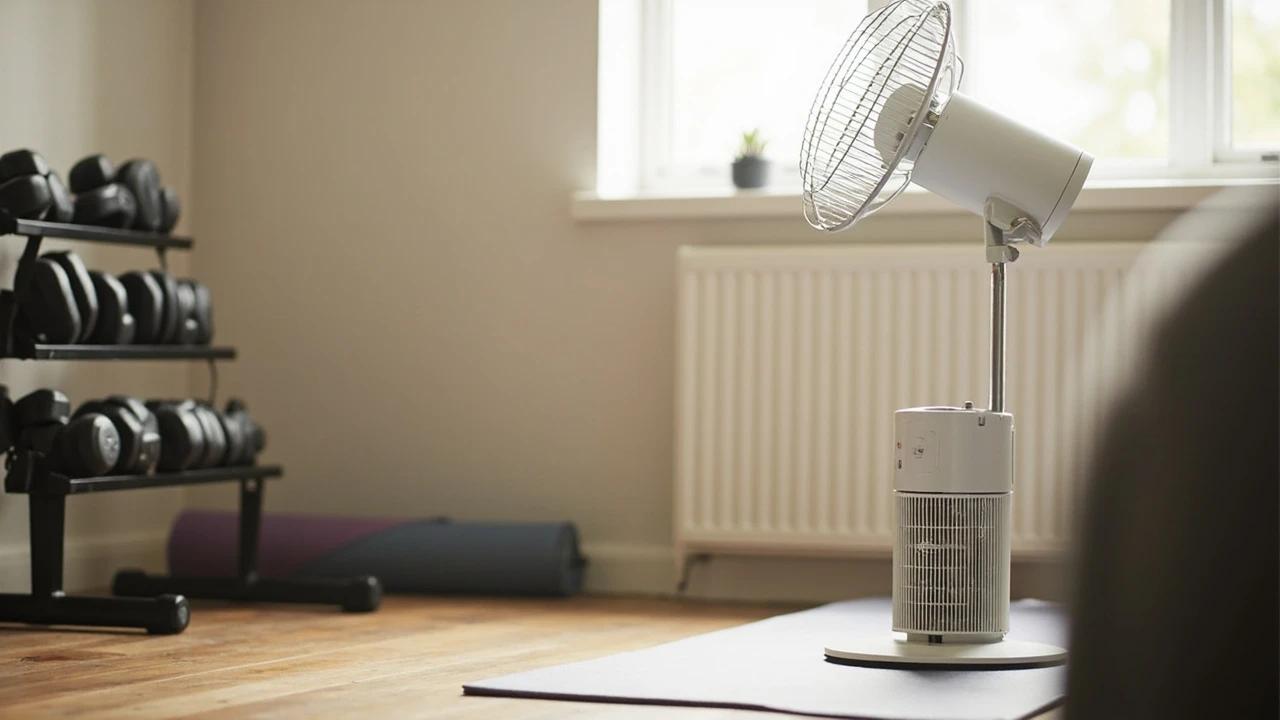
- Box fan in the doorway. Simple but effective for mild heat.
- Portable evaporative cooler for dry climates. Doesn't work in humidity.
- Mini-split AC for the ultimate setup. Costs $700-$1,500 installed. Makes your shed better than most commercial gyms.
Winter Heating
- Electric space heater (1500W): Heats an insulated 8×10 shed in 10-15 minutes. Cost: $30-$50.
- Infrared heater: Heats you, not the air. Works even with the door cracked open.
- Propane heater: Fast, powerful heat. Must have ventilation — crack a window or leave the door open a few inches. Carbon monoxide is no joke.
- Mini-split heat pump: Heats and cools. Most efficient long-term option.
Reality check: If you insulated properly in Step 3, a $30 space heater is enough for most shed gyms in most climates. Don't overthink this.
Step 7: Layout and Equipment
Now the fun part. Let's fill the space.
8×10 Shed Layout (80 sq ft)
This is a tight space. Every inch counts. Think of it like a closet gym with walls.
Equipment list:
- Adjustable dumbbells (Bowflex or PowerBlock): 1 sq ft footprint
- Flat/incline bench (foldable): 2×4 ft when in use, stores against wall
- Kettlebell (1-2 bells): Floor space next to bench
- Resistance bands with door anchor
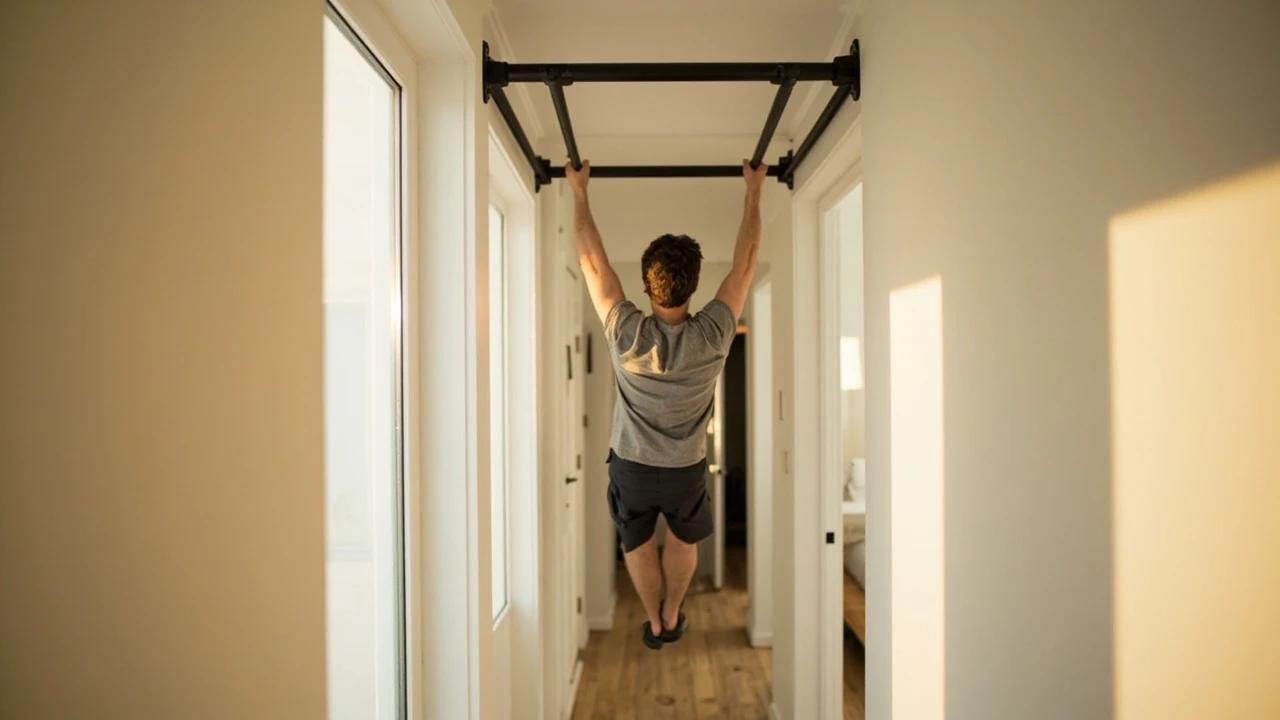
- Pull-up bar mounted to ceiling joist or wall
- Yoga mat (rolls up and stores vertically)
Layout:
- Back wall: Pull-up bar mounted overhead. Adjustable dumbbells on a small shelf below.
- Right wall: Foldable bench stored flat against wall when not in use.
- Left wall: Wall hooks for bands, jump rope, and accessories. Follow our vertical storage guide.
- Center: Open floor space for bench work, swings, and floor exercises. You get roughly 5×6 feet of open floor — enough for everything except barbell work.
10×12 Shed Layout (120 sq ft)
Now we're talking. This size lets you add a rack.
Equipment list:
- Half rack or folding squat rack (4×4 ft footprint)
- Barbell + plates (stored on rack or wall pegs)
- Adjustable bench
- Adjustable dumbbells
- Kettlebell(s)
- Resistance bands
Layout:
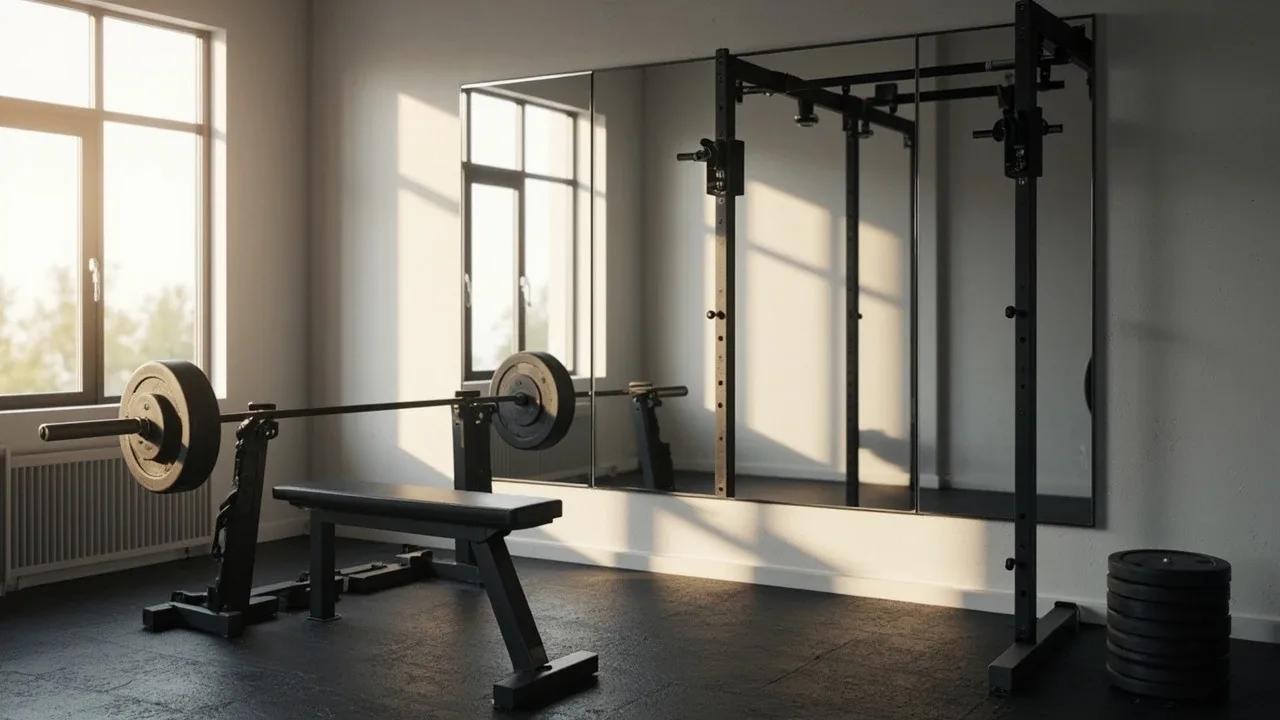
- Back wall: Half rack centered, with plate storage on the rack posts.
- Right wall: Adjustable bench (slides under the rack when not in use). Dumbbell shelf.
- Left wall: Accessory storage — bands, belts, chalk, foam roller.
- Center aisle: 4×8 ft open area for deadlifts, rows, and floor work.
- Front (near door): Keep clear for entry/exit and airflow. Good spot for a fan.
Step 8: Finishing Touches
These aren't essential, but they make the difference between a shed you tolerate and a shed you love.
- Mirror: Mount one on the back wall. Check form and make the space feel bigger. A $20 door mirror from a home store works fine.
- Speaker: Bluetooth speaker mounted on a shelf. Your shed, your music, your volume.
- Whiteboard: Track your workouts on the wall. Dry-erase board + markers.
- Rubber door mat at the entry to keep dirt out.
- Lock: A basic padlock keeps honest people out and gives you peace of mind about your equipment.
Cost Breakdown
Here's what the full conversion actually costs:
| Item | Budget | Mid-Range |
|---|---|---|
| Insulation | $100 | $300 |
| Flooring (rubber mats) | $60 | $150 |
| Electrical (extension cord vs. dedicated) | $0 | $1,000 |
| Climate control (space heater vs. mini-split) | $30 | $1,200 |
| Lighting | $20 | $60 |
| Paint / finishing | $30 | $80 |
| Total (shed prep only) | $240 | $2,790 |
Equipment is separate. A solid starter setup runs $300-$800. See our budget home gym guide for the most cost-effective equipment picks.
| Product | Best For | Price Range |
|---|---|---|
| HulkFit Power Squat Rack | Squats and bench press in a 10x12 shed | $180-$280 |
| PowerBlock Elite Adjustable Dumbbells | Space-saving adjustable dumbbells | $300-$400 |
| Rogue Echo Bike | Cardio in a compact footprint | $700-$800 |
FAQ
Do I need a permit to convert my shed into a gym?
Generally, no. You're not changing the structure's use from a zoning perspective — it's still an accessory building. However, if you're running a new electrical circuit, most jurisdictions require an electrical permit. Check with your local building department. The permit usually costs $50-$100 and ensures the work is done safely.
Can a shed floor support heavy gym equipment?
A concrete slab can handle anything you throw at it. A wooden floor on joists is the concern. Standard shed floors are built for lawnmowers and boxes — maybe 40 psf live load. A loaded squat rack with 400 lbs of plates concentrates a lot of weight on a small area. Solution: Reinforce the floor joists by sistering additional 2×8 or 2×10 lumber alongside the existing joists, and add a layer of 3/4" plywood on top. This distributes the load and prevents bouncing.
How do I keep my shed gym from getting moldy?
Moisture is the enemy. Three rules: (1) Ventilation — install at least one vent or exhaust fan to move humid air out. (2) Vapor barrier — when insulating, always include a vapor barrier on the warm side of the insulation. (3) Dehumidifier — run a small dehumidifier during humid months. A $40 unit is enough for a shed-sized space. Wipe down equipment after use to prevent rust.
Is it worth insulating a shed gym?
Absolutely. An uninsulated metal or wood shed is 10-15 degrees hotter than outside in summer and equally colder in winter. Insulation doesn't just make it comfortable — it makes your heater and fan actually effective. Without insulation, you're heating the outdoors. With R-13 walls and R-19 ceiling, a $30 space heater can keep an 8×10 shed at 65°F when it's 30°F outside.
Can I use a shed gym year-round?
Yes, if you've insulated and have basic climate control. People train in shed gyms in Minnesota winters and Texas summers. The keys are: insulation (Step 3), a heat source for winter, airflow for summer, and a good attitude. You're not building a spa — you're building a place to get strong. A little discomfort is part of the charm.
Sheds and garages share the same ventilation problem. Best Fans for a Garage Gym — wall-mount and drum fan picks that work equally well in a converted shed.
Converting the garage rather than a shed? Garage Gym Layout Ideas — 1-car and 2-car floor plans with the same climate and flooring playbook.
Not ready to build out a shed? Your garage is the faster path — the single-car garage gym layout shows how to fit a full strength setup in 12×20 ft, with or without keeping room for the car.
Heating an outbuilding? How to Heat a Garage Gym Without Blowing a Breaker — the circuit math and sizing tables apply to any uninsulated detached space.
Why people end up in a shed: The Garage Gym Gap — once both cars are parked, a standard two-car garage leaves less usable width than a garden shed does.