DIY projects hub: Build your own home gym equipment → — power racks, sandbags, plyo boxes, and more.
Key takeaways
A flat weight bench can be built for roughly $40 in lumber (plus foam and vinyl) using three 8-foot 2×4s, 3/4" plywood, high-density foam, and marine-grade vinyl.
- Finished dimensions: 12" wide × 48" long × 17.5" tall — matching standard bench proportions.
- Padding is marine vinyl over high-density foam; ready-made alternatives include the Amazon Basics and FLYBIRD benches.
- Pre-drill every joint and apply wood glue — glue carries more load than screws alone.
- Never let screws penetrate through the plywood backing of the pad, which can cause injury.
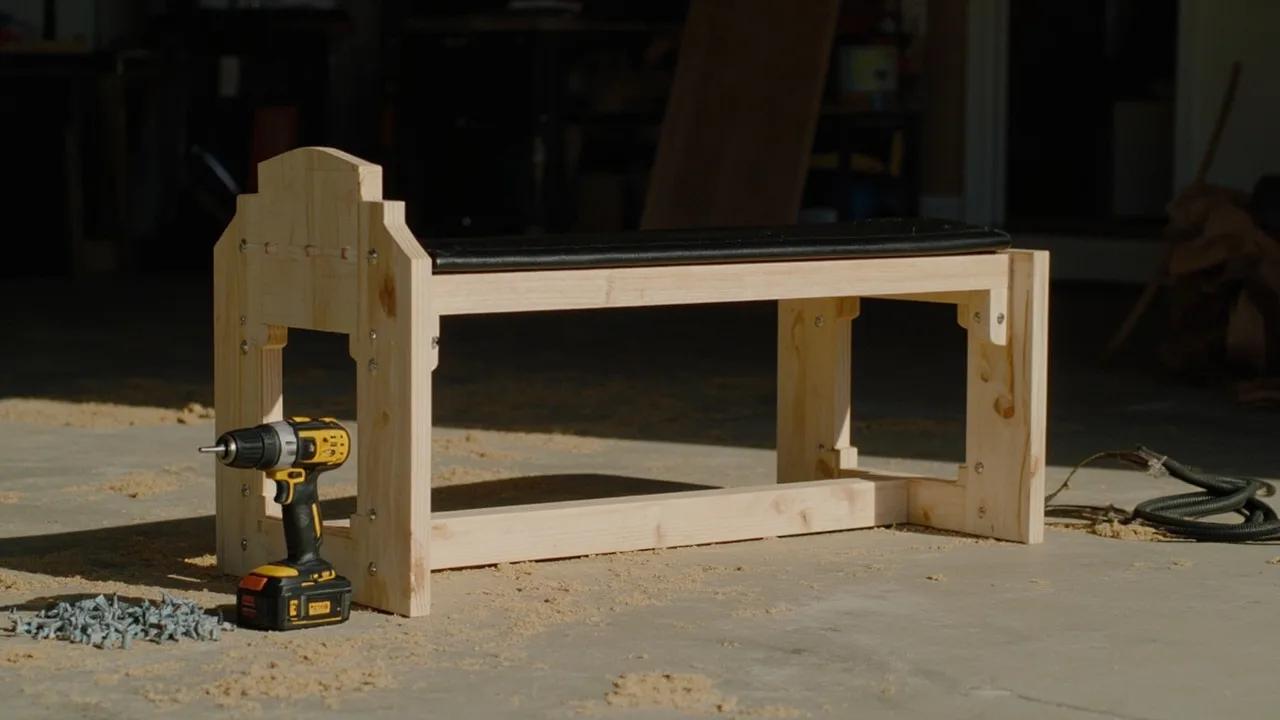
A good flat bench costs real money. You can build your own for $40 in lumber, plus foam and vinyl. This design uses a 2x4 box frame. It is heavy and ugly, and all it takes is a saw, a drill and a staple gun.
Prefer to buy instead of build? If DIY isn't your thing, here are the best ready-made options:
- Amazon Basics Flat Bench
- FLYBIRD Adjustable Bench
- Finer Form Flat Bench — 1,000 lb capacity
Materials List
- Lumber: Three 8-foot 2x4s.
- Top: One piece of 3/4 inch Plywood (cut to 12" x 48").
- Padding: High-density foam (upholstery foam, 2 inches thick). 12" x 48". Check price on Amazon →
- Cover: Vinyl fabric (Marine grade is best, sold at fabric stores). 18" x 54". Check price on Amazon →
- Hardware: 2.5 inch wood screws. Wood glue. Staples.
Cut List
- Legs: 4 pieces at 14¾ inches.
- Stringers (Length): 4 pieces at 45 inches.
- Cross Braces (Width): 4 pieces at 6 inches.
Cut two stringers from each of two boards, and the legs and braces from the third. The legs put the top of the pad at 17½ inches: 14¾ inches of frame, ¾ inch of plywood and 2 inches of foam. If your foam is thicker or thinner, shorten or lengthen the legs by the difference.
Step-by-Step
1. Build the Frame
We are building a box frame: two "H" end frames joined by four stringers.
- The "H" frames: For each one, lay a cross brace flat between two legs, flush with their tops, and fit a second about 4 inches off the floor. Each "H" comes out 9 inches wide: two 1½-inch legs and the 6-inch brace.
- The stringers: Screw them to the outside of the legs, one along the top and one along the bottom of each side, with the top pair flush with the tops of the legs. That adds 1½ inches a side, so the frame is 12 inches wide and 45 inches long, and the 48-inch pad overhangs each end by 1½ inches.
- Tip: Pre-drill holes and use wood glue at every joint. Glue is stronger than screws.
2. The Pad Base (Plywood)
- Cut your plywood to 12 inches wide by 48 inches long. This is standard bench spec.
- T-Nut Trick: If you want to make the pad removable (to replace vinyl later), install "T-Nuts" into the plywood so you can bolt it to the frame from underneath, rather than screwing into it.
3. Upholstery (The Hard Part)
- Lay the vinyl face down on the floor.
- Lay the foam on top of the vinyl.
- Lay the plywood on top of the foam.
- Pull and Staple: Start in the middle of one long side. Pull the vinyl TIGHT and staple it to the wood.
- Go to the opposite side. Pull very tight (compress the foam) and staple.
- Work your way to the ends.
- Corners: Fold them like a present ("Hospital Corner") and staple the hell out of them. A smooth corner makes it look pro.
4. Attach Pad to Frame
- Place the finished pad on top of your wooden frame.
- Screw up through the two flat top braces into the plywood base of the pad. Use 2-inch screws here, not the 2½-inch frame screws: they pass the 1½-inch brace and stop half an inch into the ¾-inch plywood, where the longer ones would come out the top and poke your back.
Specs
- Height: ~17.5 inches (Standard powerlifting height). This is crucial if you later upgrade to a power rack.
- Width: 12 inches (Standard).
- Capacity: A homemade bench has no tested load rating. Check every joint for movement before each session, and for heavy pressing use a bench with a published rating, like the Finer Form flat bench above. If you need something that disappears, check our foldable bench reviews.
Recommended Gear from This Article
| Product | Best For | Price Range |
|---|---|---|
| Amazon Basics Flat Bench | Best budget buy | Check price on Amazon |
| FLYBIRD Adjustable Bench | Best foldable | Check price on Amazon |
| Finer Form Flat Bench | 1,000 lb flat bench | Check price on Amazon |
| Marine Vinyl Fabric | DIY upholstery | Check price on Amazon |
| High Density Foam | Bench padding | Check price on Amazon |
Rather buy than build? Best Weight Bench for a Home Gym — flat vs adjustable vs FID, the specs that matter, and the four benches worth the money.