Table of Contents
Key takeaways
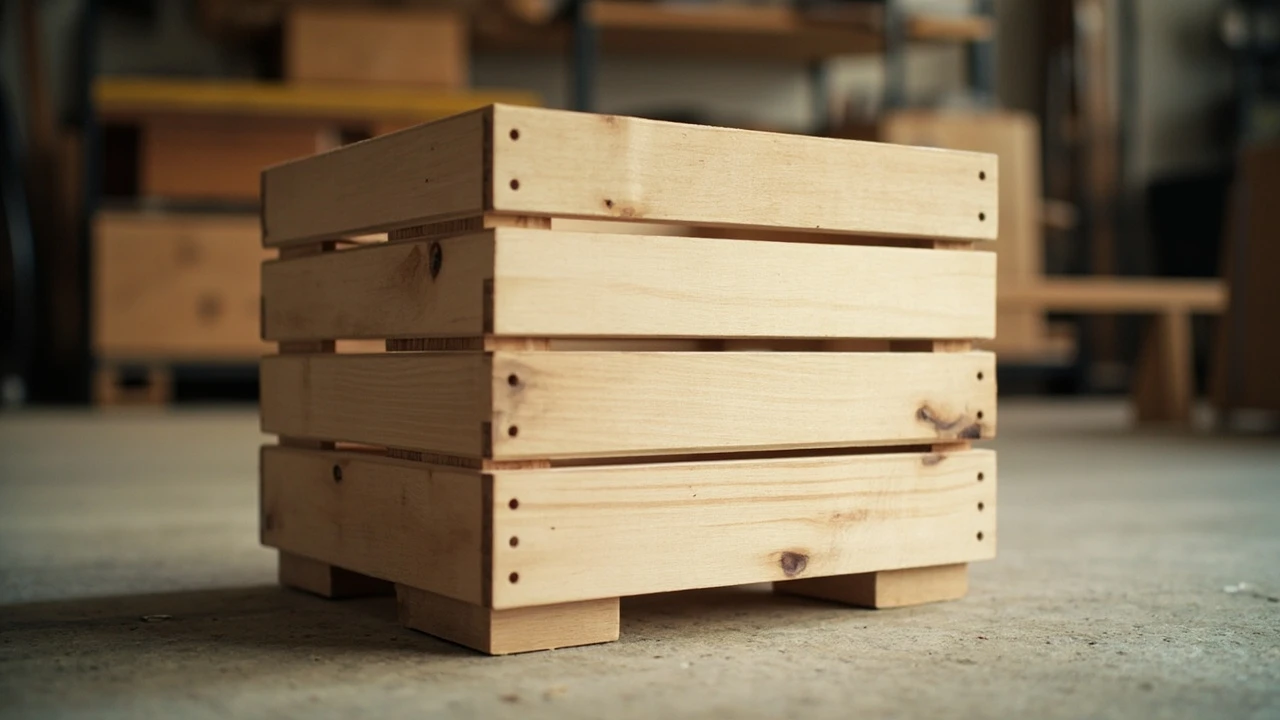
A 3-in-1 plyo box with 20", 24", and 30" jump heights can be built from a single 4×8 sheet of 3/4" plywood in about 2 hours, for the cost of the plywood alone if you already own the glue, screws and sandpaper.
- Materials needed: 3/4" plywood, Titebond III wood glue, #8 × 2.5" construction screws, and 80/120-grit sandpaper.
- One 4×8 sheet yields all six panels; the finished box handles 300+ lbs of dynamic jump load.
- Combine glue and screws at every joint — screws alone allow flex and eventual cracking.
- Never substitute 1/2" plywood; it flexes and cracks within weeks under jump training.
A plyo box is the single most versatile piece of gym equipment you'll own. Box jumps, step-ups, elevated push-ups, incline presses, deadlift blocks, dip bases — one box, dozens of uses.
Commercial plyo boxes cost $80-150 for a decent one, though some ready-made 3-in-1 boxes now cost far less. This guide builds the same thing cheaply in about 2 hours.
Quick Answer
Build a 3-in-1 plyo box (20"/24"/30" heights) from a single sheet of 3/4" plywood, construction screws, and wood glue. Build time: 2 hours. Rated for 300+ lb jump impact when built correctly.
- One sheet of plywood: $35 (3/4" 4x8 at Home Depot) = all 6 panels
- Cut list: 20x24, 20x24, 24x28.5, 24x28.5, 18.5x28.5, 18.5x28.5 inches
- Build time: 2 hours (1 hour cutting, 1 hour assembly)
Related guides
Why the 3-in-1 Design?
A 3-in-1 plyo box is a rectangular box with three different dimensions — 20, 24, and 30 inches. Flip it onto any of three sides to change jump height. One box, three boxes' worth of use.
- 20" side: beginner box jumps, step-ups, dips
- 24" side: standard men's box jump (crossfit/games height)
- 30" side: advanced box jumps, Bulgarian split squats
Cost to build a 3-in-1: one sheet of plywood plus glue, screws and sandpaper. Three separate boxes cost more in materials, or $300+ commercial.
Prefer to buy instead of build? Worth knowing before you start: a ready-made 3-in-1 can now cost about the same as building one.
- Amazon Basics 3-in-1 Wooden Plyo Box — the budget pick, a plain wooden box like the one this guide builds
- Yes4All 3-in-1 Soft-Padded Plyo Box — foam sides that are far kinder to shins on a missed rep
Build it anyway if you want a custom height, the skill, or a box you can repair. Buy it if you want to jump on it this week.
Materials List
| Item | Qty | Cost |
|---|---|---|
| 3/4" plywood (4x8 sheet) | 1 | $35 |
| Wood glue (Titebond III) | 1 bottle | Check price on Amazon |
| Construction screws (#8 x 2.5") | 1 box | Check price on Amazon |
| Sandpaper (80 + 120 grit) | 1 pack | Check price on Amazon |
Plywood is a hardware-store buy — Home Depot cuts the sheet for free, which Amazon cannot. If you already have glue, screws and sandpaper: $35.
Tools Needed
- Circular saw or table saw
- Drill with #2 Phillips bit
- Pencil + tape measure
- Square (for perpendicular cuts)
- Orbital sander (optional but speeds finishing)
Cut List
From one 4x8 sheet of 3/4" plywood, cut these 6 panels:
- Top/Bottom: 20" x 24" (x2)
- Long sides: 24" x 28.5" (x2)
- Short sides: 18.5" x 28.5" (x2) — these will have internal height of 28.5" after accounting for 3/4" top and bottom panels
Orient cuts to minimize waste. A good cut plan fits all 6 panels on one 4x8 sheet with 6-8 inches of offcut to spare.
Step 1: Cut the Plywood
Mark all 6 panels on the plywood using pencil and a square. Use a circular saw with a straight-edge guide (or table saw if available) to make clean, square cuts.
Take your time here — if the panels aren't square, the finished box will be wobbly. Measure twice, cut once.
Step 2: Sand the Edges
Hit every cut edge with 80-grit sandpaper to remove splinters, then 120-grit for a smoother feel. This takes 15-20 minutes with an orbital sander or 30 minutes by hand.
If you skip this step, you will regret it the first time you slam a shin into the box.
Step 3: Dry-Fit the Box
Assemble the box without glue or screws first. Stand the two long-side panels upright and position the short-side panels between them. Place the bottom and top panels on the ends.
If anything doesn't align, now's the time to re-cut. The final box will be as square as your dry-fit.
Step 4: Glue and Screw
Disassemble. Apply a bead of wood glue to all mating surfaces.
Reassemble and drive #8 x 2.5" construction screws through the long-side panels into the short-side panel edges. 4-5 screws per seam, evenly spaced. Pre-drill if your plywood wants to split.
Screw the bottom panel on first (easier access), then the top panel.
Step 5: Clamp and Cure
If you have clamps, use them. If not, weigh the box down with a couple of 45 lb plates while the glue cures (24 hours minimum).
Step 6: Finish (Optional)
- Sand all edges one more time with 120-grit
- Apply polyurethane or oil-based sealer for moisture resistance (garage boxes)
- Stencil height numbers on each face for reference (helpful when you're sweaty and the box looks identical from three angles)
Safety and Capacity
A plyo box built to this spec handles 300+ lb of dynamic jump load — far more than most users will ever apply. The failure mode is almost always missed cuts leading to warped boxes, not materials failure.
Critical: Always test-land from the lowest height first. If the box rocks or slides, reinforce or rebuild before higher-impact use.
Planning the full build? How much does a home gym cost? breaks down every budget tier, and our cost calculator picks equipment that fits your space and spend.
Frequently Asked Questions
Can I use 1/2" plywood instead?
No. 1/2" plywood flexes under jump impact and will develop cracks within weeks. 3/4" is the minimum; 1" is overkill but works if you have extra.
Do I need wood glue if I'm using screws?
Yes. Screws alone let the box flex at the joints. Glue adds rigidity and prevents the characteristic "wobble" that makes cheap boxes feel unsafe.
What's the max jump height for a DIY plyo box?
30" is standard. 36" is doable with the same design but requires slightly larger panels. Past 36", consider a dedicated tall plyo box rather than stacking.
Can you use a plyo box for deadlift blocks?
Yes — the 20" or 24" side works great for block pulls. Just use the flat side and make sure the box is stable before loading it with a heavy bar.
How do I make it non-slip on top?
Glue a 3/4"-thick rubber gym mat offcut to the top face. Covers the plywood, adds grip, and cushions sketchy landings.