Table of Contents
Key takeaways
Casting concrete plates with Quikrete 5000 and rebar reinforcement yields a 250 lb set for roughly $46–$61, far below iron plate prices of $1.50–$2 per pound.
- Budget about $0.20 per pound in materials; expect ±2–5 lb variance from target weight per plate.
- Use #3 rebar and a 1.25" PVC pipe sleeve; demold after 48 hours and cure a minimum of 7 days (ideally 14).
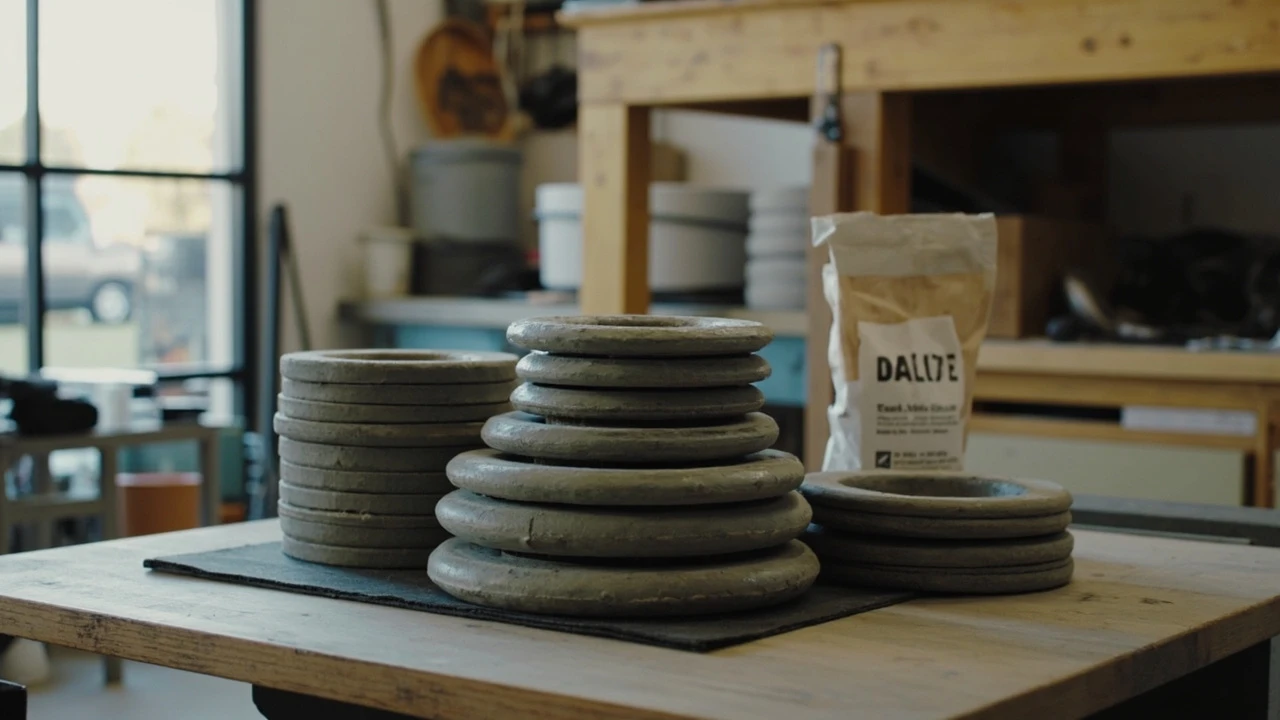
- Concrete plates run more than twice as thick as iron's 1.5" — factor in bar space before building a full set.
- Never train with uncured plates, and avoid dropping them — concrete fractures on impact.
Concrete weight plates feel like the ultimate DIY flex: pour cement, add a hole, train hard, save hundreds of dollars. The reality is more nuanced — concrete plates work, but they're bulky, imprecise, and only worth casting for specific situations.
This guide covers the build process, the math on whether it's worth your time, and when to just buy iron instead.
Quick Answer
Cast DIY concrete weight plates for about $0.20 per pound using a bucket mold, Quikrete, and rebar for structure. A 250 lb plate set costs about $40-60 in materials and 4-6 hours of active work (plus 7-day curing time).
- Best for: Ultra-budget garage gyms, training during a move, remote areas where shipping iron is expensive
- Skip if: You're within 1-hour drive of used plates (Facebook Marketplace iron is ~$1.20/lb)
- Core trade-off: Concrete plates are 3-4x the volume of iron per pound — they take serious storage space
Related guides
Is Concrete Plate Casting Worth It?
Before you buy $60 of concrete, do the math.
Used iron plate price: ~$1.20/lb on Facebook Marketplace New iron plate price: ~$1.50-2/lb at Tractor Supply or Rogue DIY concrete cost: ~$0.20/lb materials + 4-6 hours labor
At $20/hour labor valuation, 5 hours = $100 of your time. So against new iron ($375-500 for a 250 lb set), casting saves roughly $210-350 after labor. Against used iron (at $300 for a 250 lb set), the saving after labor is about $140-150, but the plates take 3-4x the space of iron, land ±2-5 lb off target and can fracture.
Where DIY concrete genuinely wins:
- Rural/remote locations (shipping iron costs $100-200)
- Military PCS moves (you leave the plates, save relocation weight)
- Ultra-starter builds where every dollar matters
- Training environments where damaging plates is expected (sleds, outdoor gyms)
Otherwise, buy used iron.
Materials List
For a 250 lb plate set (2x 45, 2x 35, 2x 25, 4x 10 = 250 lb):
| Item | Qty | Cost |
|---|---|---|
| Quikrete 5000 (60 lb bags) | 5 bags | $35 |
| PVC pipe (1.25" ID, 36" length) | 1 | $3 |
| Rebar (#3 steel, 3/8" diameter) | 7 ft | $5 |
| 5-gallon buckets | 4-6 | free (or $15 for 6 new) |
| Release agent (cooking spray or WD-40) | 1 | $3 |
| Total | — | $46-61 |
Tools Needed
- Wheelbarrow or large mixing tub
- Shovel or mixing hoe
- Hacksaw or angle grinder (to cut rebar)
- Measuring cup
- Bubble level
- Utility knife
Step 1: Build the Molds
5-gallon buckets are the default DIY mold. Cut them down to the target plate thickness:
- 45 lb plate: 3.5-4 inches tall
- 35 lb plate: 2.75-3 inches tall
- 25 lb plate: 2-2.5 inches tall
- 10 lb plate: 1-1.25 inches tall
Score the bucket with a utility knife at the target height, then snap it cleanly. Sand the cut edge flat.
Step 2: Set the Center Hole
Cut the PVC pipe to match your mold height plus 1 inch (you'll trim flush later). Center the pipe in the bucket — this becomes the Olympic bar hole.
Stabilize the pipe with a single piece of rebar pushed down through it into the bucket bottom, or tape the pipe to the bucket center so it can't drift during pouring.
Step 3: Add Reinforcement
Cut two 4-inch rebar segments per plate. Place them in a cross pattern in the bottom third of the mold around (not touching) the PVC pipe. This is critical — concrete alone is brittle under drop loads; rebar adds tensile strength and prevents shattering.
Step 4: Mix the Concrete
Mix Quikrete 5000 per package directions. Target: slightly drier than "pancake batter" consistency — stiff enough to hold shape but wet enough to flow around the rebar.
One 60 lb bag of Quikrete 5000 yields about 0.45 cubic feet when mixed. For a 45 lb plate, you'll need about 0.34 cubic feet, roughly three-quarters of a bag.
Step 5: Pour and Vibrate
Pour concrete into each mold to the score line. Don't overfill. Tap the bucket sides aggressively (or hold a running palm sander against it) for 30 seconds to drive out air bubbles — trapped air becomes fracture points.
Smooth the top with a trowel.
Step 6: Cure
Concrete develops most of its strength in the first 7 days but continues curing for up to 28. Don't train with the plates for at least 7 days — ideally 14.
Cover the curing plates with plastic for the first 3 days to retain moisture. After day 3, uncover and let air-cure the remaining time.
Step 7: Demold and Finish
After 48 hours, flex the bucket and slide the plate out. Trim the PVC flush with the plate surface using a hacksaw. Sand any rough edges.
Optional: spray-paint for weather sealing if the plates will live outdoors.
Accuracy and Safety
Concrete plate weights vary ±2-5 lb from target. This matters less than people think — most home lifters overestimate their precision anyway. Label each plate's actual weight with a Sharpie or paint pen after weighing on a bathroom scale.
Never drop concrete plates. The rebar helps but cannot eliminate fracture risk. Use a controlled lowering motion. If you're training deadlifts heavy, invest in iron.
Planning the full build? How much does a home gym cost? breaks down every budget tier, and our cost calculator picks equipment that fits your space and spend.
Frequently Asked Questions
Are concrete plates safe?
Safe for controlled lifting (squat, bench, press, row). Unsafe for drops from height — a cracked concrete plate can shatter into sharp fragments. Always use a spotter or safety bars when maxing out.
How accurate are concrete plates?
±2-5 lb from target. Label actual weights after weighing. Your sets will still progress linearly; you just won't match the lifter down the street's exact PRs.
What's the best mold?
5-gallon buckets are standard and free. For a premium finish, buy silicone concrete molds from pottery suppliers (~$30 each) — they release cleanly and produce cleaner edges.
Can you use regular concrete mix?
Yes but use the high-strength formulas (Quikrete 5000, Sakrete 5000-psi). Standard concrete (Quikrete Fast-Setting) is weaker and fractures faster under flex.
How much storage space do concrete plates take?
Roughly 3-4x the volume of iron plates of the same weight. A 45 lb iron plate is 1.5" thick; a 45 lb concrete plate is more than twice that. Plan for a plate tree with extra vertical capacity.
Buying instead of building? Bumper plates vs iron plates — what each costs per pound, and which one caps how heavy you can load the bar.