
Table of Contents
- What is SilverSneakers?
- Benefits of Low-Impact Cardio
- The Core Movement Library
- Setting Up Your Home Workout Space
- Sample 20-Minute Routine
- Tracking Your Progress
- Getting Started Today
- Is SilverSneakers Free With Medicare?
- SilverSneakers vs HASfit vs ElderGym vs Sit and Be Fit
- Your First 4 Weeks: A Specific Ramp Plan
- Who Should Skip SilverSneakers
- Frequently Asked Questions
- What to Read Next
Key takeaways
SilverSneakers is free with most Medicare Advantage plans but not with original Medicare alone, giving eligible members access to 200+ on-demand workouts at no direct cost.
- Alternatives include HASfit (1,000+ free videos) and Sit and Be Fit (free on PBS, approximately 400 episodes).
- Functional improvements typically appear in 4–6 weeks; visible strength changes take 10–12 weeks.
- Clear a 6×6-foot area, keep a phone nearby, and schedule at least one full rest day per week.
- Do not begin unsupervised home exercise within 6 weeks of surgery without physical therapy clearance.
You don't need a gym membership to stay active. The SilverSneakers program—typically offered through Medicare Advantage plans—provides excellent follow-along workouts that can be done entirely at home with minimal equipment.

What is SilverSneakers?
SilverSneakers is a fitness program designed specifically for older adults. While it's famous for its gym partnerships, the at-home component offers hundreds of video workouts tailored for various fitness levels and health conditions.
Benefits of Low-Impact Cardio
Low-impact doesn't mean low-effectiveness. These exercises improve cardiovascular health without stressing vulnerable joints:
Heart Health Benefits:
- Reduced blood pressure (average 5-10 mmHg drop)
- Improved cholesterol ratios
- Better blood sugar regulation
- Decreased resting heart rate
Joint-Friendly Movement:
- No jumping or high-impact landings
- Controlled range of motion
- Gradual progression options
- Modifications for arthritis, joint replacements, and chronic pain

The Core Movement Library
Marching in Place
The foundation of low-impact cardio. Lift knees to comfortable height while swinging arms naturally. Start with 1 minute; build to 5 continuous minutes.
Step Touches
Step right foot to the right, tap left foot beside it. Reverse. Add arm reaches overhead for increased intensity. This movement improves lateral stability—crucial for avoiding falls.
Arm Circles
Often underestimated, arm circles elevate heart rate while improving shoulder mobility. Start with small circles, gradually increasing diameter. Reverse direction midway through.
Heel Digs
Alternate tapping heels in front of you while pumping arms. This targets the often-neglected shin muscles (tibialis anterior), which are essential for clearing the foot during walking.
Knee Lifts with Twist
Lift right knee while rotating torso to bring left elbow toward the knee. Alternate sides. This combines cardio with core engagement and improves rotational mobility.
Setting Up Your Home Workout Space
Space Requirements
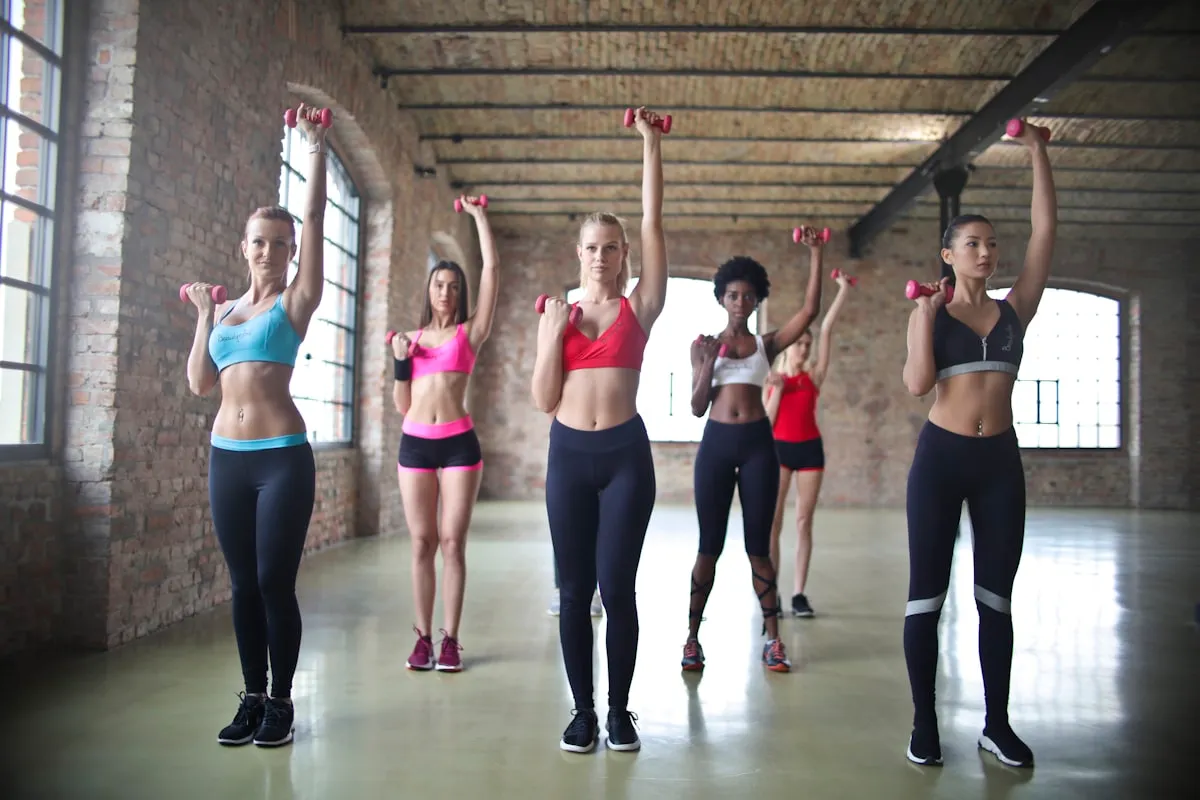
Clear a 6x6 foot area in your living room. Remove rugs that might slip, coffee tables, and anything you might bump into.
Equipment Needed
- Sturdy chair - For balance support and seated exercises
- Water bottle - Stay hydrated; keep it within reach
- Supportive shoes - Even indoors, proper footwear prevents slips
- Light hand weights (optional) - 1-3 lb dumbbells or soup cans
Optimal Environment
- Good lighting to see the screen clearly
- Temperature around 68-72°F
- Phone nearby in case of emergency
- Workout buddy (in person or via video call) for motivation and safety
Sample 20-Minute Routine
Warm-Up (3 minutes):
- Gentle marching: 1 minute
- Shoulder rolls: 30 seconds
- Ankle circles: 30 seconds each foot
- Deep breathing: 30 seconds
Cardio Block (10 minutes):
- Marching with arm swings: 2 minutes
- Step touches: 2 minutes
- Heel digs: 2 minutes
- Knee lifts: 2 minutes
- Combo (mix all movements): 2 minutes
Strength Block (5 minutes):
- Wall push-ups: 10 reps
- Chair squats: 10 reps
- Arm curls (with weights or water bottles): 10 reps
- Calf raises: 10 reps
Cool-Down (2 minutes):
- Gentle stretching
- Deep breathing
- Seated forward fold
Tracking Your Progress
Keep a simple log of:
- Date and time of workout
- Duration completed
- How you felt (1-10 scale)
- Any modifications needed
After 4 weeks, review your log. Most people notice they can exercise longer, feel less winded, and need fewer rest breaks.
Getting Started Today
The hardest part is starting. Commit to just 10 minutes today—less than the time spent watching commercials. Your future self will thank you for beginning this journey toward better health and independence.
Is SilverSneakers Free With Medicare?
This is the most-searched question about the program, and the answer is almost always yes — but not always.
SilverSneakers is free if you have one of the following:
- A Medicare Advantage plan (Part C) that includes the SilverSneakers benefit — many plans do, but several large carriers dropped it for 2026, so check your specific plan first
- A Medicare Supplement plan (Medigap) from a participating insurer in your state
- A group retiree plan from a former employer that contracts with Tivity Health
It is not included with original Medicare (Part A + Part B alone) — and you can't buy SilverSneakers directly as an individual at any price; it's strictly an insurance benefit. If you only have original Medicare, you can switch to a participating plan during the next open enrollment window (October 15 – December 7) or use the free alternatives below.
How to check your eligibility in 60 seconds: go to tools.silversneakers.com, enter your member ID from the back of your insurance card, and the site tells you immediately. No phone call required.
SilverSneakers vs HASfit vs ElderGym vs Sit and Be Fit
The right at-home senior fitness program depends on what you actually need. Here is how the four most-recommended options stack up:
| Program | Cost | Best For | Library Size | Modifications | Equipment |
|---|---|---|---|---|---|
| SilverSneakers | Free with most Medicare Advantage | Beginners wanting structured, brand-trusted videos | 200+ workouts | Built into each video | Chair, light weights |
| HASfit | 100% free YouTube | Beginners → intermediate; strength-leaning | 1,000+ free videos | Dual-presenter (standard + modified shown together) | Chair, dumbbells, bands |
| ElderGym | Free YouTube + paid Academy | Pure balance + fall-prevention focus | 150+ workouts in paid Academy | Verbal cues only | Chair |
| Sit and Be Fit | Free on PBS TV; paid streaming club | Lowest-mobility users, post-surgery | ~400 episodes | Entire program is seated | Chair, light objects |
If you have Medicare Advantage, start with SilverSneakers — you're already paying for it. If you don't and you're brand new to fitness, HASfit's free YouTube library gives you more workouts than you could complete in a year.
Your First 4 Weeks: A Specific Ramp Plan
Most people fail at exercise programs in the first month. This ramp is built to make weeks 1–4 feel deliberately easy so adherence sticks.
Week 1 — Show up, that's it.
- Days 1, 3, 5: One 10-minute SilverSneakers video each. Any one.
- Don't push intensity. Goal: prove to yourself you'll do it.
Week 2 — Extend duration, hold intensity.
- Days 1, 3, 5: One 20-minute video each.
- Same exertion level as week 1 — you're just doing it for longer.
Week 3 — Add a fourth day.
- Days 1, 3, 5, 6: One 20-minute video each.
- Day 6 should be the easiest video you can find — keep adherence above all.
Week 4 — Add strength.
- Days 1, 3, 5: 20-minute cardio video
- Days 2, 4: 15-minute strength video (with 1–3 lb weights)
- One full rest day each week, non-negotiable.
After week 4, most users feel meaningfully better and the habit is locked in. That's the point at which you can start hunting for more advanced programs or stack resistance band routines on top.
Who Should Skip SilverSneakers
The program is a great fit for most older adults, but a few groups will find it frustrating:
- Already strong, training 3+ years: The intensity ceiling is too low. Move to strength training programs designed for older adults.
- Recovering from major surgery (under 6 weeks post-op): Wait for your PT clearance. SilverSneakers does not vet for medical contraindications.
- Wanting equipment-heavy training: It's a bodyweight + light-weight program. If you have a real home gym setup, the program won't use it.
Frequently Asked Questions
Do I need to be on Medicare to use SilverSneakers? No. Anyone 18+ can sign up for the at-home video library at $10/month. The free version requires an eligible insurance plan.
Can I use SilverSneakers if I've never exercised before? Yes — most users start at zero. Pick any video tagged "Foundations" and the program scales from there.
Is the at-home version different from the gym version? The at-home library is a subset focused on equipment-light routines. The gym version includes classes you'd attend in person at a participating facility.
How long until I see results? Most users report better stair-climbing and easier daily movement at 4–6 weeks. Visible strength changes typically take 10–12 weeks of consistent 3-day-per-week training.
What equipment do I actually need to start? A sturdy chair and water. Light hand weights (or two soup cans) are nice-to-have but optional for the first month.
Can I do this if I have arthritis or knee pain? Yes, with caveats. Filter for "low impact" or "chair" workouts and avoid videos labeled "advanced." If a movement hurts (vs. just feels hard), stop and substitute with a chair-based exercise.
What's the best time of day to do these workouts? Whenever you'll actually do them. Morning has slight metabolic advantages, but consistency beats timing — a 9pm workout you do beats a 7am workout you skip.
What to Read Next
- HASfit Senior Workouts At Home — the largest free alternative
- Best Balance Training Equipment for Seniors — what to add once you've outgrown bodyweight
- Strength Training After 60 for Beginners — the next-level program